


Can Newborns Sleep On Their Side?


Can Newborns Sleep on Their Side? Some Must-knows for Parents
If you have noticed your newborn leaning onto their side during sleep, it is completely understandable to feel concerned. Many parents ask the same question in the early weeks: Can newborns sleep on their side, or is that something to worry about?
The safest answer is simple. Newborns should be placed on their backs to sleep for every nap and every night. Side sleeping is not recommended for newborns because it is not a stable sleep position and can make it easier for a baby to roll onto their stomach.
For tired parents, this can feel confusing at first. A newborn may look comfortable on their side, and some babies naturally curl or tilt slightly during sleep. But safe sleep guidance is based on what is most stable and protective over time, not only on what looks comfortable in the moment.
Table of Contents
- Is it okay for newborns to sleep on their side?
- Why can’t newborns sleep on their side?
- What if my newborn rolls onto their side while sleeping?
- Can newborns sleep on their side if you are watching them?
- Can newborns sleep on their side on your chest, in your arms, or while being held?
- Can newborns sleep on their side in a bassinet?
- Can newborns sleep on their side in a swaddle?
- Can newborns sleep on their back with their head turned?
- When can babies sleep on their side?
- Can newborns sleep on their stomachs?
- When should I call my pediatrician?
- Final thoughts
Is it okay for newborns to sleep on their side?
In general, no. Newborns should not be placed on their side to sleep, even if they seem more settled that way.
Side sleeping may look gentle or natural, but it can quickly turn into stomach sleeping. Because newborns are still developing head control and body strength, they may not be able to move themselves easily into a safer position. That is why back sleeping remains the safest sleep position for healthy newborns.
This same guidance applies whether your baby is a few days, a few weeks, or around 1 or 2 months old. In the newborn stage, the safest place to start every sleep is still on the back.
Why can’t newborns sleep on their side?
The biggest concern is that side sleeping is unstable. A newborn placed on their side may roll forward onto their tummy, and at this stage, they may not yet have enough strength or coordination to lift and reposition themselves well.
Parents sometimes wonder whether side sleeping is safer if the baby spits up, has mild reflux, or simply looks more comfortable that way. But for healthy newborns, back sleeping is still the recommended position. It is considered the safest and most consistent option for reducing sleep-related risks.
What if my newborn rolls onto their side while sleeping?
This is one of the most common worries among parents.
Some newborns may briefly roll or tilt onto their sides due to reflexes, the newborn curl, or the way they naturally tuck their bodies in the early weeks. If you notice this, it does not automatically mean something is wrong. The most important thing is to keep placing your baby on their back at the start of every sleep and to make sure the sleep space stays firm, flat, and clear.
If your newborn repeatedly ends up strongly on one side, or if you are not sure whether what you are seeing is normal newborn movement, it is worth mentioning it to your pediatrician. Sometimes parents simply need reassurance. Other times, it helps to rule out a side preference, tight neck muscles, or another positioning issue.
Can newborns sleep on their side if you are watching them?
This is where many parents look for an exception. They may wonder whether side sleeping is okay if they are supervising, sitting nearby, or constantly checking.
For sleep, the recommendation does not really change. Newborns should still be placed on their backs, not on their sides, even if someone is watching. Supervision does not make side sleeping a stable sleep position, and it can be hard to monitor every small movement once a baby settles.
This is also why questions like “how long can newborns sleep on their side if supervised?” do not really have a helpful safe answer. The better answer is that newborn sleep should begin on the back, rather than deciding how long side sleeping might be acceptable.
Can newborns sleep on their side on your chest, in your arms, or while being held?
This question usually comes from real life. Many babies fall asleep while being held, lying on a parent’s chest, or resting in someone’s arms after feeding.
The main distinction here is between falling asleep while being held and being placed down for sleep. Contact naps and feeding cuddles do happen, but if a parent or caregiver is also sleepy, there is a higher risk of unsafe positioning. If your newborn falls asleep on your chest or in your arms, it is safest to move them to a firm, flat sleep surface on their back as soon as you can.
So while a newborn may doze in your arms or on your chest, that should not be treated as a safe, planned side-sleeping position.
Can newborns sleep on their side in a bassinet?
Whether your baby sleeps in a bassinet, crib, or another approved sleep space, the safest starting position is still on their back.
A bassinet can be a good sleep space for a newborn, but side sleeping is not safer just because the baby is in a bassinet. The same safe sleep rules still apply: a firm, flat surface, a fitted sheet, and no loose blankets, pillows, bumpers, stuffed toys, or sleep positioners.
Can newborns sleep on their side in a swaddle?
No. A swaddled newborn should still be placed on their back to sleep, not on their side.
Swaddling may help some newborns feel calmer, but it does not make side sleeping safe. In fact, once a baby starts showing signs of rolling, swaddling should stop for sleep because it can limit their ability to move freely.
If you are using a swaddle, the safe position is still back sleeping.
Can newborns sleep on their back with their head turned?
Yes. A newborn sleeping on their back with their head turned to one side is very different from a newborn being placed to sleep on their side.
Many babies naturally turn their heads to one side while lying on their backs. That is normal. What matters is that the body stays flat on the back on a firm, safe sleep surface.
If your baby always turns their head the same way, or if you notice a strong side preference, it may be worth mentioning at your baby’s next checkup.
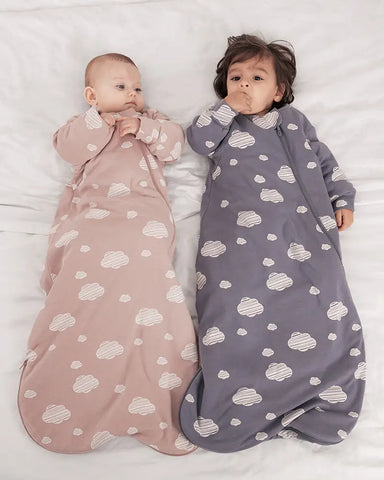
When can babies sleep on their side?
This answer changes with development.
For newborns, side sleeping is not recommended. As babies grow and become stronger, they eventually gain the ability to roll from back to tummy and from tummy to back on their own.
Once a baby can roll both ways independently, parents should still place them on their back at the start of sleep. But if the baby rolls into another position on their own, it is usually okay to let them stay there.
That stage usually comes later than the newborn period. So if your question is specifically about a newborn, the safest answer remains the same: start every sleep on the back.
Can newborns sleep on their stomach?
No. Newborns should not be placed on their stomachs to sleep.
Stomach sleeping is not recommended for newborns because it carries a higher risk than back sleeping. This is part of why side sleeping is also discouraged, since side sleeping can more easily lead to stomach sleeping.
For newborns, the safest sleep position is still on the back.
When should I call my pediatrician?
It is always okay to ask if something about your baby’s sleep feels unclear.
You may want to check in with your pediatrician if:
- Your newborn frequently ends up strongly on one side
- Your baby seems to always turn their head one way
- you notice feeding, reflux, or breathing concerns
- Your baby is starting to roll, and you are unsure how sleep guidance changes
- you feel confused or uneasy about what you are seeing during sleep
Parents do not need to wait until something feels serious to ask questions. Sometimes getting clear guidance early can make the whole sleep routine feel much calmer.
Final thoughts
If you have been wondering whether newborns can sleep on their side, you are asking exactly the kind of thoughtful question many new parents ask. The safest answer is still the clearest one: newborns should be placed on their backs to sleep, not on their sides.
Side sleeping can look harmless, and it may even seem more natural in some moments. But for newborns, the safest sleep position is the one that is most stable and most consistently recommended over time. That is why back sleeping remains the standard guidance for every nap and every night.
If your newborn occasionally seems to lean to one side, try not to panic. Keep starting sleep on the back, keep the sleep space simple and safe, and bring up any repeated concerns with your pediatrician. Sometimes a little reassurance can be just as helpful as the answer itself.
Best Sellers





Read more
Understanding Sleep Regressions: Why and When Happen, and What to Do
There’s nothing more stressful than when your baby is finally sleeping well and then suddenly, they’re not. If your once-great sleeper is now waking frequently, fighting naps, or suddenly wide awak...
Read more
Baby Won't Sleep Without Swaddle But Rolls Over
If your baby has started rolling and still screams the moment the swaddle comes off, you are in the hardest week of infant sleep, and you have not done anything wrong. Here is the short answer: onc...
Read more
Leave a comment
This site is protected by hCaptcha and the hCaptcha Privacy Policy and Terms of Service apply.