


What is a TOG Rating? How to Choose the Right TOG of Sleep Sacks?


You've probably looked up TOG while buying a sleep sack, found two different charts that don't quite agree, and ended up more uncertain than when you started.
That's a frustrating place to land when all you're trying to do is dress your baby comfortably for bed.
The good news is that TOG isn't complicated once you understand what it measures. It's a warmth rating, and you use it by matching it to the temperature of your baby's room. That's the whole idea.
This guide from Kaiya Baby covers what the number means, how to read the temperature chart, what to put on your baby underneath, and how to make it all work in your own home.
What is a TOG rating?
TOG is a measure of insulation. The Lullaby Trust describes it as a measure of insulation (warmth) used for items like baby sleeping bags and blankets, and two retailer guides, from Love To Dream and Nest Designs, expand the three letters as Thermal Overall Grade.
The lower the number, the lighter the insulation. The higher the number, the warmer the product is designed to be.
This guide covers the four steps in the chart below: 0.5, 1.0, 2.5, and 3.5 TOG.
Kaiya Baby does not make a 1.5 TOG; our 1.5 TOG sleep sack guide covers where it fits.
A 0.5 TOG sleep sack is designed for warm rooms, 1.0 TOG works well in mild temperatures, 2.5 TOG is suited to cooler nights, and 3.5 TOG is intended for rooms that stay cold through the night.

What TOG can't tell you is how things will actually feel in your specific home. It won't account for a nursery that drops a few degrees after midnight, a baby who naturally runs warm, or the difference a base layer makes underneath.
One laboratory test method for this is BS EN 17667:2022, for the determination of thermal resistance of filled textile articles and similar items using a small guarded hotplate apparatus.
The number is a reliable starting point rather than a complete answer. It works best when you read it alongside your room temperature and your baby's actual sleep setup.
Why does TOG matter for a sleep sack?
Babies depend on their environment and what they're wearing to stay comfortable through the night. For more on when babies regulate their own body temperature, we have a separate guide.
When they're too warm, sleep tends to become unsettled.
When they're too cool, they often start waking more frequently. It is easy to end up on both sides of that, often more than once.
A TOG rating gives you something grounded to work from.
Rather than pressing your hand against a sleep sack and making your best guess, you can match a warmth level to an actual number on a room thermometer, which takes a surprising amount of uncertainty out of the process.
It also helps with layering, which is where a lot of bedtime anxiety actually sits.
Parents worry about the sleep sack and about what goes on underneath in equal measure, usually on the same night, and having a TOG framework helps you think about both as one connected decision rather than two separate ones.
TOG chart by room temperature
The temperature to focus on is the one inside the nursery while your baby is actually sleeping, not the weather outside, not the hallway, and not how the room feels when you first walk in at bedtime.
Some rooms stay steady all night, while others lose several degrees after midnight, particularly in older homes, rooms near external walls, or anywhere with drafts or poorly insulated windows.
A thermometer kept in the nursery is useful for this reason, and it's worth checking what it reads during the early hours rather than only at the start of the night.
Find your TOG by room temperature
Enter the temperature of the room your baby actually sleeps in, measured at bedtime.
This is Kaiya Baby’s own guidance, not a medical recommendation, and other brands publish different bands for the same temperature. Treat it as a starting point and adjust for how your baby sleeps, what they wear underneath, and whether heating or air conditioning runs overnight.
| TOG | Room temperature | Works well for |
| 0.5 TOG | 75 to 80°F / 24 to 27°C | Warm rooms, summer nights, hot weather |
| 1.0 TOG | 68 to 75°F / 20 to 24°C | Mild temperatures, spring and autumn, climate-controlled homes |
| 2.5 TOG | 61 to 68°F / 16 to 20°C | Cool nurseries, colder nights, winter |
| 3.5 TOG | 57 to 61°F / 14 to 16°C | Very cold rooms that stay chilly overnight |

It is worth saying plainly what this chart rests on. The tog number itself is a measured quantity: BS EN 17667:2022 is one test method for the thermal resistance of filled textile articles, and the page that reproduces its scope names child sleep bags among them.
SGS, describing BS EN 16781, the European standard for children's sleep bags, says the standard requires that advice on choosing an insulation value for the home be given to the purchaser — without setting out what that advice should say.
The Lullaby Trust, the UK safer sleep charity, says it cannot provide a specific guide matching room temperature to clothing, clothing layers and tog.
It says it is unable to provide this specific advice because the thermal insulation differs for every product, because heat trapped between layers changes the warmth significantly, and because every baby is different.
The same page tells parents to “follow the manufacturer's tog guide to ensure you're using the right tog sleep bag for the room temperature.”
The room temperature bands in the table above are not set by either standard; they are Kaiya Baby's own usage guidance, to be checked against your room and your baby.
Read the chart as a starting point rather than a rule, then check your baby rather than the chart.
The four bands above cover roughly 57°F to 80°F. Outside that range, the bag stops being the right lever and the room becomes the thing to change.
As a reference point, The Lullaby Trust recommends a room temperature of 16-20°C for babies, and says that where heating is left on overnight, it should be set low and certainly no higher than 20°C.
That guidance is written for the UK; if you are elsewhere, treat it as a reference rather than a local rule.
These ranges are a helpful guide rather than a fixed rule, and if your room sits right between two TOGs, the base layer your baby is wearing will usually tip the balance one way or the other.
It's also worth keeping in mind that the same temperature doesn't always feel the same from one home to another.
A room cooled to 68°F by air conditioning tends to feel drier and colder against the skin than a room sitting at 68°F with the winter heating running.
Because of that, you may find you need to dress your baby slightly warmer in an air-conditioned room than the chart alone would suggest. That's not overthinking it; it's a reflection of how different homes behave in practice.
What temperature does 0.5 TOG cover?
A 0.5 TOG sleep sack is the lightest step in the chart above, and it's best suited to warm rooms that stay around 75°F or above.
In that kind of environment, a reasonable place to start is a diaper and a light short-sleeve bodysuit.

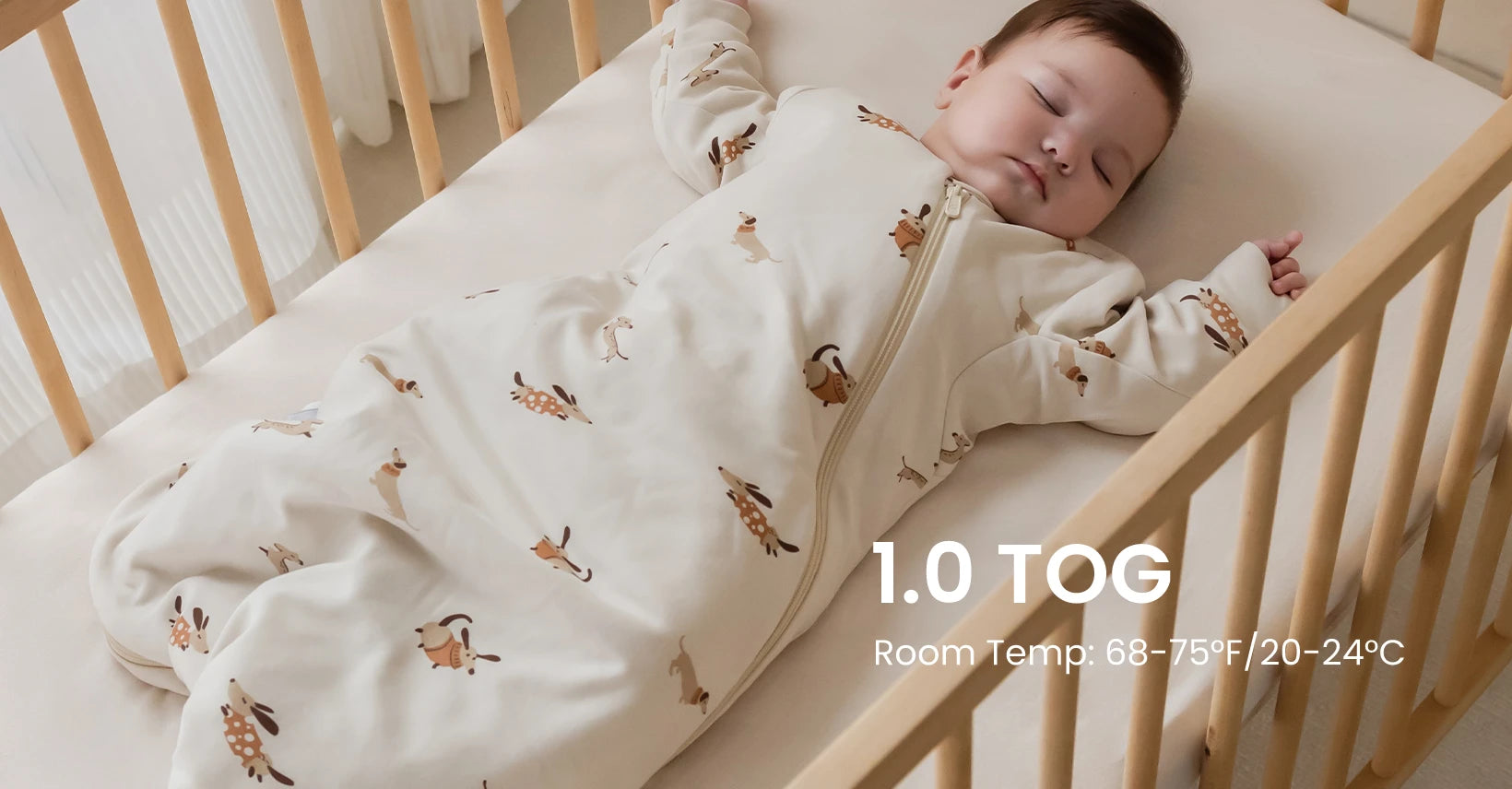
What temperature does 1.0 TOG cover?
1.0 TOG works well in mild, steady room temperatures, and it is flexible enough that a simple change to the base layer can handle small overnight shifts without needing to change the sleep sack.
If you want a closer look at how this works in everyday life, our 1.0 TOG sleep sack guide explains how to use it, what to wear underneath, and how it behaves in climate-controlled homes.
If your nursery tends to sit comfortably between 68 and 75°F through much of the year, this is likely the TOG that will feel most useful on an everyday basis.
What temperature does 2.5 TOG cover?
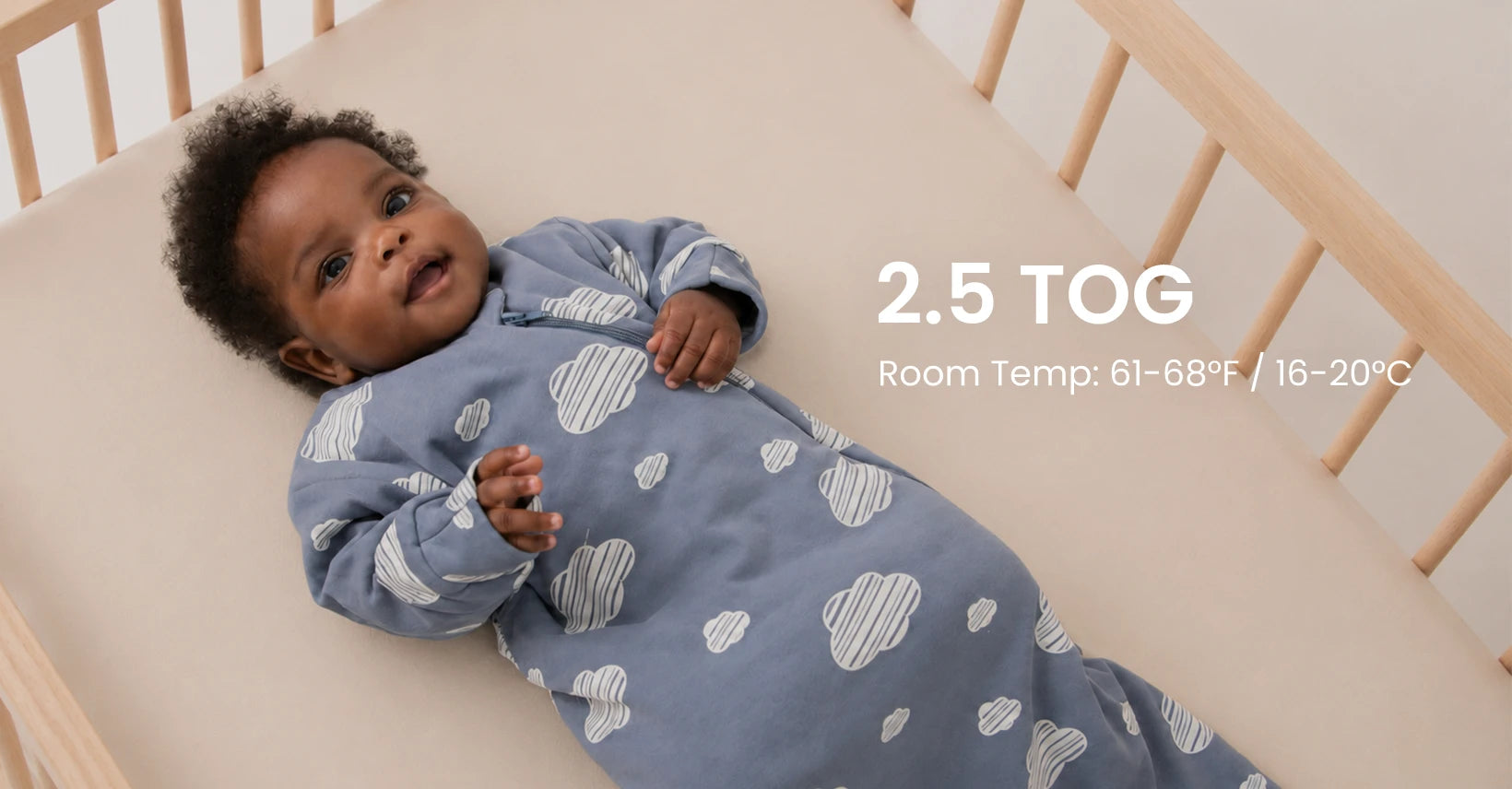
A 2.5 TOG sleep sack traps enough extra warmth that it belongs in cool rooms, not mild ones, roughly in the range of 61 to 68°F.
This is the step built for winter nights and for a nursery that sits in a cooler part of the house, the kind of room you can feel the difference in as soon as you walk in.
What temperature does 3.5 TOG cover?
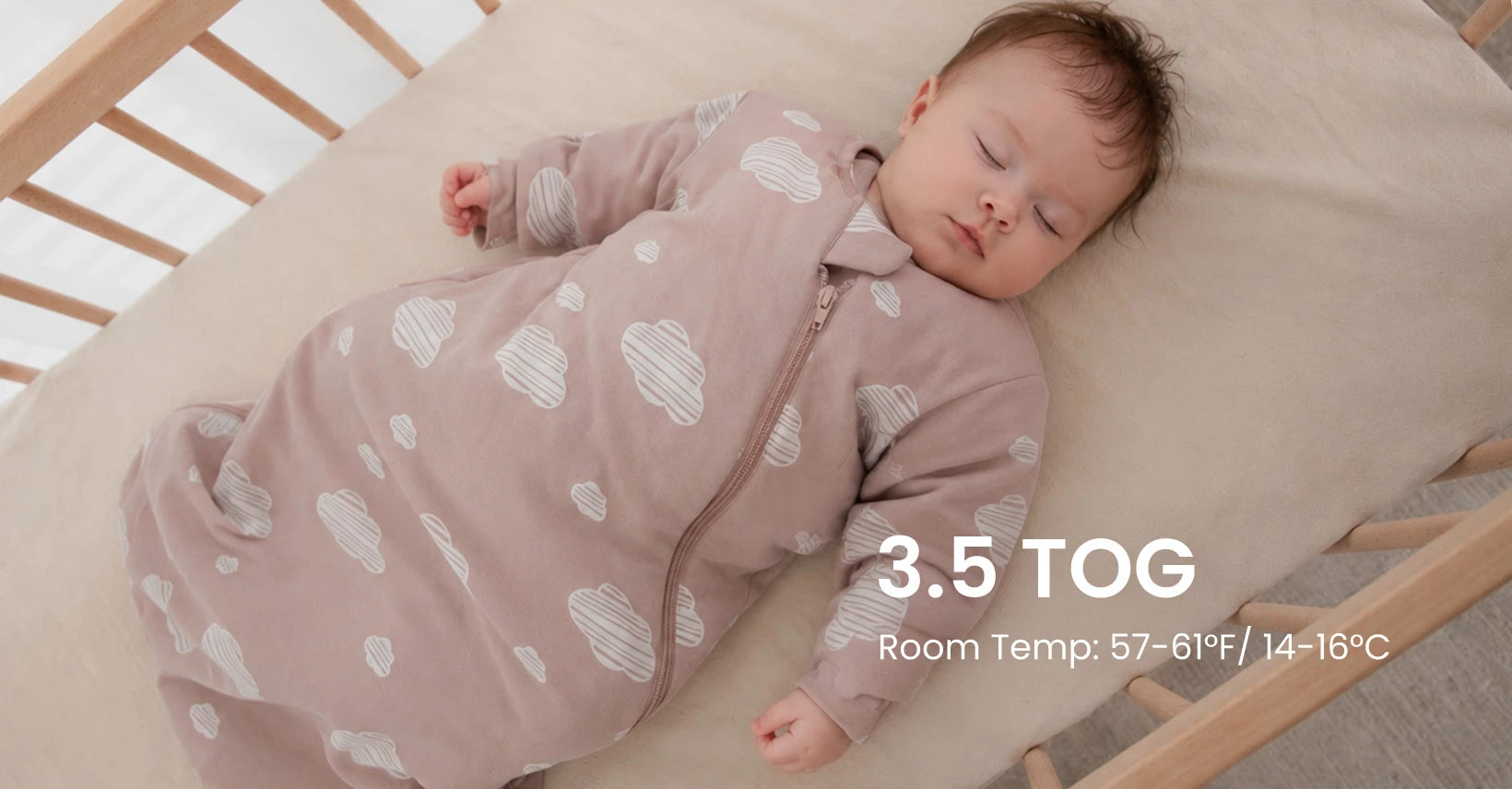
A 3.5 TOG sleep sack is designed for rooms that stay cold overnight, typically around 57 to 61°F.
Not every family will need one, particularly if the nursery heats well.
But in colder climates, older houses, or rooms that refuse to warm up despite the heating, the difference between 2.5 and 3.5 TOG is real, and you can feel it the moment you handle the two side by side.
Do I need a different TOG for each season?
You may need a different TOG when the room changes, and seasons are simply the most common reason rooms change.
A nursery that holds 70°F all year is likely to sit in the same 1.0 TOG band in January and in July. A nursery reaching 76°F in August and 62°F in February crosses two bands, and the chart above shows which two.
As with the chart itself, read this as a starting point rather than a rule.
So the more useful question is not which season it is, but how far your room actually travels. Check the thermometer on the warmest night you can remember and again on the coldest; read both numbers against the chart, and buy for those two points rather than for four seasons.
Even so, if your home shifts enough between summer and winter, a single TOG may not cover every situation comfortably throughout the year.
Keeping a lighter option and a warmer one on hand is more practical than searching for one all-seasonal sleep sack that almost works in every season.
In a nursery whose temperature stays within a narrow band, two TOGs may be all you need across the year.
The Lullaby Trust sets out what to do at the two ends of that range.
When the room is cooler than 16°C, and you are using a baby sleeping bag, it says not to add extra blankets on top, and to add an extra layer of clothing or choose a higher tog sleeping bag if your baby feels cold.
When the room is between 16 and 20°C, it says you may choose to use a baby grow and baby sleep bag.
Summer is where this gets overthought most often.
In hot weather, the Lullaby Trust says it is fine to have your baby in a lightweight layer such as a short-sleeve bodysuit, and in really hot weather, fine to have your baby in a short-sleeve vest or even just a nappy.
A 0.5 TOG sack covers the warm end of the chart above, but past roughly 80°F the sack stops being the useful lever and cooling the room does more than changing the bag.
Winter has the opposite trap, and it is usually about timing rather than the number. A room that reads 68°F at bedtime can sit several degrees lower by 3 am, which is the window where a sack chosen for the earlier reading starts to feel thin.
If you are deciding between two TOGs for winter, decide for the coldest hour rather than for the moment you put your baby down.
The calculator above asks for the bedtime reading because that is the number most parents actually have. If you also know what the room drops to overnight, run that second number through it as well and choose between the two answers with the base layer in mind.
Spring and autumn are the awkward ones, because the room can cross a band in either direction within the same week.
This is where the base layer earns its keep: the same 1.0 TOG sack over a short-sleeve bodysuit and over a footed sleeper are two different setups, and changing the layer underneath is faster than changing the sack.
What TOG does a newborn need? Choosing by age, weight, and size
TOG is chosen by room temperature, not by age. What age and weight decide is the size of the sack, and that is a separate question with its own safety reasoning behind it.
The Lullaby Trust is direct about this: most baby sleeping bags are fitted by weight, not age, so always check the manufacturer’s guidelines.
It adds that if you are using a baby sleeping bag, you should make sure it is well fitted around the neck and shoulders, so the baby cannot wriggle down inside.
Size is the safety decision. TOG is the warmth decision. They are not the same question, and a temperature chart can only answer the second one.
The same page tells parents to check for a British Safety Standard code, and names the safety standard for baby sleeping bags as BS EN 16781:2018.
For newborns, the same general thinking applies. There's no single TOG that suits every newborn stage, because room temperature and layering tell you much more than age alone ever will.
For a baby born at term and discharged without extra instructions, a 1.0 TOG with a light base layer is a reasonable starting point in a mild and steady nursery, and the actual conditions of your room remain a more reliable guide than any age-based recommendation.
If your baby was discharged with instructions of their own, those come first, and the paragraph below is for you.
If your baby was born prematurely or at a low birth weight, we are not going to give you a TOG figure for that.
There is no institutional guidance we can point to that sets one, and writing our own would be a guess dressed up as advice. The Lullaby Trust presents its room temperature range as a guide and says you will still need to check your baby regularly.
Ask the team who discharged your baby what they want you to do, and start from what they tell you rather than from the chart above.
Nothing on this page is written for that situation, and the starting point we suggest for term babies is not a default for it.
Two further points the Lullaby Trust raises that come up most often with the youngest babies.
Weighted swaddles, blankets and sleeping bags are not recommended for babies under one year, because of the risk of overheating and head covering, and because they can restrict breathing by pressing on the delicate chest of a baby.
And hats should be removed indoors, because babies lose heat through their heads, so if their heads are covered, the baby can overheat.
If you are still deciding between a swaddle and a sleep sack, that choice comes before the TOG one, and we have a separate guide on swaddle vs sleep sack.
At the other end, a sleep sack is usually outgrown by size rather than by birthday, and we cover the signs of when to stop using sleep sacks.
What should my baby wear under a sleep sack?
The sleep sack handles the overall warmth, and what the baby wears underneath helps you fine-tune it for the room.
What your baby wears underneath changes how warm the whole setup is. The Lullaby Trust notes that the heat trapped between layers changes the insulation or warmth of the product significantly, and that is the hidden reason two babies in the same 1.0 TOG sack can be dressed completely differently.
When your chart and your instinct disagree, look at the whole outfit, not the sack alone.
Getting that combination right matters more than most parents expect. We have put together a full guide on what a baby should wear under a sleep sack with a room-by-room breakdown to make the decision easier.

One thing worth knowing: if your baby feels cold, The Lullaby Trust says to add an extra layer of clothing or choose a higher tog sleeping bag.
To check whether your baby feels right, The Lullaby Trust says to check your baby regularly to see if they are too hot, feeling the chest or the back of their neck.
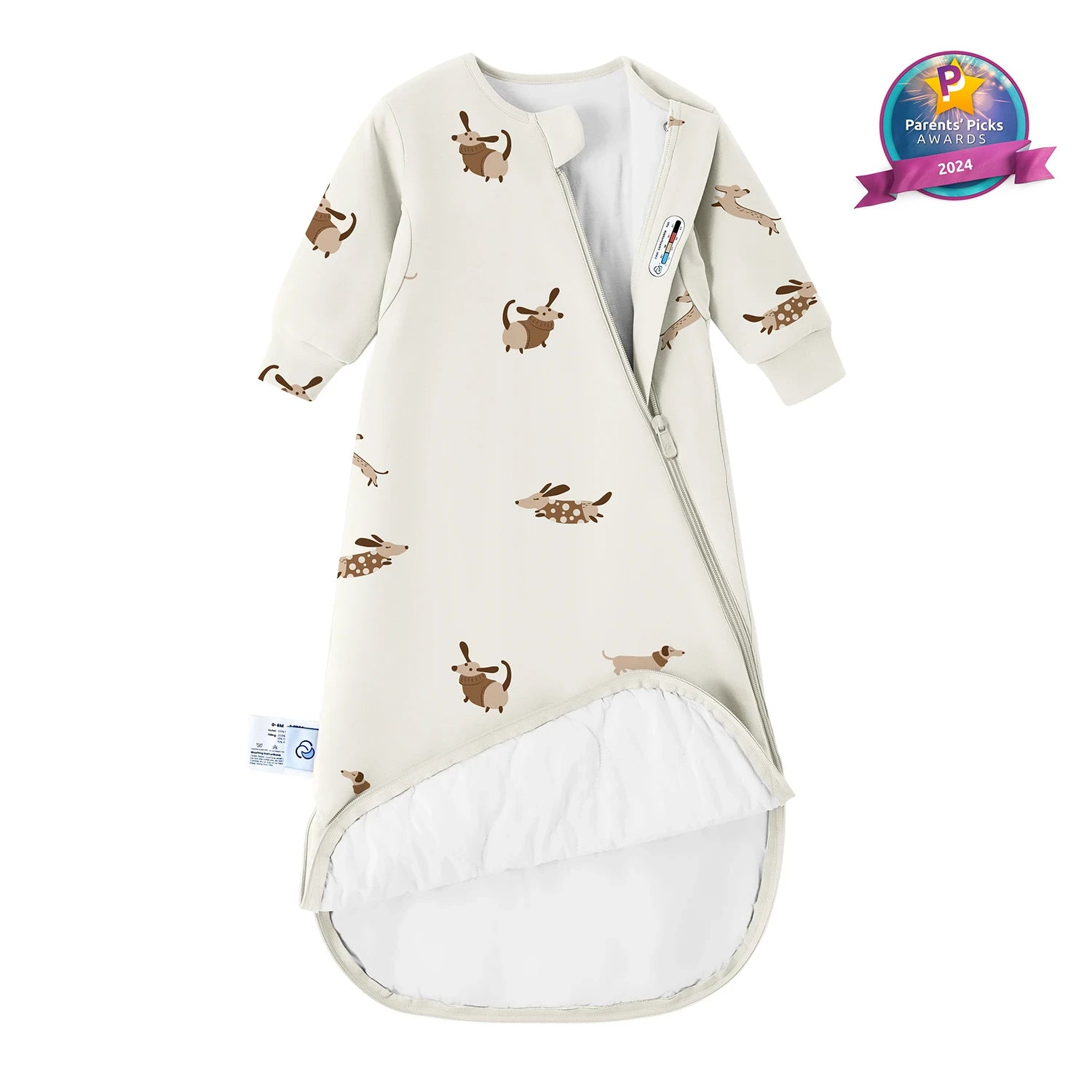
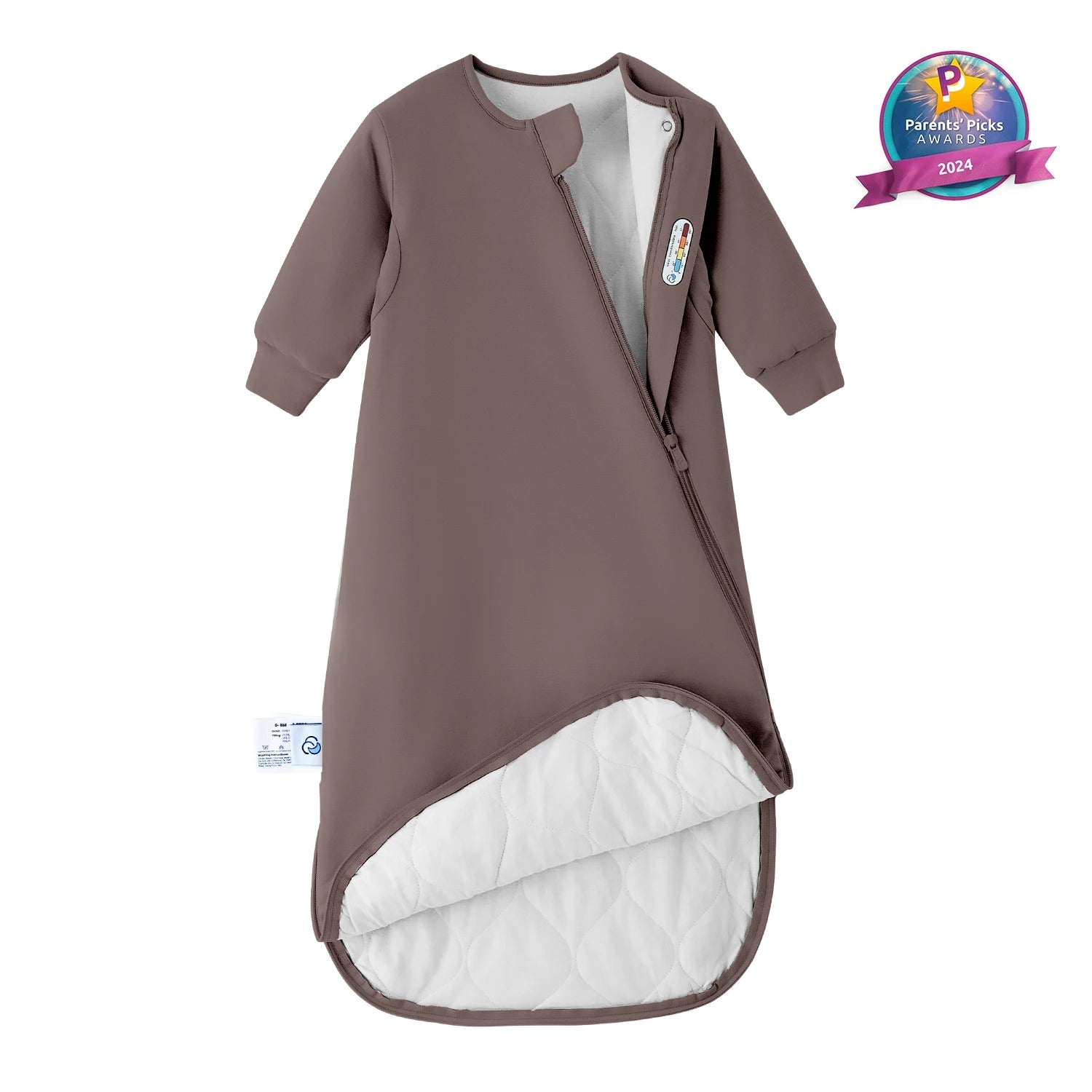
Or, on the Kaiya Baby camel wool long-sleeve styles we checked, a temperature-sensing sticker sits on the sleep sack and gives a color read at a glance: blue means they are cold, dark red means overheating.
One thing to know before you layer: you cannot work out the warmth of two sleep bags by adding their tog numbers together.
The Lullaby Trust puts it directly — dressing your baby in two 1.0 tog sleep bags does not make the sleep bag 2.0 tog, and it calls doing so dangerous, because air becomes trapped between the layers and increases the warmth.
Do not stack bags.
Could my baby be waking at night because they're cold?
Room temperature is worth checking. A baby who is simply under-dressed for the room is easy to overlook, though night waking has many other possible causes.
There is no institutional guidance we can point to that identifies a cold baby from waking patterns alone, so treat room temperature as one thing to check rather than a diagnosis.
The Lullaby Trust's advice is that if your baby feels cold, you add an extra layer of clothing or choose a higher tog sleeping bag.
The NHS says overheating can increase the risk of SIDS, and that the way to check is to feel your baby's chest or the back of their neck; if the skin is hot or sweating, remove one or more layers of clothing or bedding.
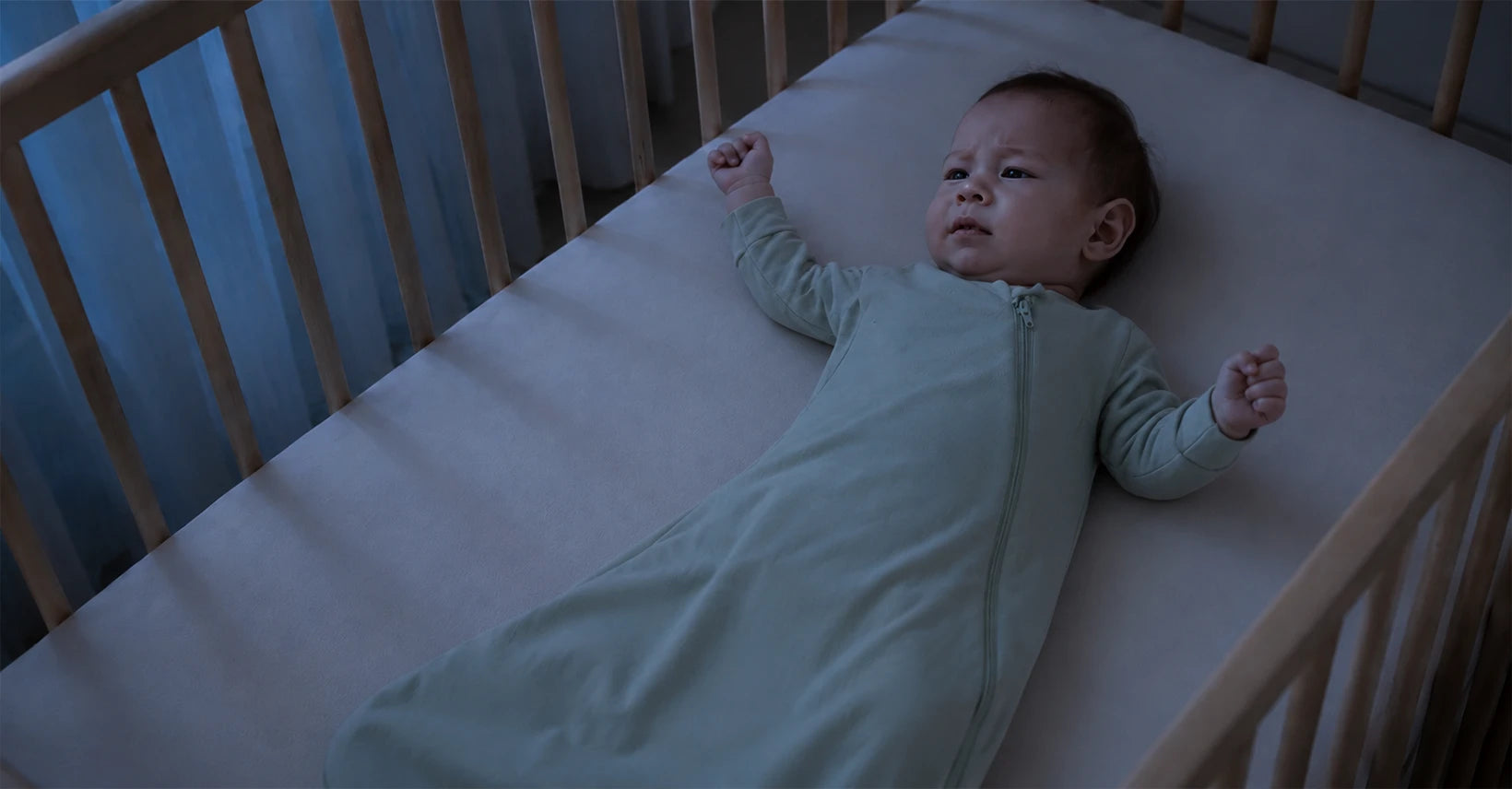
Overheating remains the risk that safe sleep guidance rightly emphasizes.
One more note for the parent staring at a 3.5 TOG sack and wondering if it is too much: read it against the room temperature it is built for rather than against the number on its own. On this chart, it is simply the step meant for the coldest rooms.
How to choose the right TOG?
The best place to begin is always the nursery temperature rather than the season, because a room that stays at 70°F in January may need the same TOG as one sitting at 70°F in April.
Your baby is sleeping in your home, not in the weather forecast, and your home's behavior is more individual than any seasonal guideline can fully account for.
It also helps to pay attention to what happens later in the night, not just at the moment you put your baby down.
A room can feel perfectly comfortable at bedtime, then lose real warmth a few hours later.
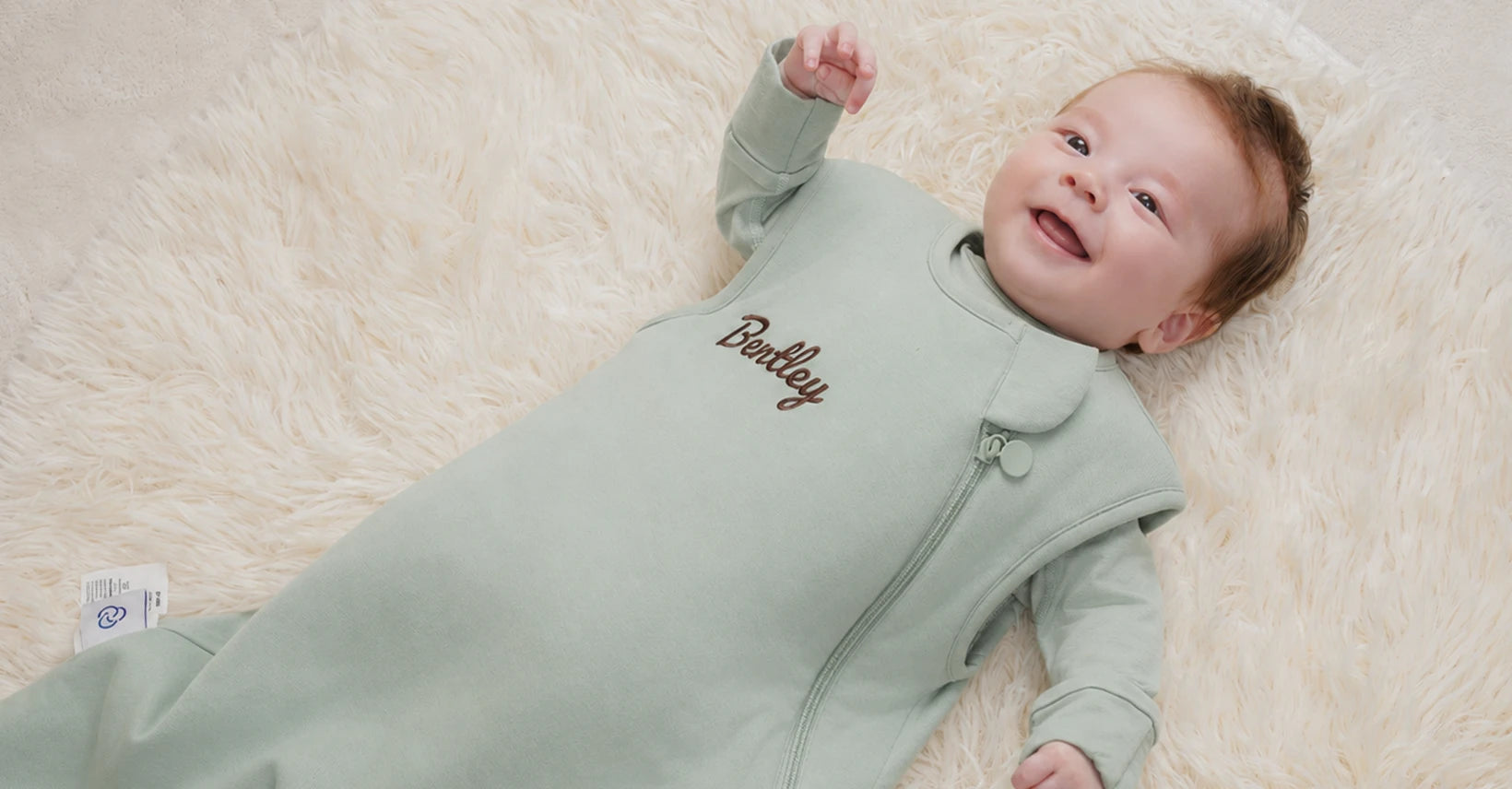
If your baby settles well early on but starts waking more toward the early morning, overnight temperature is one of the first things worth checking before assuming something else is going on.
The base layer matters no less than the TOG itself, and it's easy to underestimate how much difference it makes.
A 1.0 TOG sleep sack over a short-sleeve bodysuit is a genuinely different sleep setup from a 1.0 TOG sleep sack over a footed sleeper.
If a TOG doesn't seem to be working quite right, adjusting what's underneath is often a more useful first step than switching the sleep sack entirely.
If fabric is also part of your decision, it's worth knowing that material affects how a TOG rating actually feels in daily use, not just on paper.
Kaiya Baby's camel wool long-sleeve sleep sacks use a 30% camel wool and 70% SORONA® fiber blend inside a 100% GOTS-certified organic cotton shell.
The fill is 30% camel wool and 70% SORONA® polyester, and the shell and lining are 100% GOTS-certified organic cotton.

Final Thoughts
A TOG rating gives you a simple place to start. Instead of guessing by how thick a sleep sack feels or going only by the season, you can match it to the room your baby actually sleeps in and adjust from there.
It does not need to be right on the first night, and that is completely okay. Once you get to know your nursery and how your baby usually sleeps, TOG starts to feel much less confusing. It becomes one small thing that helps bedtime feel easier.
If you are looking for sleep sacks made with that kind of care, Kaiya Baby's camel wool long-sleeve sleep sacks use a 100% GOTS-certified organic cotton shell with a fill of 30% camel wool and 70% SORONA® polyester.
On those camel wool long-sleeve styles, the temperature-sensing sticker is there for nights when you want to check at a glance.
Frequently Asked Questions
Why do different brands' TOG charts disagree?
TOG itself is a standardized laboratory measurement of thermal resistance, so a 1.0 TOG sack from any brand traps the same warmth. What differs is the room temperature advice printed next to it, because each brand assumes a different base layer underneath. On top of that, sacks with the same TOG can still feel different in use because of fabric, fill, and fit. Read any chart as "this sack, over the clothing this brand assumed," and the contradictions mostly disappear.
What TOG is best for a newborn?
There is no single TOG that fits every newborn. Room temperature and layering matter more than age alone. In a mild, steady nursery, many newborns do well in a 1.0 TOG with a light base layer.
How do I find the TOG rating on a sleep sack?
Check the care label first, usually on the inside seam or neckline, then the product page or packaging. If none of those state a TOG, treat the sack's weight and fill as your guide and assume light single-layer cotton sits near 0.5 and quilted or fleece-lined styles run 2.5 or higher.
What is the highest and lowest TOG rating?
For baby sleep sacks, the practical range runs from about 0.2 for the lightest summer styles to 3.5 for winter. Higher numbers you see elsewhere, like 10.5 or 13.5, belong to adult duvets, which use the same scale at much heavier weights. There is no reason to go above 3.5.
Is one TOG enough for the whole year?
Go by your room, not the season, and the answer follows. If the nursery stays steady all year, one or two TOGs cover it. If it swings between warm summers and cool winters, a lighter option and a warmer one handle the year better than any single sack trying to do both.
Do TOG ratings apply to socks or regular clothes?
The scale can measure any textile, but most everyday clothing is not rated. A few sleepwear brands publish values for their layers, which is where the roughly 0.2 TOG figure for a light bodysuit comes from. For anything unrated, weight and fabric are your practical guide.
What if a TOG doesn't seem right?
Check the base layer and the overnight room temperature first; a small change to either usually fixes the setup without a new sack. If the specific problem is frequent night waking, the section above on waking from cold walks through the safe way to test one step warmer.
Best Sellers

Read more
Why Does My Baby Wake Up Screaming From Naps?
Many parents wonder why their babies wake up screaming or crying hard from their naps. This is a common problem that can be distressing for both the baby and the parents. Several factors may be at ...
Read more
The 4-month sleep regression usually shows up between 3 and 5 months, and for most families, the hardest stretch lasts a few days to a few weeks. It is not a step backward. Your baby's sleep is mat...
Read more
1 comment
Do you have a chart for base layers with TOG sleep sacks?
Alyx Schindel
Leave a comment
This site is protected by hCaptcha and the hCaptcha Privacy Policy and Terms of Service apply.