


What is a TOG Rating? How to Choose the Right TOG of Sleep Sacks?


You've probably looked up TOG while buying a sleep sack, found two different charts that don't quite agree, and ended up more uncertain than when you started.
That's a frustrating place to land when all you're trying to do is dress your baby comfortably for bed.
The good news is that TOG isn't complicated once you understand what it's actually measuring. It's a warmth rating, and the way you use it is by matching it to the temperature of your baby's room. That's the whole idea.
This guide from Kaiya Baby covers what the number means, how to read the temperature chart, what to put on your baby underneath, and how to make it all work in your own home.
What is a TOG rating?
TOG stands for Thermal Overall Grade, and it measures how much warmth a fabric or sleep product holds. The lower the number, the lighter the insulation. The higher the number, the warmer the product is designed to be.
For baby sleep sacks, the ratings you'll most commonly come across are 0.5, 1.0, 2.5, and 3.5 TOG.
A 0.5 TOG sleep sack is designed for warm rooms, 1.0 TOG works well in mild temperatures, 2.5 TOG is suited to cooler nights, and 3.5 TOG is intended for rooms that stay cold through the night.
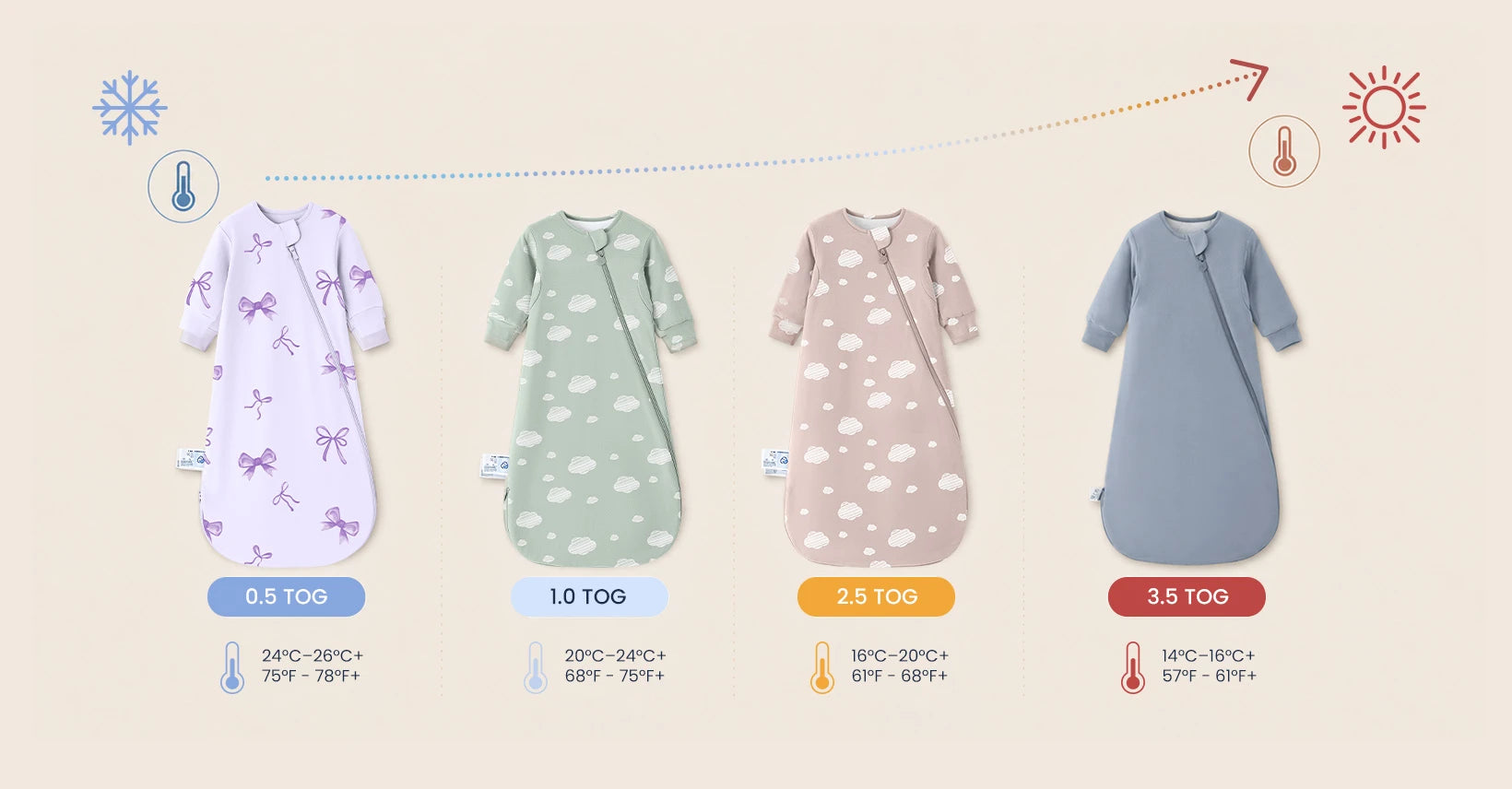
What TOG can't tell you is how things will actually feel in your specific home. It won't account for a nursery that drops a few degrees after midnight, a baby who naturally runs warm, or the difference a base layer makes underneath.
The rating comes from controlled lab testing, which makes it a reliable starting point rather than a complete answer. It works best when you read it alongside your room temperature and your baby's actual sleep setup.
Why does TOG matter for a sleep sack?
Young babies can't regulate their own body temperature the way adults can, which means they depend on their environment and what they're wearing to stay comfortable through the night.
When they're too warm, sleep tends to become unsettled.
When they're too cool, they often start waking more frequently. Most parents have been on both sides of that at some point, usually more than once.
A TOG rating gives you something grounded to work from.
Rather than pressing your hand against a sleep sack and making your best guess, you can match a warmth level to an actual number on a room thermometer, which takes a surprising amount of uncertainty out of the process.
It also helps with layering, which is where a lot of bedtime anxiety actually sits.
Parents worry about the sleep sack and about what goes on underneath in equal measure, usually on the same night, and having a TOG framework helps you think about both as one connected decision rather than two separate ones.
TOG chart by room temperature
The temperature to focus on is the one inside the nursery while your baby is actually sleeping, not the weather outside, not the hallway, and not how the room feels when you first walk in at bedtime.
Some rooms stay steady all night, while others lose several degrees after midnight, particularly in older homes, rooms near external walls, or anywhere with drafts or poorly insulated windows.
A thermometer kept in the nursery is useful for this reason, and it's worth checking what it reads during the early hours rather than only at the start of the night.
| TOG | Room temperature | Works well for |
| 0.5 TOG | 75 to 80°F / 24 to 27°C | Warm rooms, summer nights, hot weather |
| 1.0 TOG | 68 to 75°F / 20 to 24°C | Mild temperatures, spring and autumn, climate-controlled homes |
| 2.5 TOG | 61 to 68°F / 16 to 20°C | Cool nurseries, colder nights, winter |
| 3.5 TOG | 57 to 61°F / 14 to 16°C | Very cold rooms that stay chilly overnight |
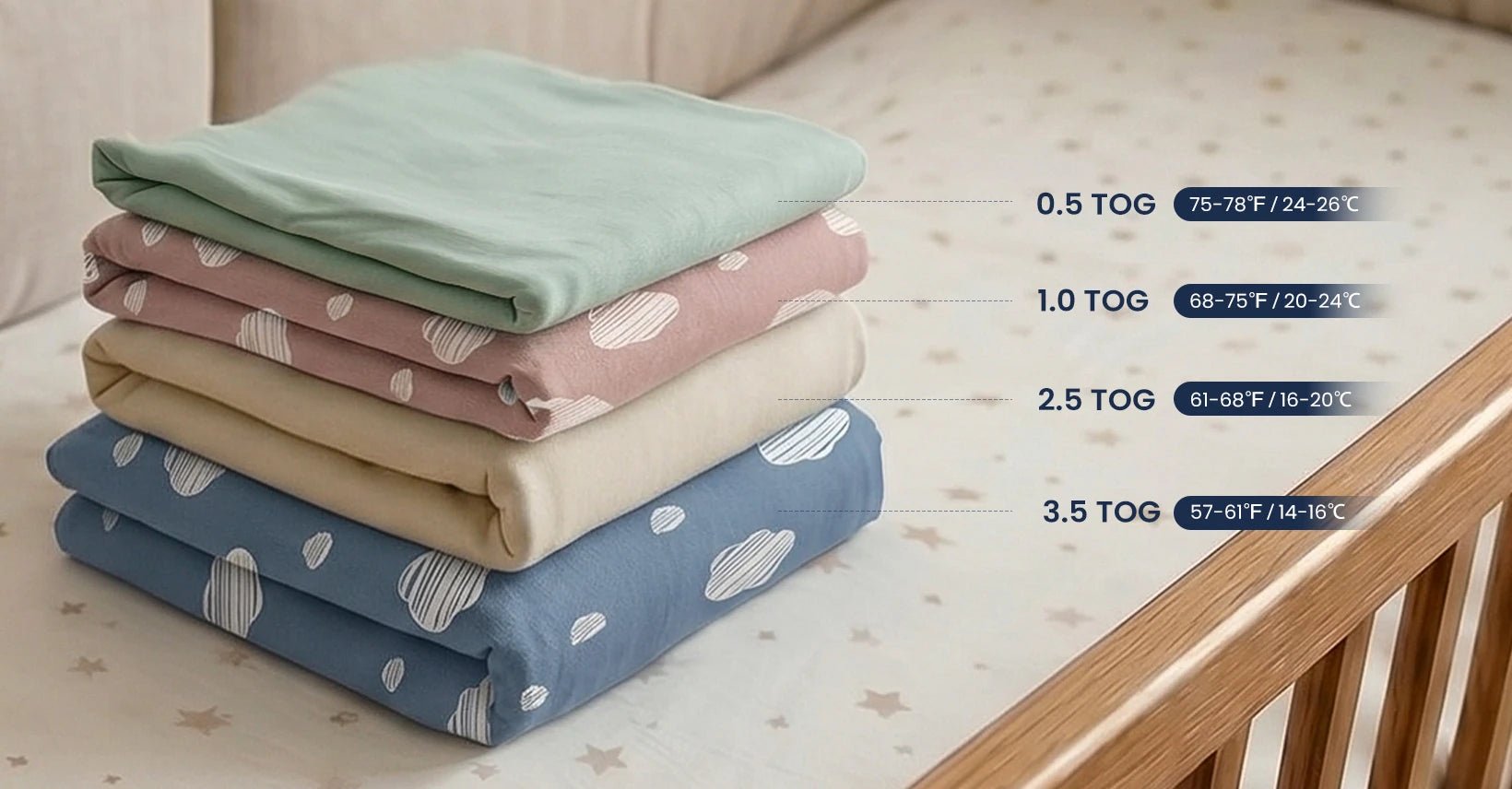
These ranges are a helpful guide rather than a fixed rule, and if your room sits right between two TOGs, the base layer your baby is wearing will usually tip the balance one way or the other.
It's also worth keeping in mind that the same temperature doesn't always feel the same from one home to another.
A room cooled to 68°F by air conditioning tends to feel drier and colder against the skin than a room sitting at 68°F with the winter heating running.
Because of that, some families find they need to dress their baby slightly warmer in an air-conditioned room than the chart alone would suggest. That's not overthinking it; it's a reflection of how different homes behave in practice.
What temperature does 0.5 TOG cover?
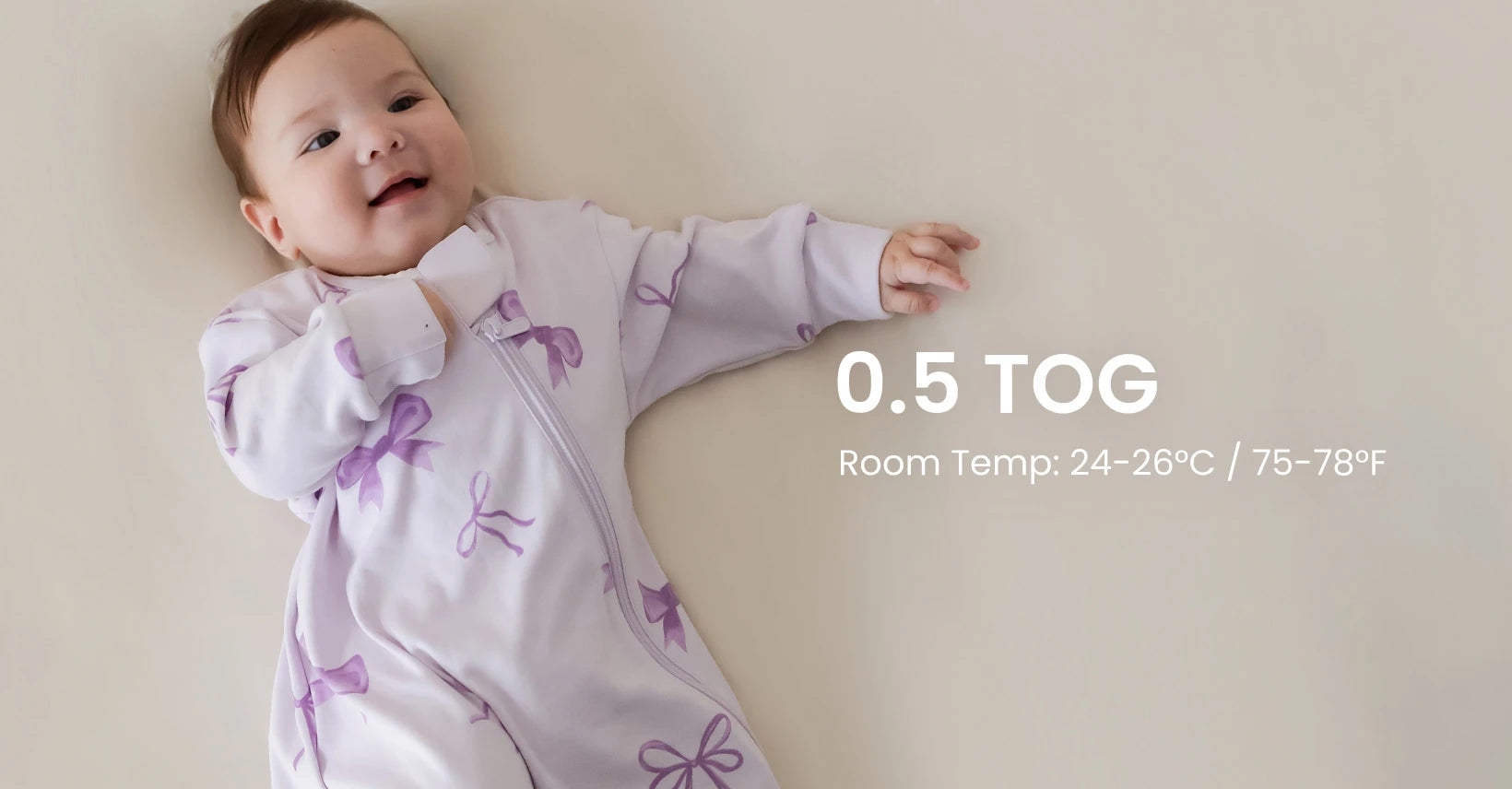
A 0.5 TOG sleep sack is the lightest option most ranges offer, and it's best suited to warm rooms that stay around 75°F or above.
In that kind of environment, many babies are comfortable with very little underneath, often just a diaper and a light short-sleeve bodysuit.
What temperature does 1.0 TOG cover?
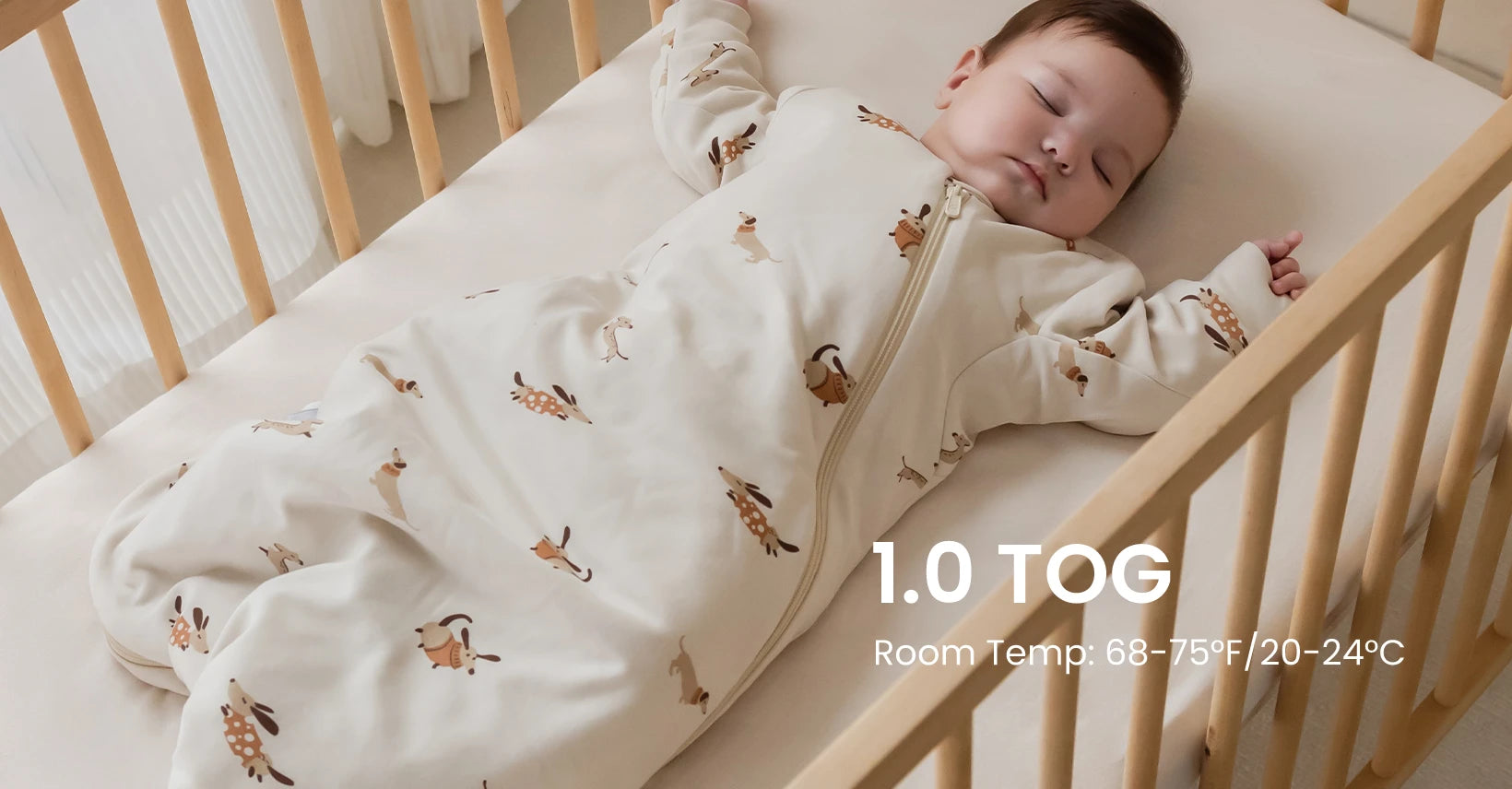
For many families, 1.0 TOG is the option they reach for most often. It works well in mild, steady room temperatures, also flexible enough that a simple change to the base layer can handle small overnight shifts without needing to change the sleep sack.
If you want a closer look at how this works in everyday life, our 1.0 TOG sleep sack guide explains when parents tend to use it, what to wear underneath, and why it often becomes the most useful option in climate-controlled homes.
If your nursery tends to sit comfortably in the mid-60s to low-70s through much of the year, this is likely the TOG that will feel most useful on an everyday basis.
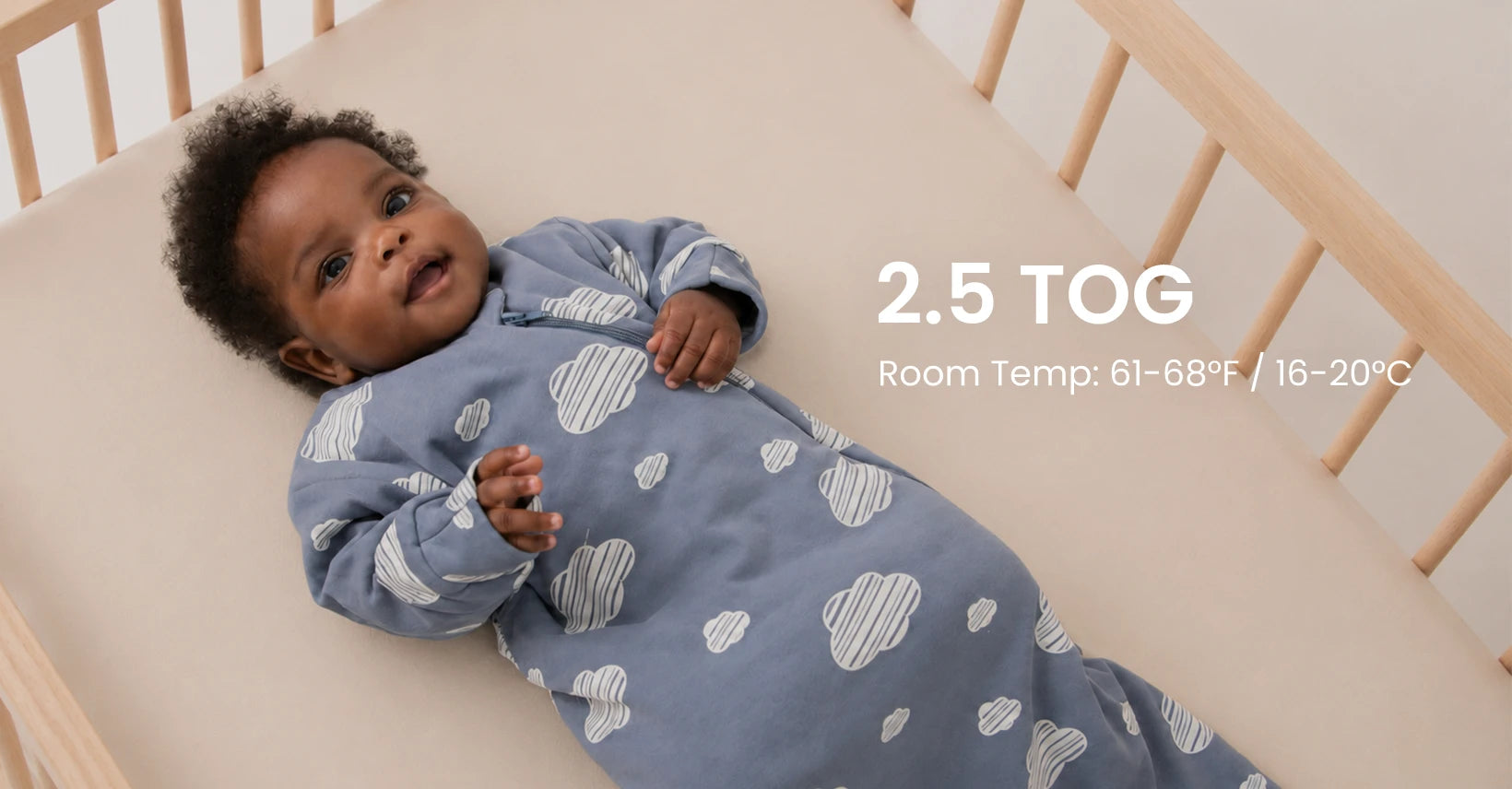
What temperature does 2.5 TOG cover?
A 2.5 TOG sleep sack traps enough extra warmth that it belongs in cool rooms, not mild ones, roughly in the range of 61 to 68°F.
For most families, this becomes the default choice in winter or when the nursery sits in a cooler part of the house, and you can feel the difference as soon as you walk in.
What temperature does 3.5 TOG cover?
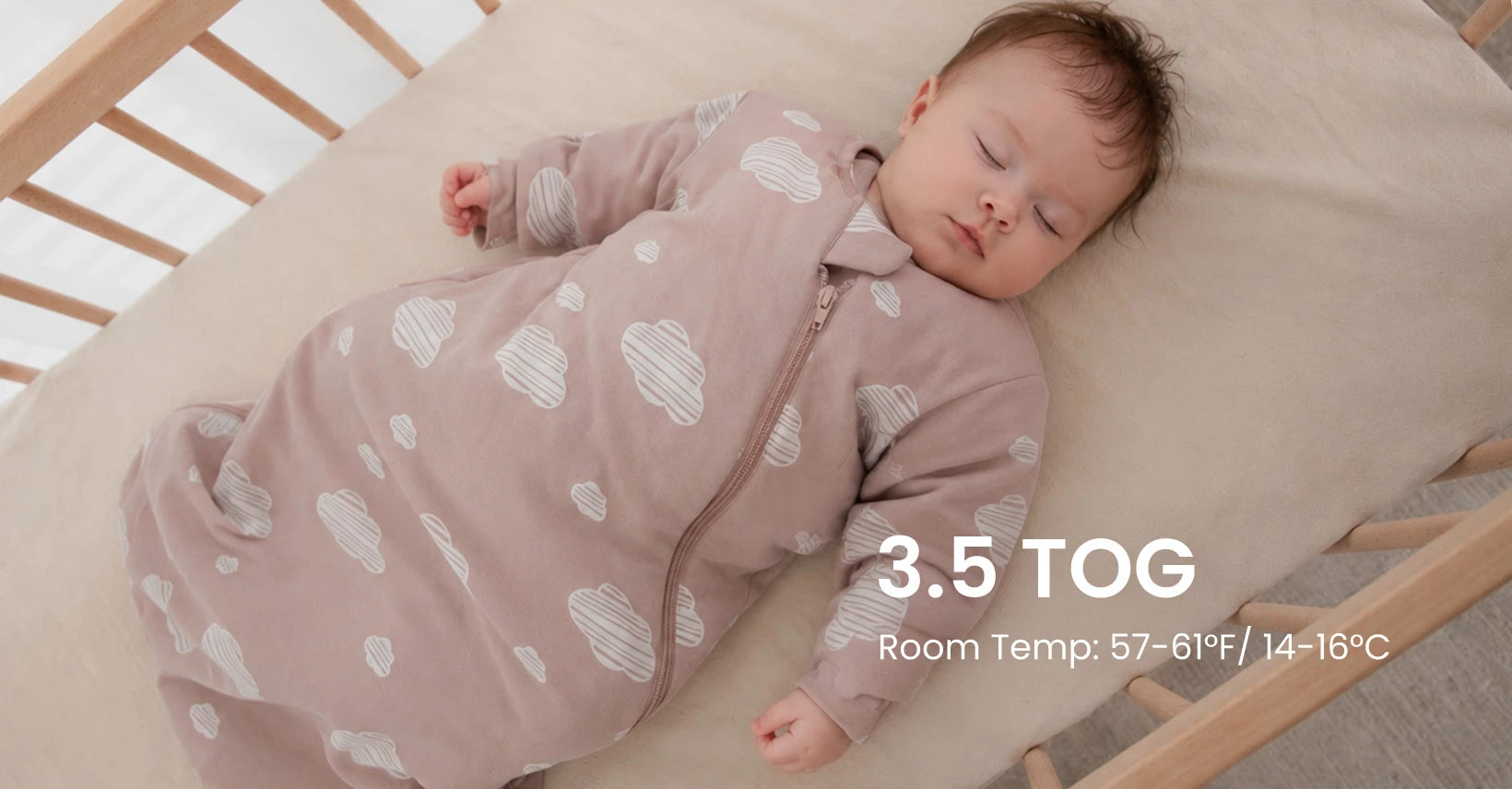
A 3.5 TOG sleep sack is designed for rooms that stay cold overnight, typically around 57 to 61°F.
Not every family will need one, particularly if the nursery heats well, but in colder climates, older houses, or rooms that refuse to warm up despite the heating, the difference between 2.5 and 3.5 TOG is real, and you can feel it the moment you handle the two side by side.
What should my baby wear under a sleep sack?
The sleep sack handles the overall warmth, and what the baby wears underneath helps you fine-tune it for the room.
Base layers carry TOG values of their own, and this is the hidden reason two babies in the same 1.0 TOG sack can be dressed completely differently.
Brands that publish clothing values place a light cotton bodysuit around 0.2 TOG and footed pajamas around 0.6 to 1.0, so a bodysuit plus pajamas under a 1.0 TOG sack adds up closer to a 2.5 TOG setup.
When your chart and your instinct disagree, count the whole outfit, not the sack alone.
Getting that combination right matters more than most parents expect. We have put together a full guide on what a baby should wear under a sleep sack with a room-by-room breakdown to make the decision easier.
One thing worth knowing: if the room is consistently cold, adding more layers under a lower-TOG sleep sack is rarely the answer. Moving up to a warmer TOG works more reliably and keeps the baby more evenly comfortable through the night.
To check whether your baby feels right, the back of the neck or the chest gives you the most honest read.
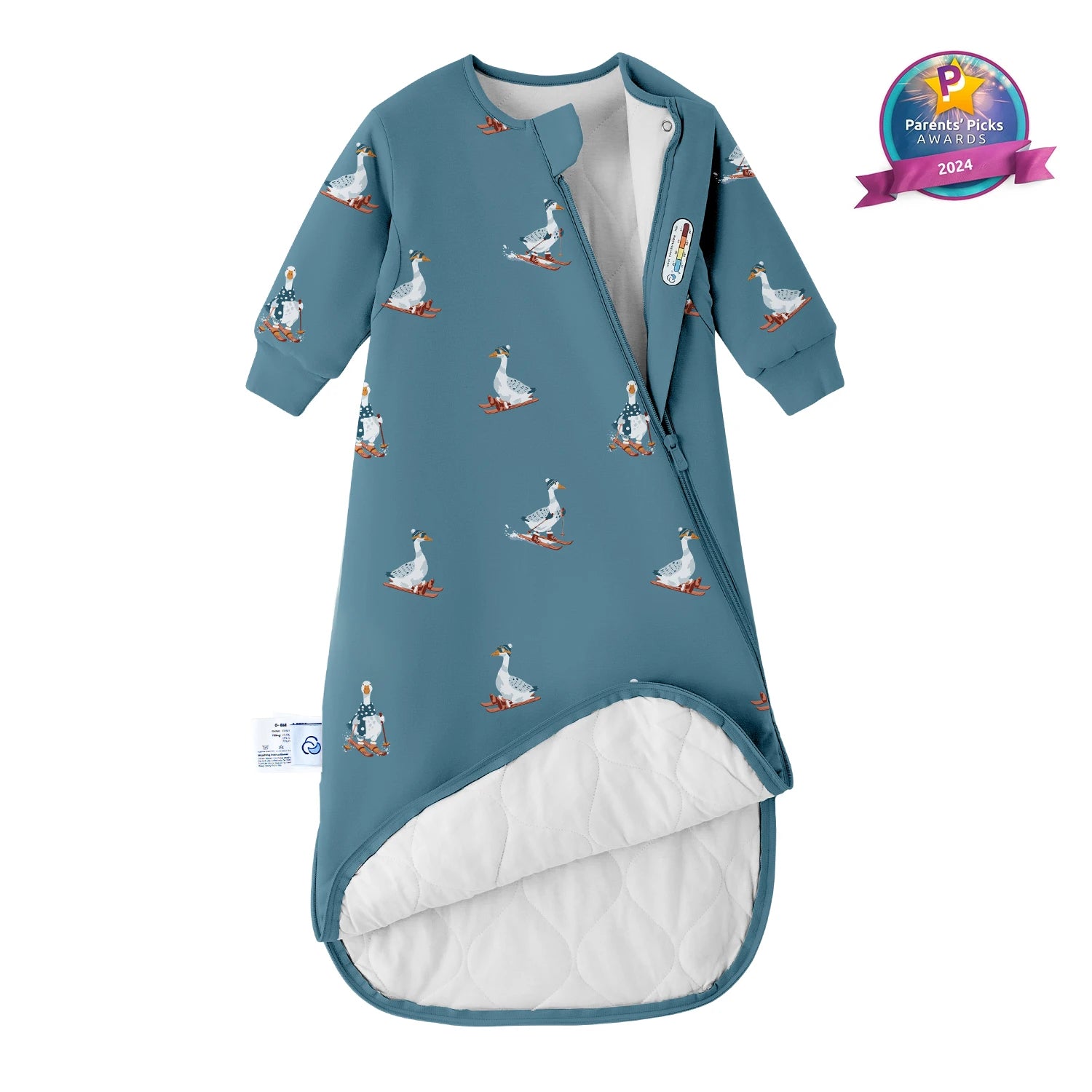
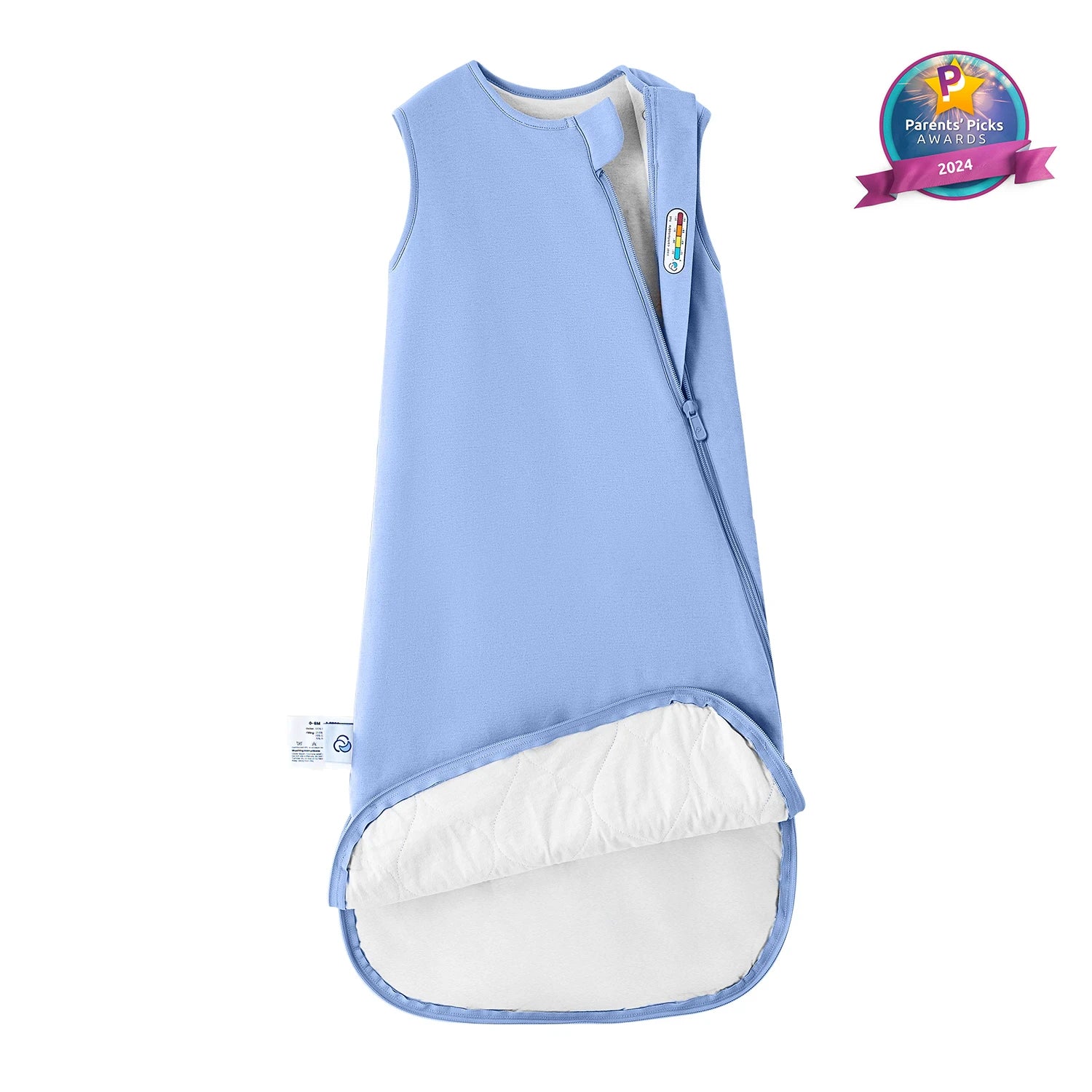
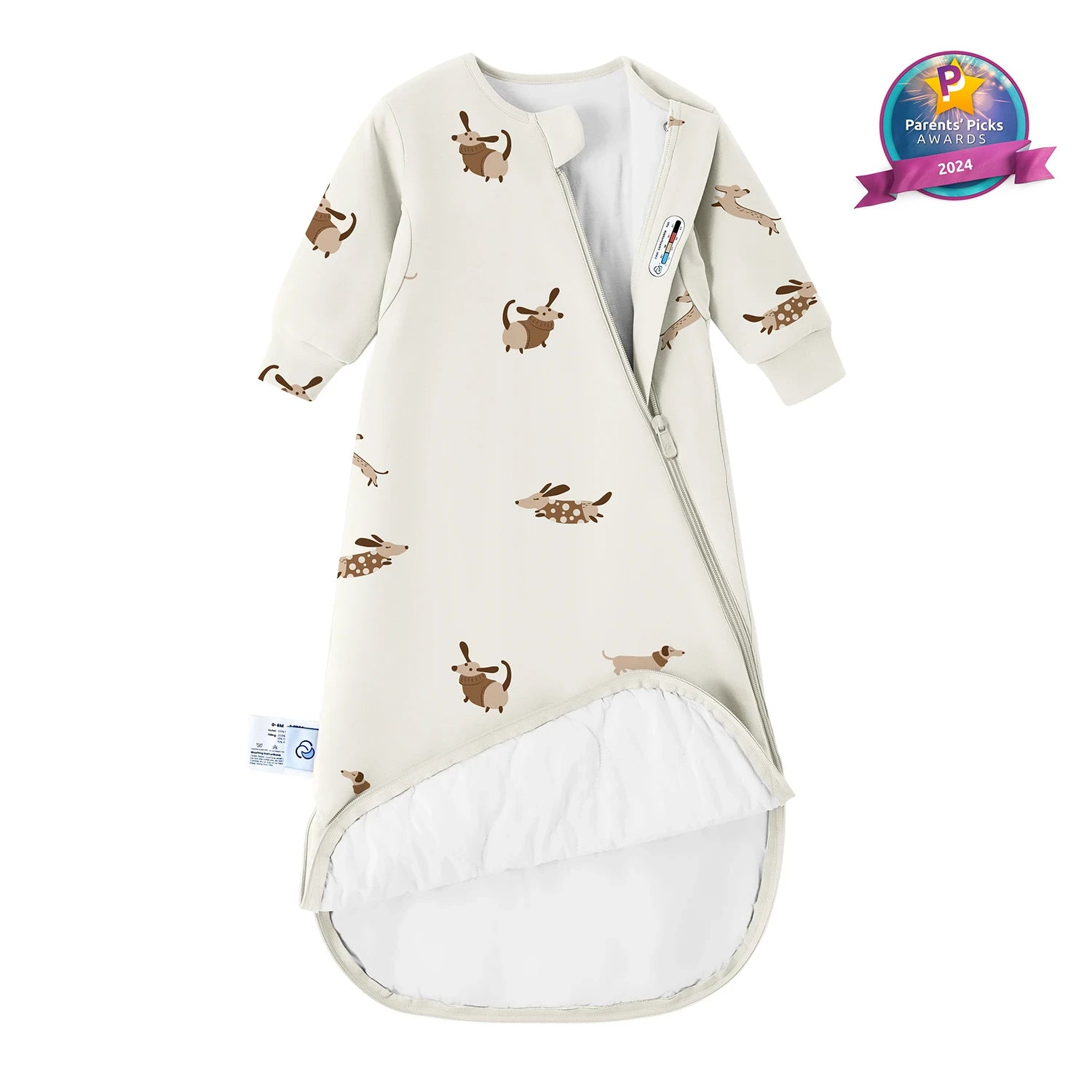
Or, Kaiya Baby's temperature-sensing sticker changes color directly on the sleep sack so you can check at a glance without touching or disturbing them.
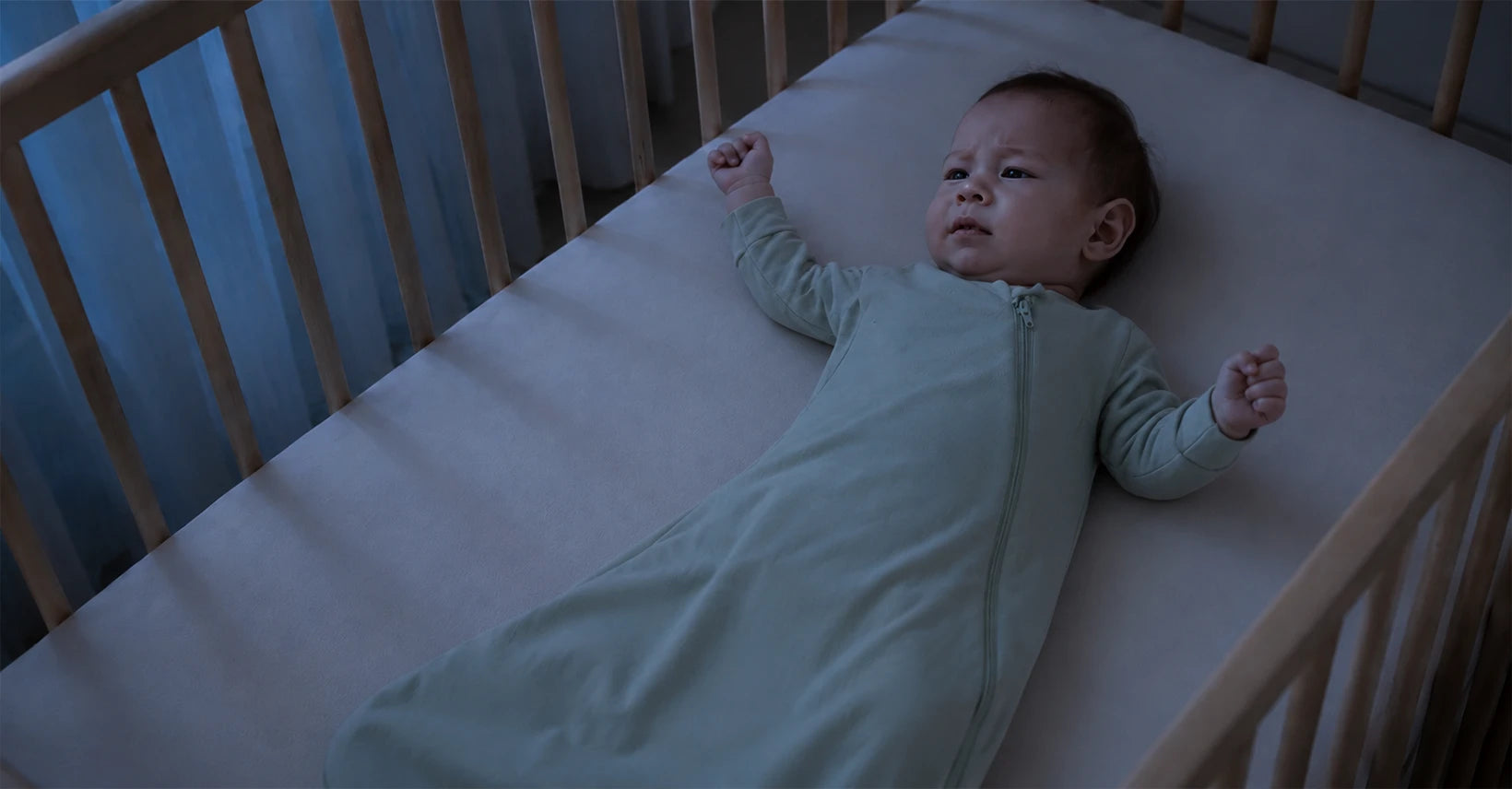
Could my baby be waking at night because they're cold?
Often, yes, and this is the possibility most parents rule out first when they should test it first. The fear of overheating is so well taught that underdressing has quietly become the more common mistake.
A baby who wakes every 1.5 to 2 hours, settles instantly when held against your warmth, and has a neck that feels comfortable and dry is describing the problem for you: the warmth was never wrong for safety; it was wrong for sleep.
The test is low-risk and takes one night. Go one step warmer, either one TOG level up or one light layer added underneath, never both at once.
Then do the neck check an hour after bedtime: warm and dry means the change worked and stayed safe, sweaty or clammy means step back down.
Overheating remains the risk that safe sleep guidance rightly emphasizes, which is exactly why the moisture check comes with every adjustment. You are not choosing between a safe baby and a sleeping baby; the check lets you have both.
One more reassurance for the parent staring at a 3.5 TOG sack and wondering if it is too much: the duvet you sleep under is probably 8 to 13.5 TOG. Even the warmest baby sleep sack is a fraction of adult bedding. The scale only feels alarming until you know where your own blanket sits on it.
How to choose the right TOG?
The best place to begin is always the nursery temperature rather than the season, because a room that stays at 70°F in January may need the same TOG as one sitting at 70°F in April.
Your baby is sleeping in your home, not in the weather forecast, and your home's behavior is more individual than any seasonal guideline can fully account for.
Even so, many homes do shift enough between summer and winter that a single TOG doesn't cover every situation comfortably throughout the year.
Most families find it more practical to keep a lighter option and a warmer one on hand, rather than searching for one all-seasonal sleep sack that almost works in every season.
For the majority of households, two TOGs handle most of the year without much difficulty.
It also helps to pay attention to what happens later in the night, not just at the moment you put your baby down.
Some rooms feel perfectly comfortable at bedtime, then lose real warmth a few hours later.
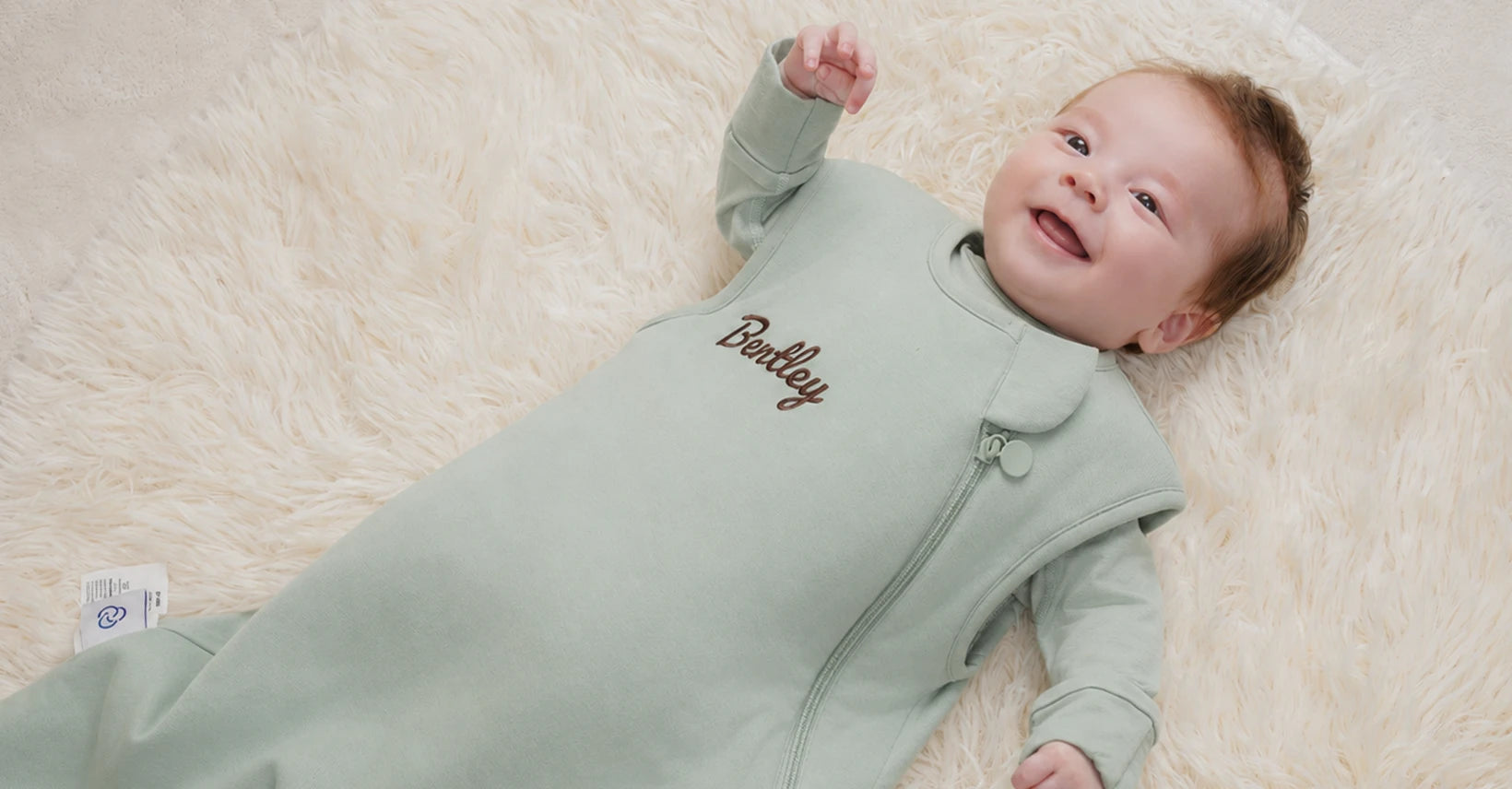
If your baby settles well early on but starts waking more toward the early morning, overnight temperature is one of the first things worth checking before assuming something else is going on.
The base layer matters no less than the TOG itself, and it's easy to underestimate how much difference it makes.
A 1.0 TOG sleep sack over a short-sleeve bodysuit is a genuinely different sleep setup from a 1.0 TOG sleep sack over a footed sleeper, and if a TOG doesn't seem to be working quite right, adjusting what's underneath is often a more useful first step than switching the sleep sack entirely.
For newborns, the same general thinking applies. There's no single TOG that suits every newborn stage, because room temperature and layering tell you much more than age alone ever will.
In a mild and steady nursery, many newborns do well with a 1.0 TOG and a light base layer, but the actual conditions of your room will always be a more reliable guide than any age-based recommendation.
If fabric is also part of your decision, it's worth knowing that material affects how a TOG rating actually feels in daily use, not just on paper.
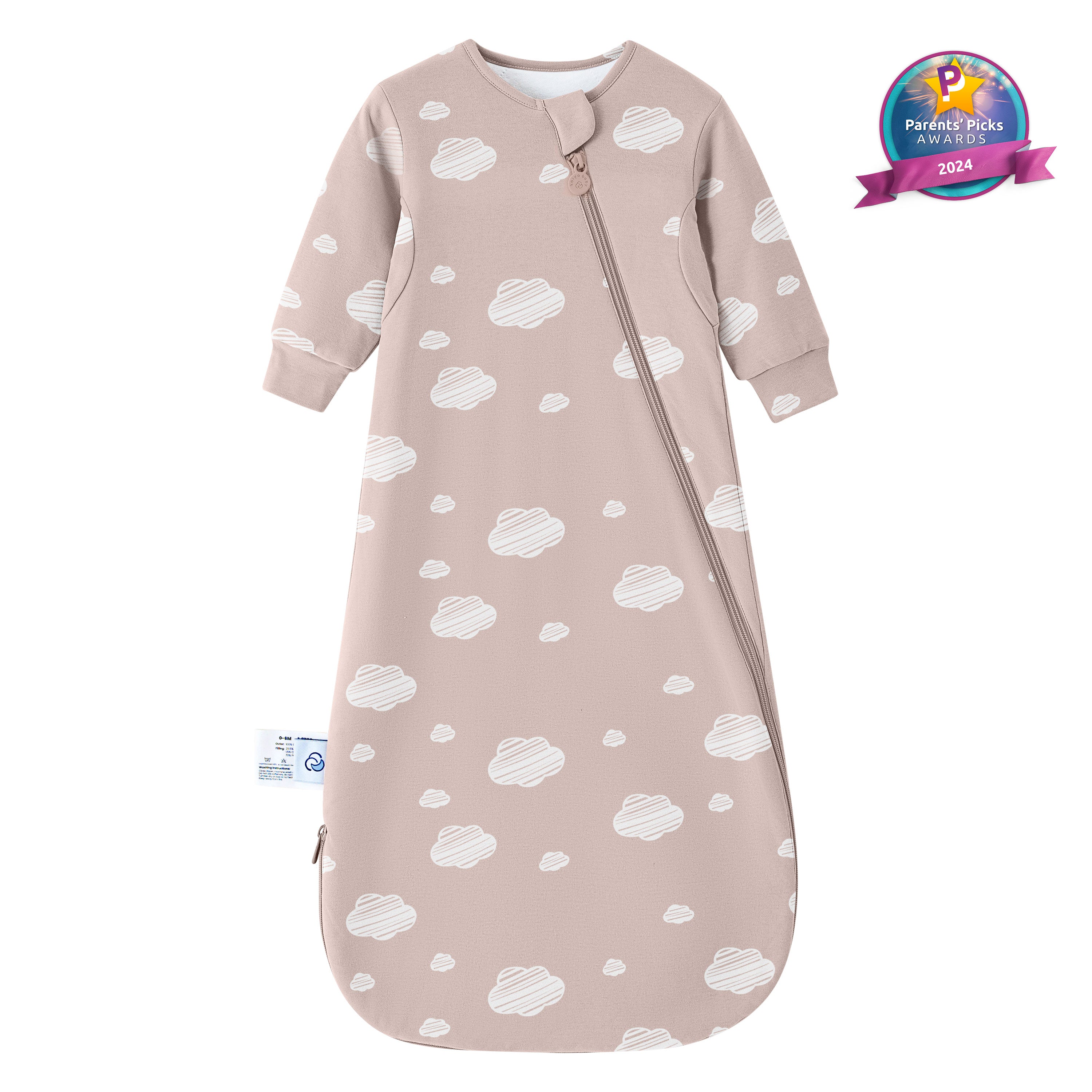
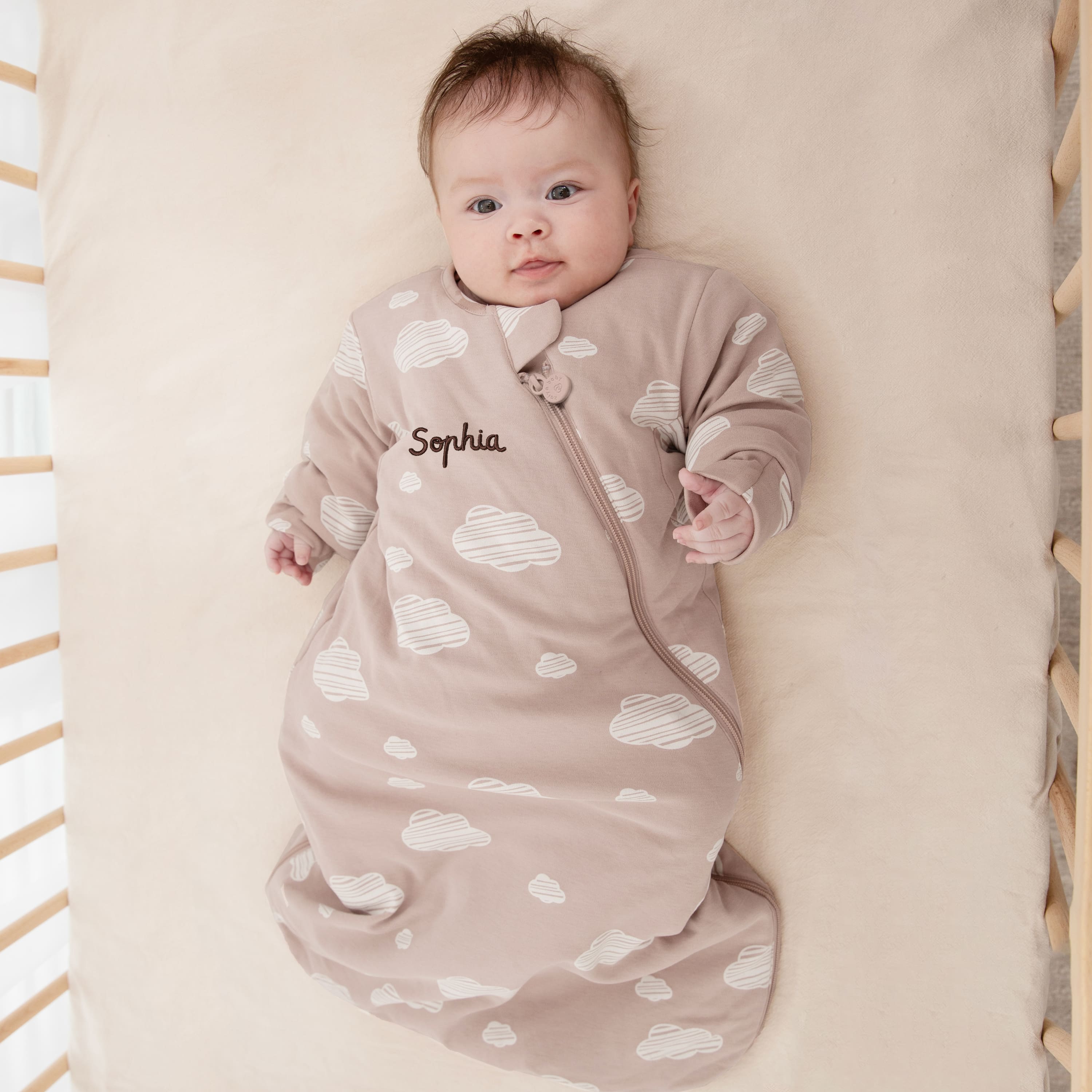
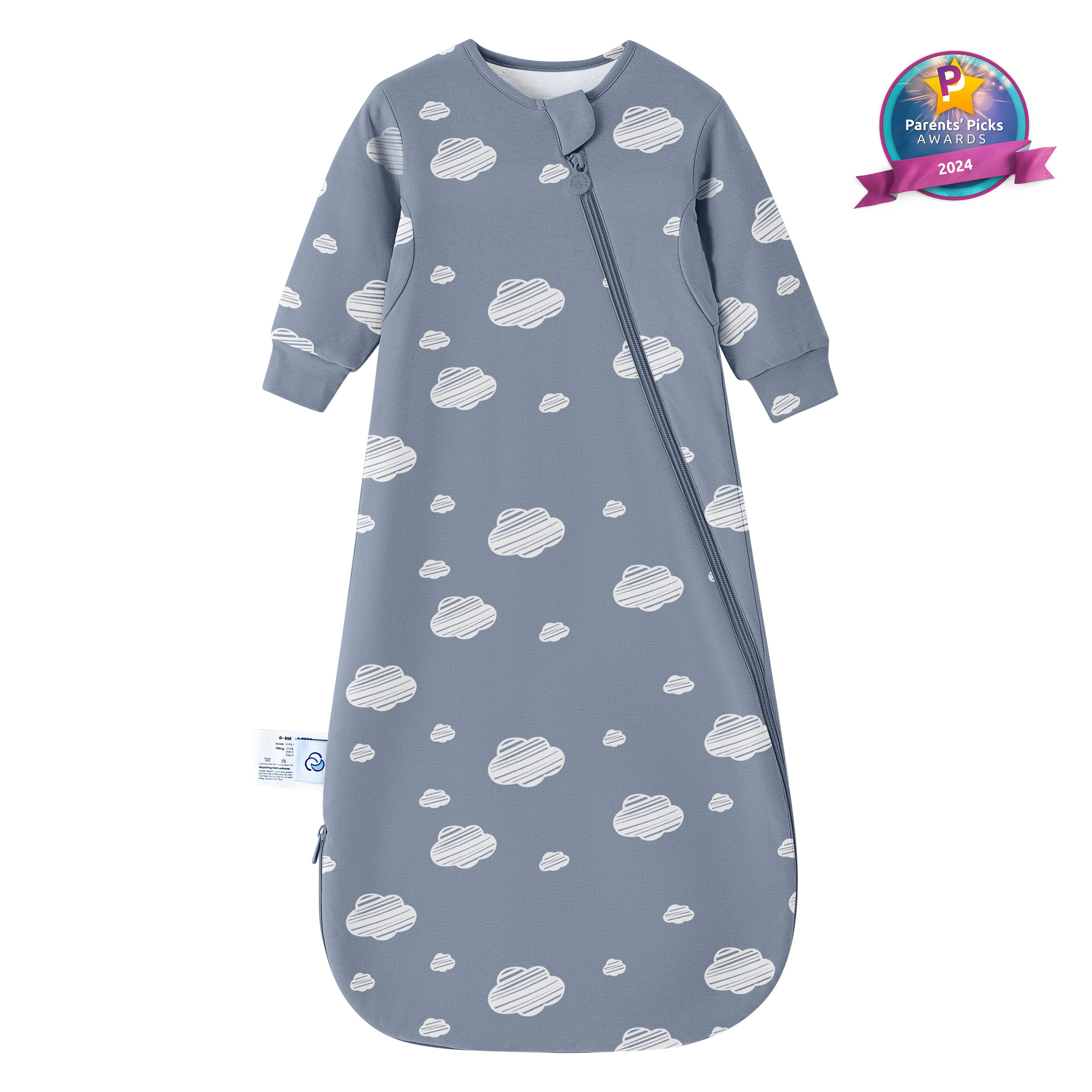
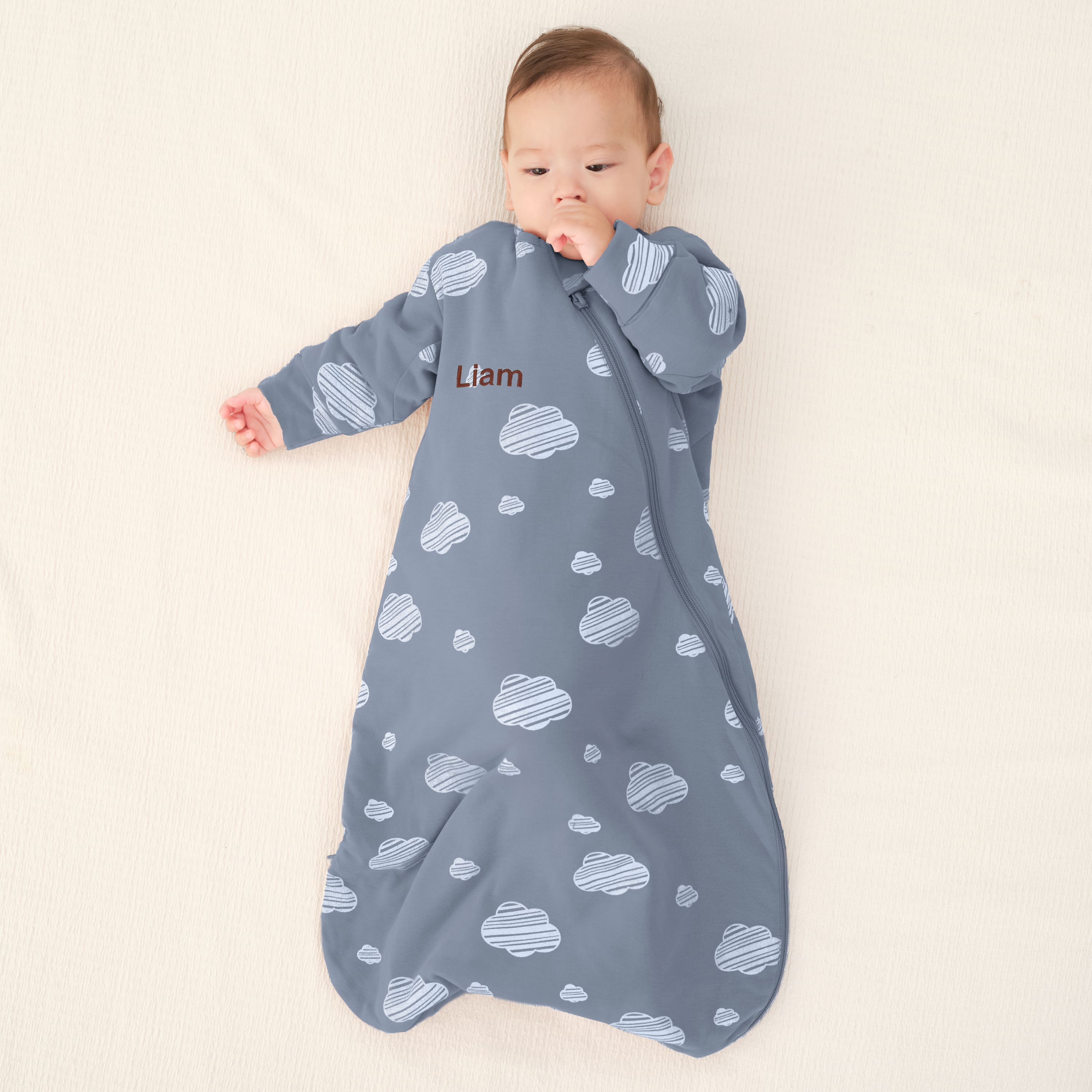
Kaiya Baby's sleep sacks use a 30% camel wool and 70% SORONA® fiber blend inside a 100% GOTS-certified organic cotton shell.
Camel wool provides natural warmth without the heaviness of a densely padded fill, and organic cotton breathes against a baby's skin rather than trapping heat against it, which makes a practical difference for families thinking carefully about what their baby sleeps in.

Final Thoughts
A TOG rating gives you a simple place to start. Instead of guessing by how thick a sleep sack feels or going only by the season, you can match it to the room your baby actually sleeps in and adjust from there.
Most parents do not get it perfect on the first night, and that is completely okay. Once you get to know your nursery and how your baby usually sleeps, TOG starts to feel much less confusing. It becomes one small thing that helps bedtime feel easier.
If you are looking for sleep sacks made with that kind of care, Kaiya Baby offers 0.5 to 3.5 TOG options in GOTS-certified organic cotton, with camel wool fill in the warmer styles.
The temperature-sensing sticker is there for nights when you want a quick check without disturbing your baby.
Frequently Asked Questions
Why do different brands' TOG charts disagree?
TOG itself is a standardized laboratory measurement of thermal resistance, so a 1.0 TOG sack from any brand traps the same warmth. What differs is the room temperature advice printed next to it, because each brand assumes a different base layer underneath. On top of that, sacks with the same TOG can still feel different in use because of fabric, fill, and fit. Read any chart as "this sack, over the clothing this brand assumed," and the contradictions mostly disappear.
What TOG is best for a newborn?
There is no single TOG that fits every newborn. Room temperature and layering matter more than age alone. In a mild, steady nursery, many newborns do well in a 1.0 TOG with a light base layer.
How do I find the TOG rating on a sleep sack?
Check the care label first, usually on the inside seam or neckline, then the product page or packaging. If none of those state a TOG, treat the sack's weight and fill as your guide and assume light single-layer cotton sits near 0.5 and quilted or fleece-lined styles run 2.5 or higher.
What is the highest and lowest TOG rating?
For baby sleep sacks, the practical range runs from about 0.2 for the lightest summer styles to 3.5 for winter. Higher numbers you see elsewhere, like 10.5 or 13.5, belong to adult duvets, which use the same scale at much heavier weights. There is no reason to go above 3.5.
Is one TOG enough for the whole year?
Go by your room, not the season, and the answer follows. If the nursery stays steady all year, one or two TOGs cover it. If it swings between warm summers and cool winters, a lighter option and a warmer one handle the year better than any single sack trying to do both.
Do TOG ratings apply to socks or regular clothes?
The scale can measure any textile, but most everyday clothing is not rated. A few sleepwear brands publish values for their layers, which is where the roughly 0.2 TOG figure for a light bodysuit comes from. For anything unrated, weight and fabric are your practical guide.
What if a TOG doesn't seem right?
Check the base layer and the overnight room temperature first; a small change to either usually fixes the setup without a new sack. If the specific problem is frequent night waking, the section above on waking from cold walks through the safe way to test one step warmer.
Best Sellers
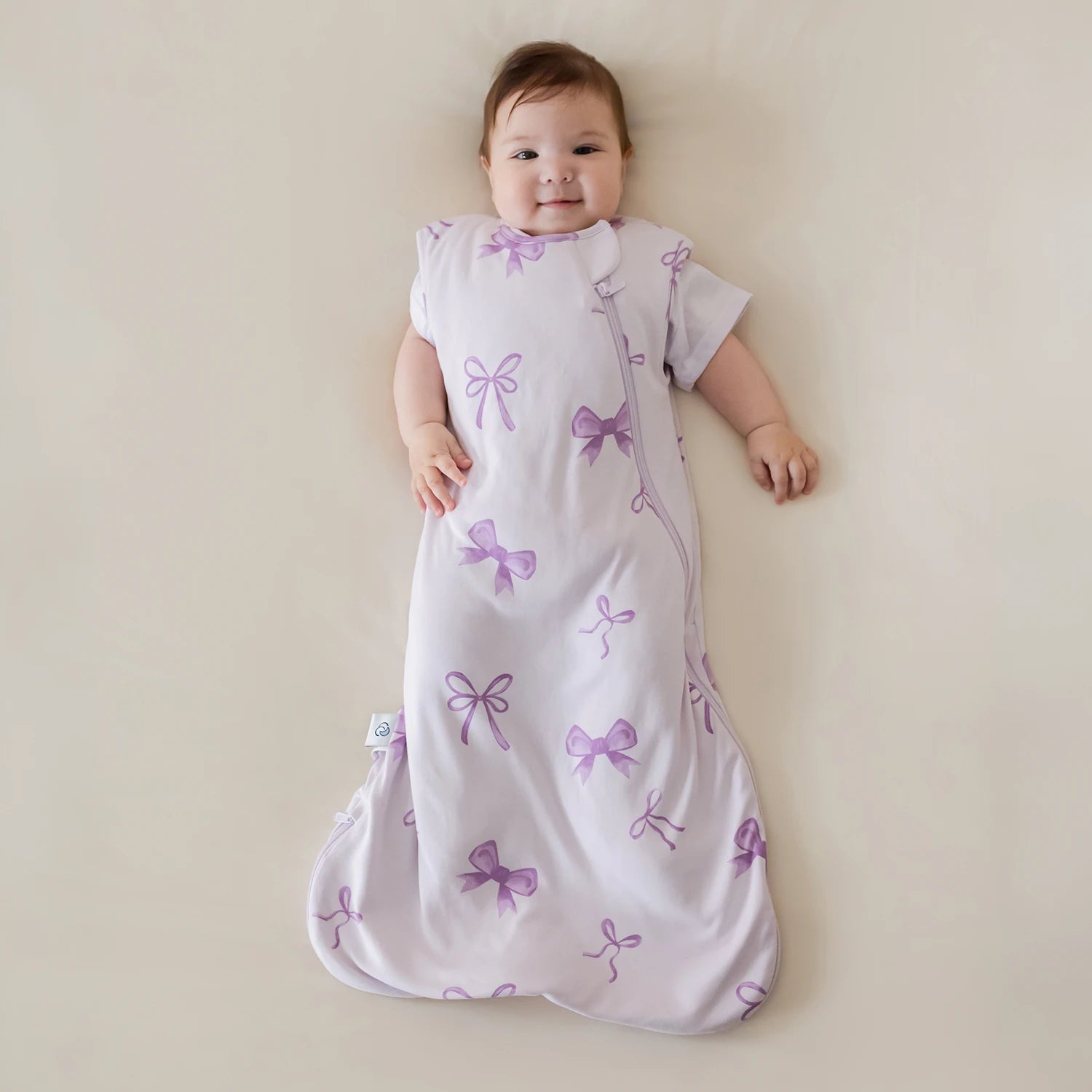
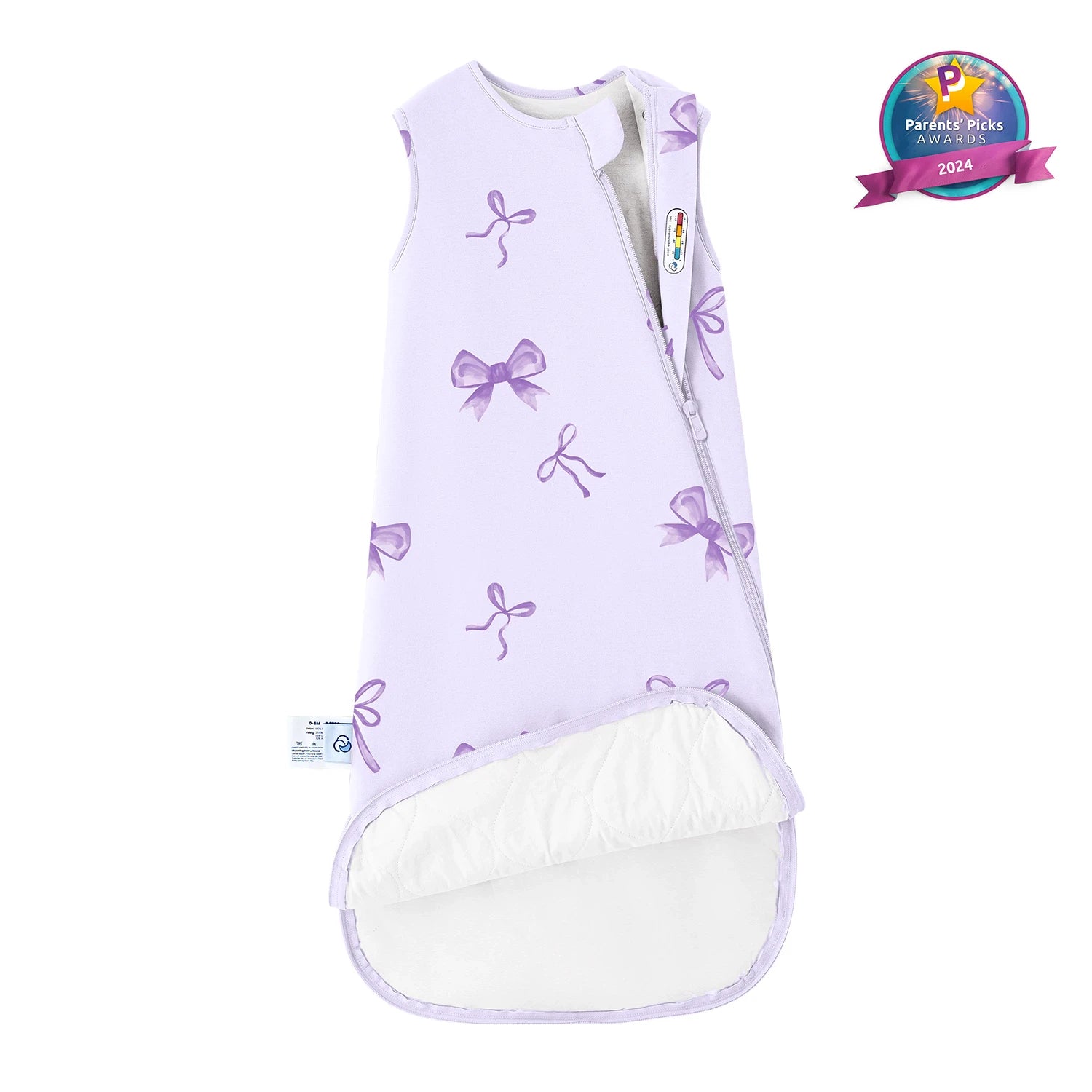
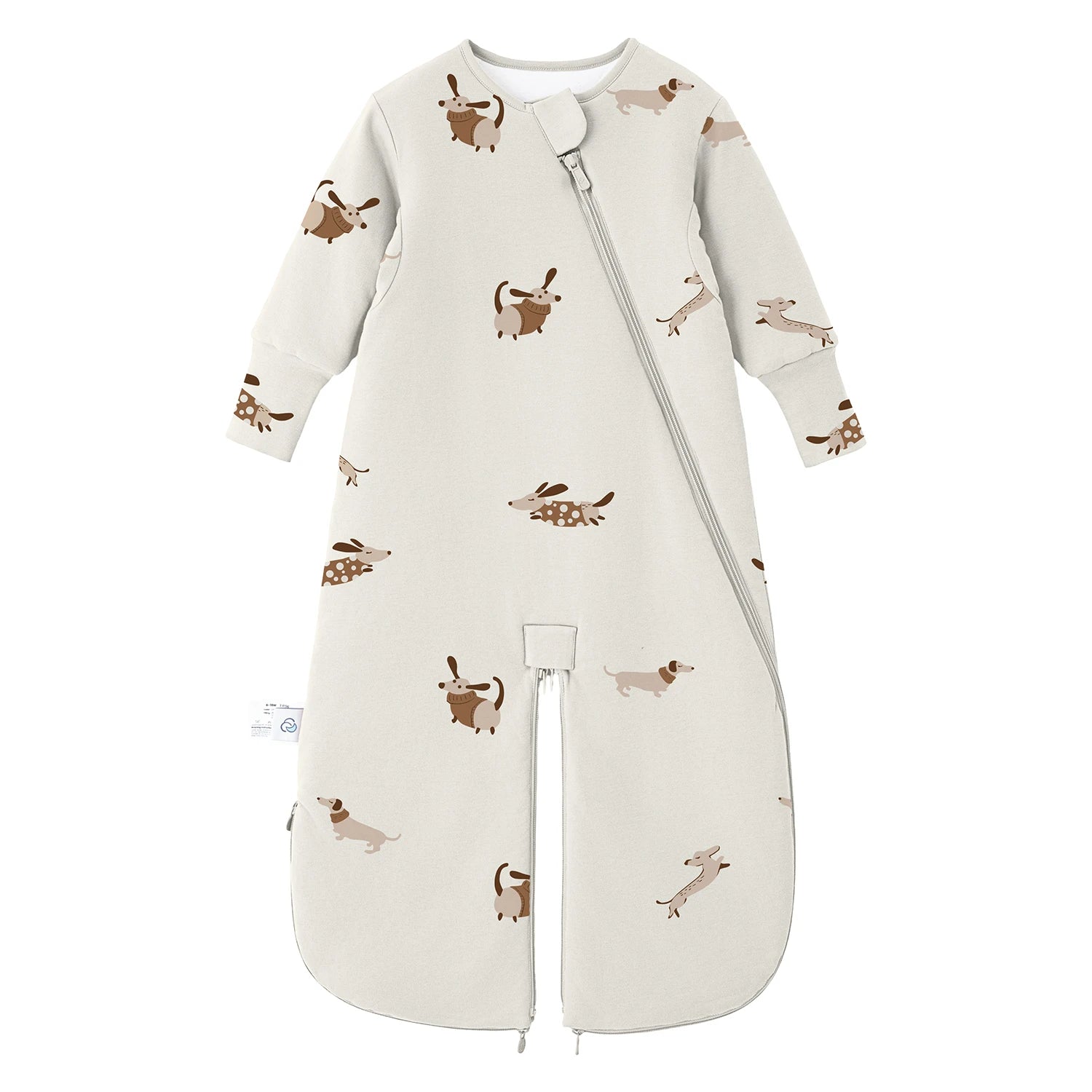
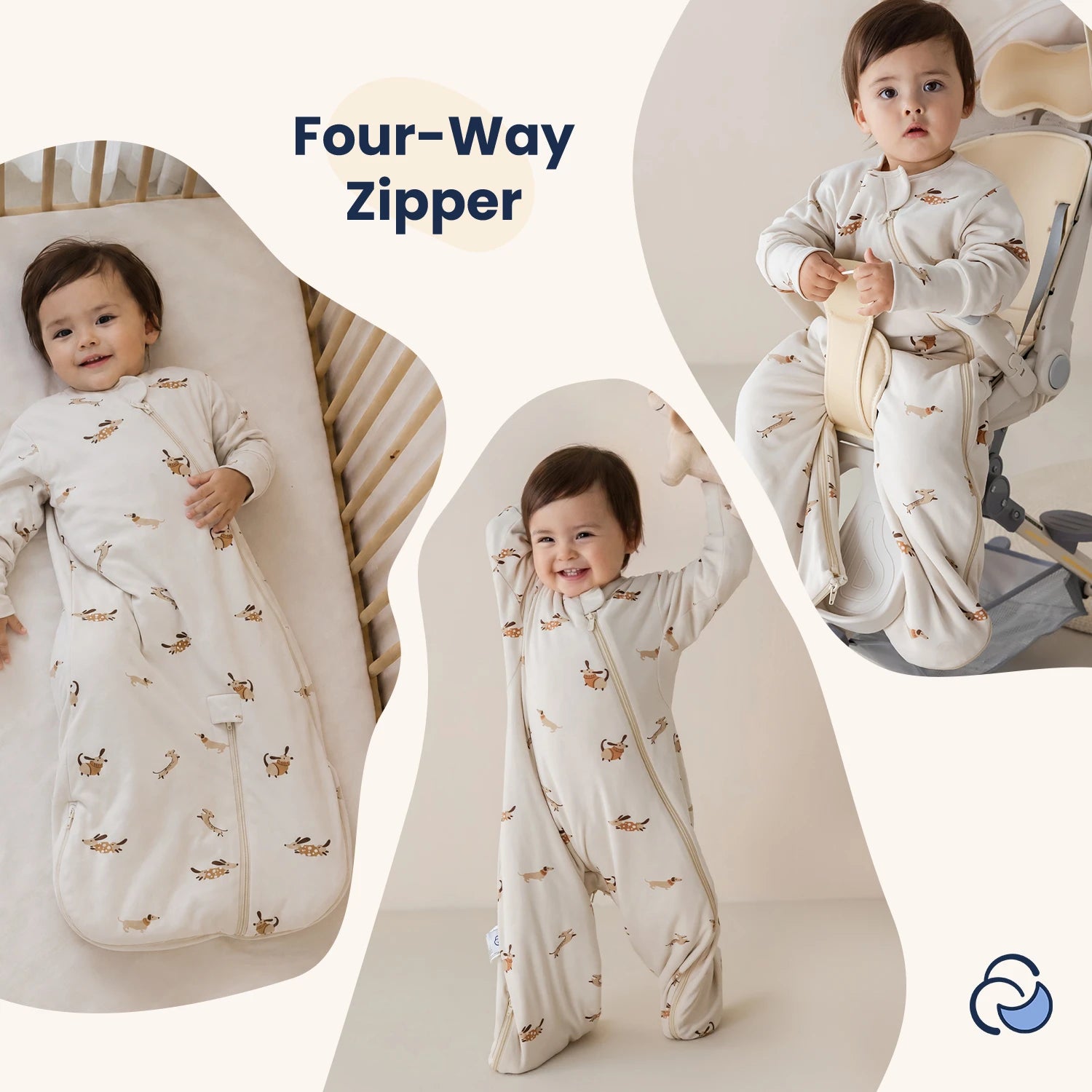
Read more
Why Does My Baby Wake Up Screaming From Naps?
Many parents wonder why their babies wake up screaming or crying hard from their naps. This is a common problem that can be distressing for both the baby and the parents. Several factors may be at ...
Read more
The 4-month sleep regression usually shows up between 3 and 5 months, and for most families, the hardest stretch lasts a few days to a few weeks. It is not a step backward. Your baby's sleep is mat...
Read more
Leave a comment
This site is protected by hCaptcha and the hCaptcha Privacy Policy and Terms of Service apply.