


Filters








Frequently Asked Questions
A 2.5 TOG sleep sack is made for rooms between 61–68°F (16–20°C). That is also the room temperature health authorities recommend for babies — the NHS advises keeping the room at about 16 to 20°C — which makes 2.5 TOG the standard choice for a correctly heated nursery through autumn and winter.
Our four ratings run end to end with no gaps: 0.5 TOG for 75–80°F (24–27°C), 1.0 TOG for 68–75°F (20–24°C), 2.5 TOG for 61–68°F (16–20°C), and 3.5 TOG for 57–61°F (14–16°C). Measure the room with a thermometer rather than going by season — the number that matters is the lowest temperature of the night, not the temperature at bedtime. Full explanation in our TOG Rating Guide.
One layer underneath is usually enough. Close to 68°F (20°C), a short-sleeve bodysuit. Around 64–66°F (18–19°C), a long-sleeve bodysuit. Close to 61°F (16°C), add footed pants or light pyjamas. The AAP puts it simply: your baby needs about one more layer than you would wear in the same room.
No hats indoors — a covered head is one of the fastest ways for a baby to overheat. If your room sits between two TOG bands, change the layer underneath before you change the sleep sack. Full breakdown in What to Wear Under a Sleep Sack.
TOG measures thermal insulation — how much warmth a fabric holds — not how thick it is. A 2.5 TOG sleep sack is rated to keep a baby comfortable in a 61–68°F (16–20°C) room, whether it looks bulky or not.
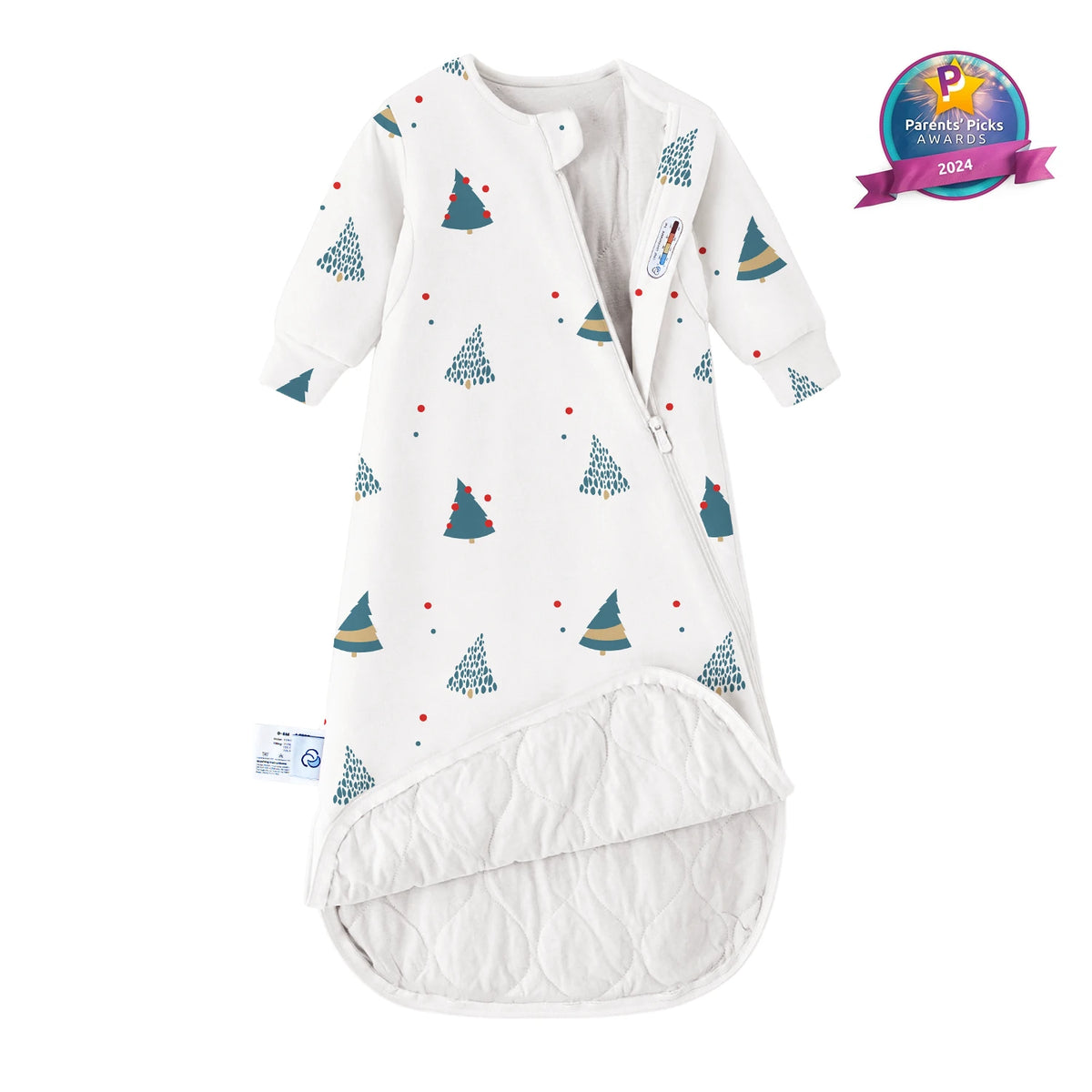
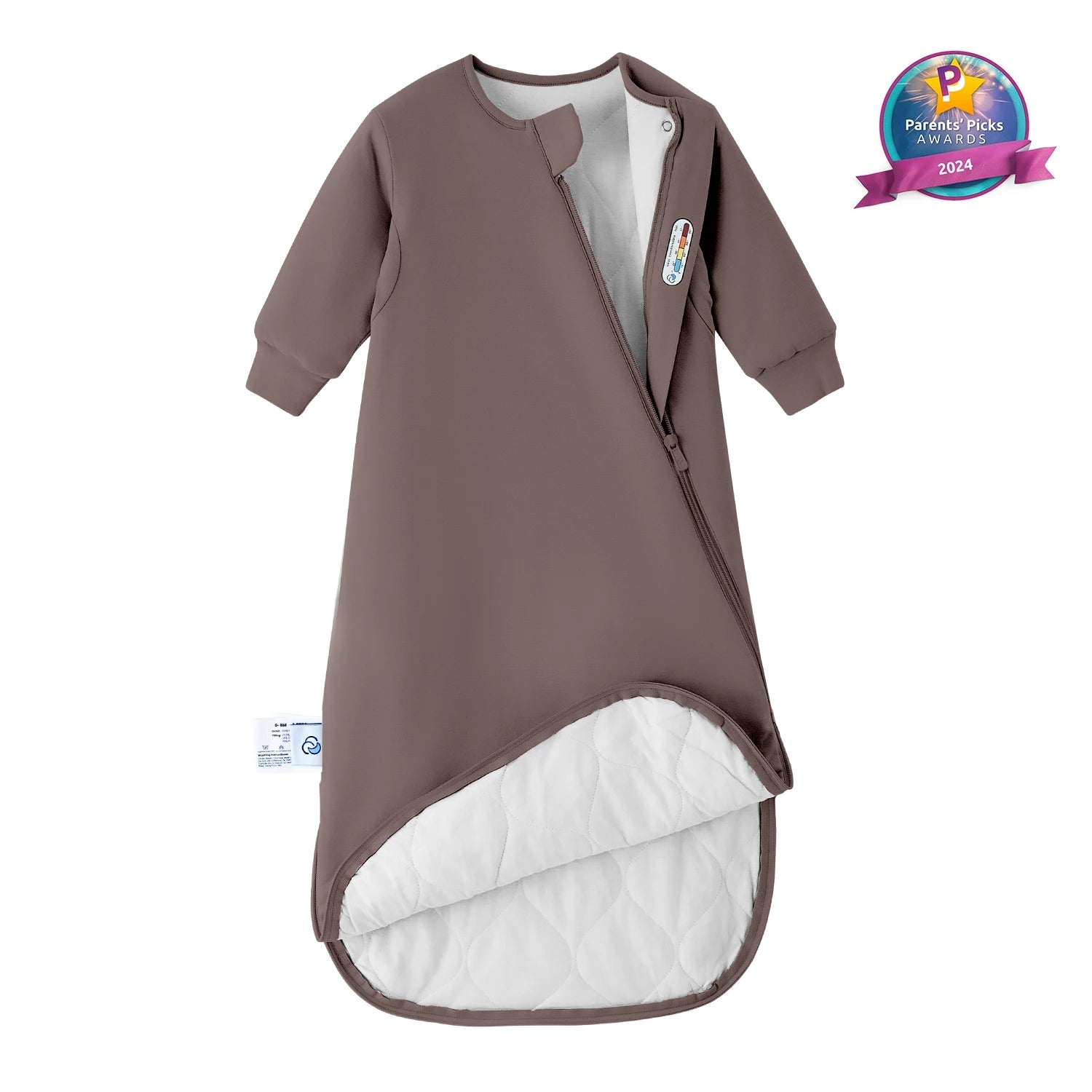
That distinction matters when you compare products. Kaiya Baby reaches 2.5 TOG with a fill of 30% camel wool and 70% SORONA® polyester inside a 100% GOTS certified organic cotton shell, so the warmth comes from the fibre rather than from bulk. More in Best Material for a Sleep Sack.
Switch when the room's lowest overnight temperature drops below 68°F (20°C). Most bedrooms feel comfortable at bedtime and then cool down before dawn, and it is that early-morning low your baby actually sleeps through — so measure it with a room thermometer instead of going by the month.
If your baby wakes damp or flushed, move down a TOG or remove a layer. If they wake as the room cools toward morning, move up. See Ideal Room Temperature for Newborns.
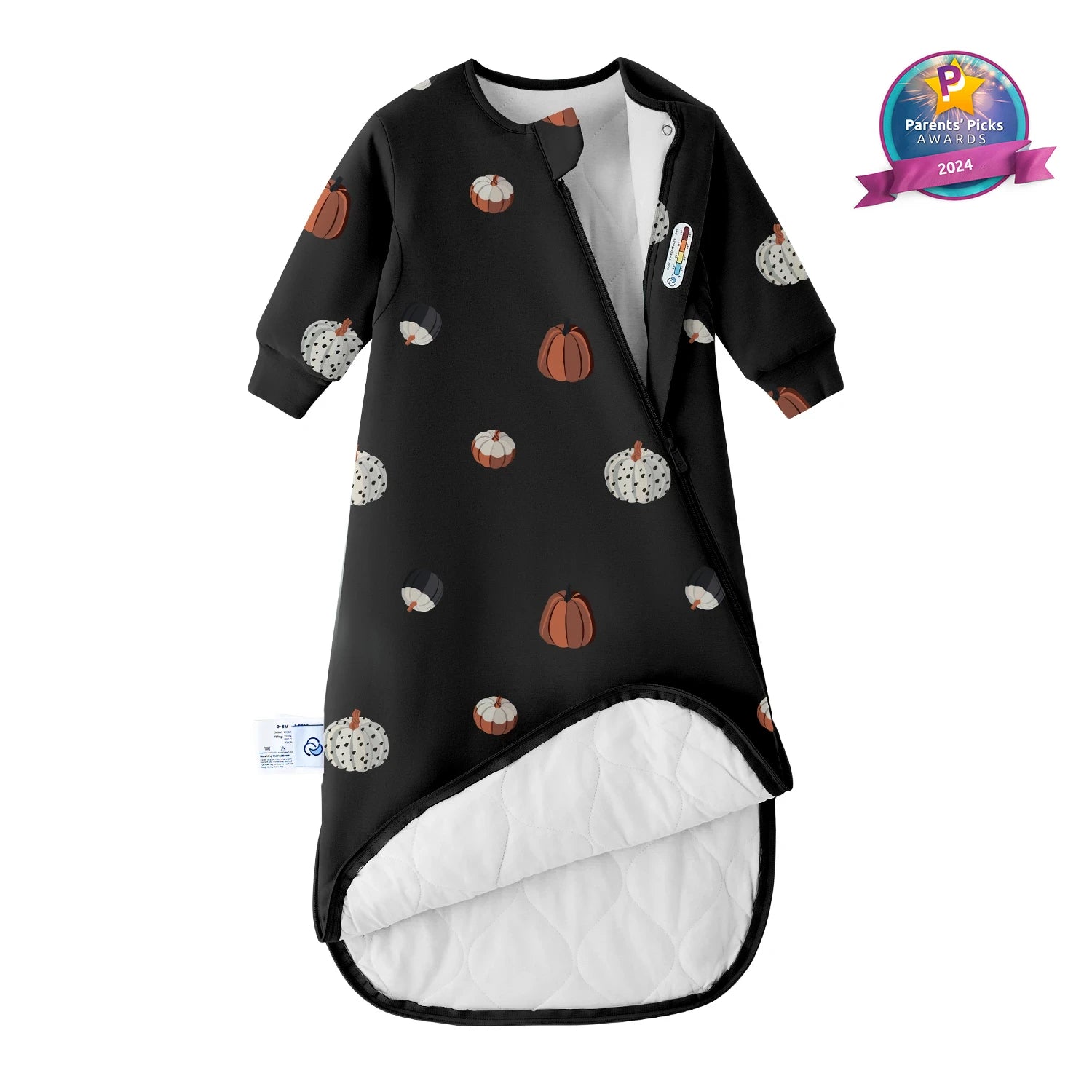
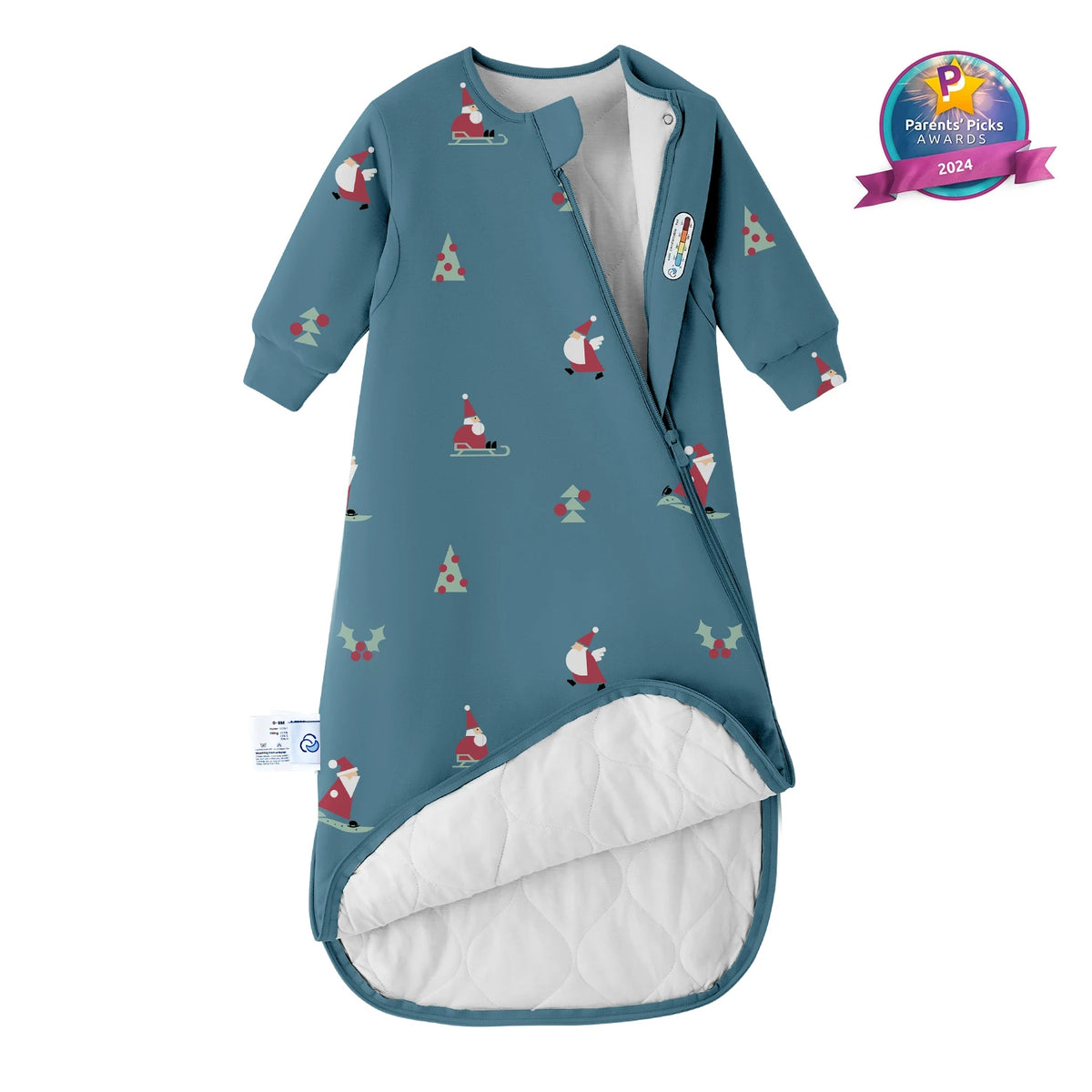
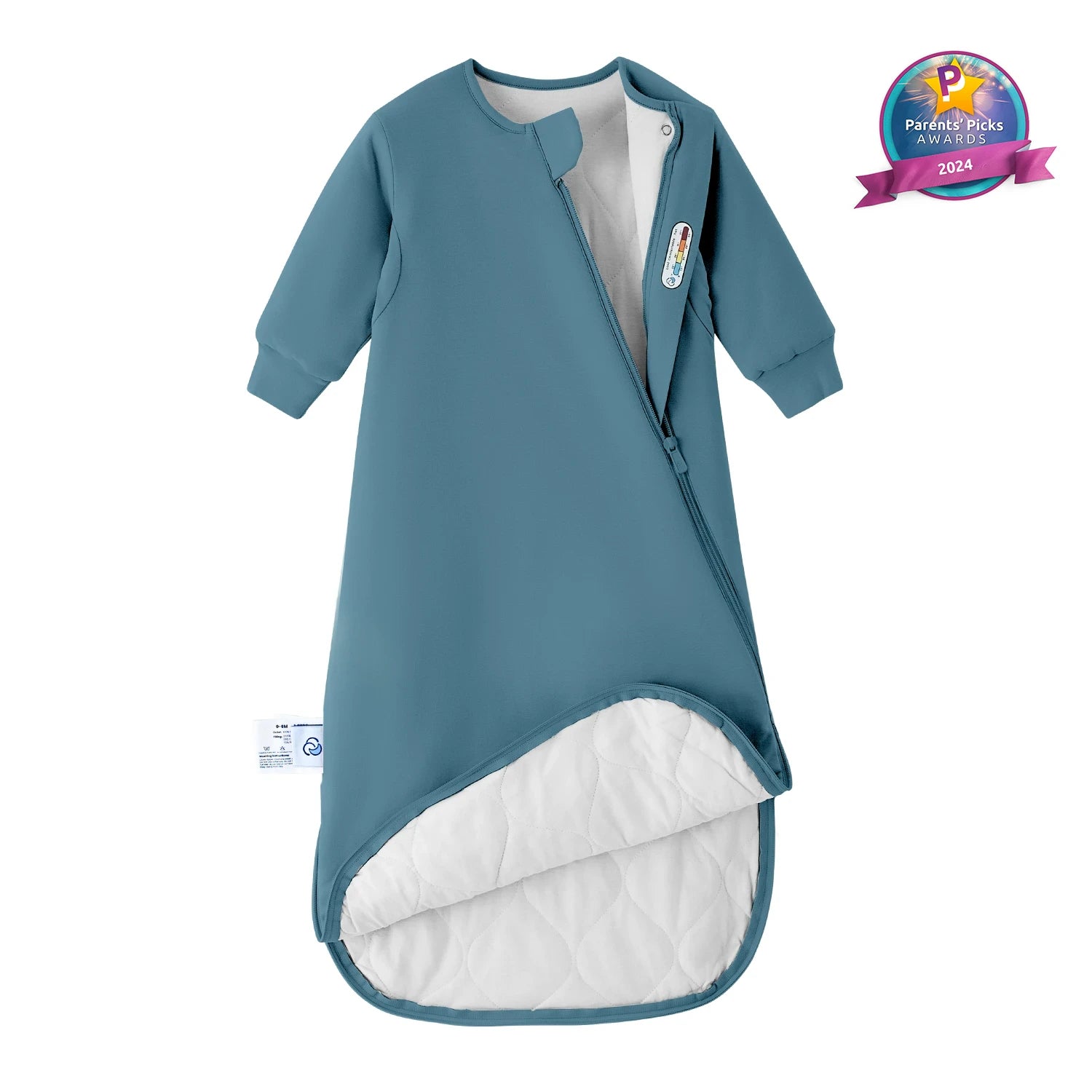
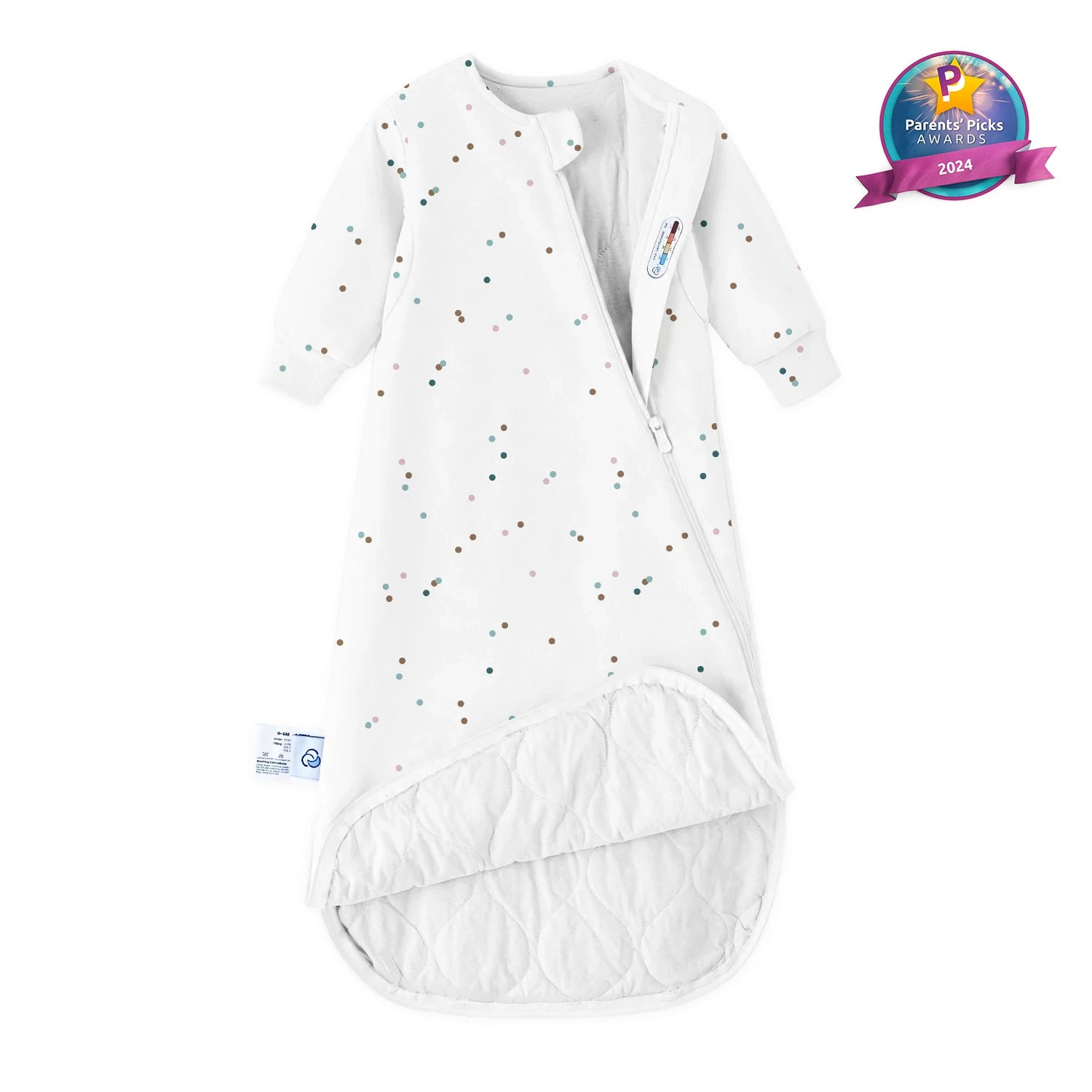
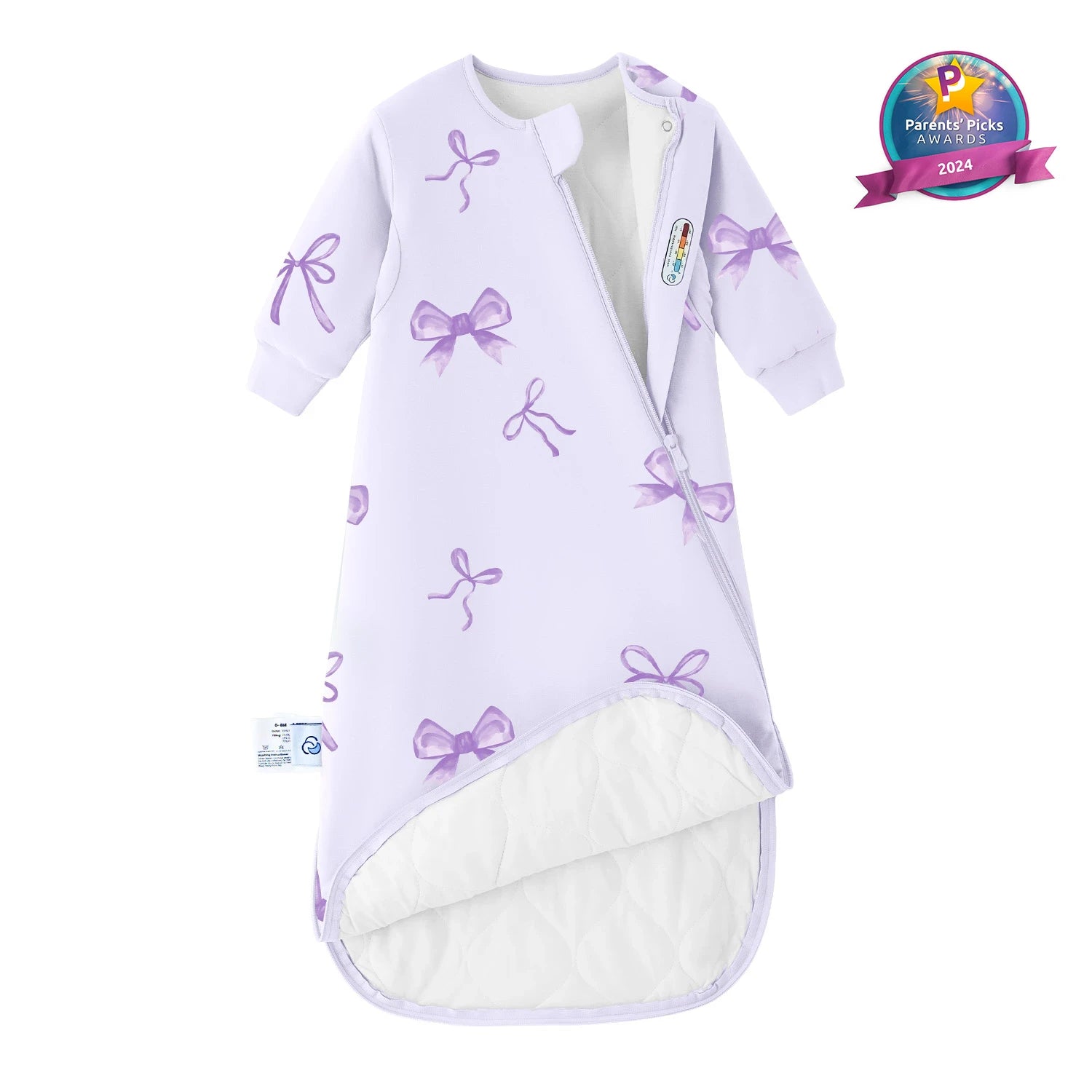
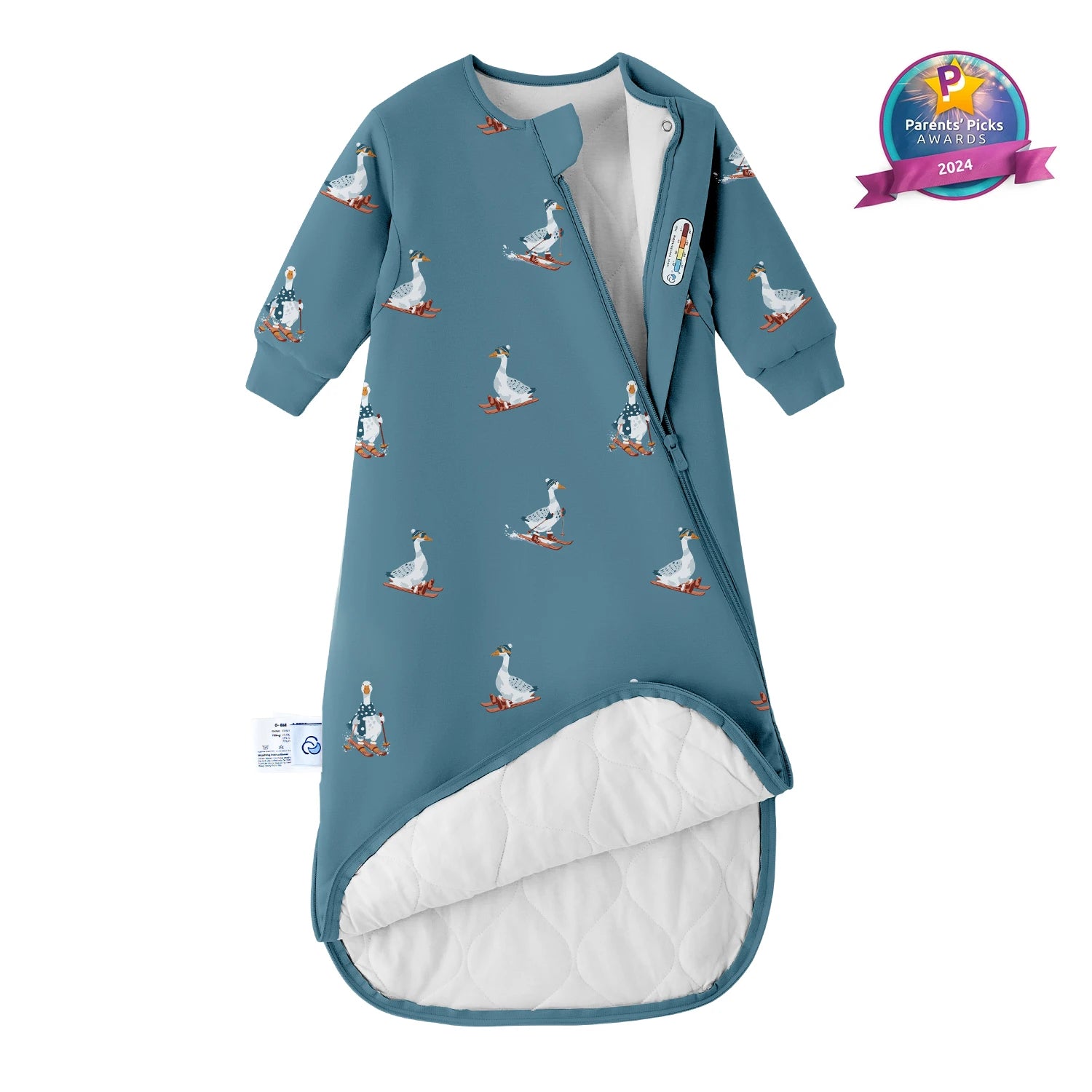
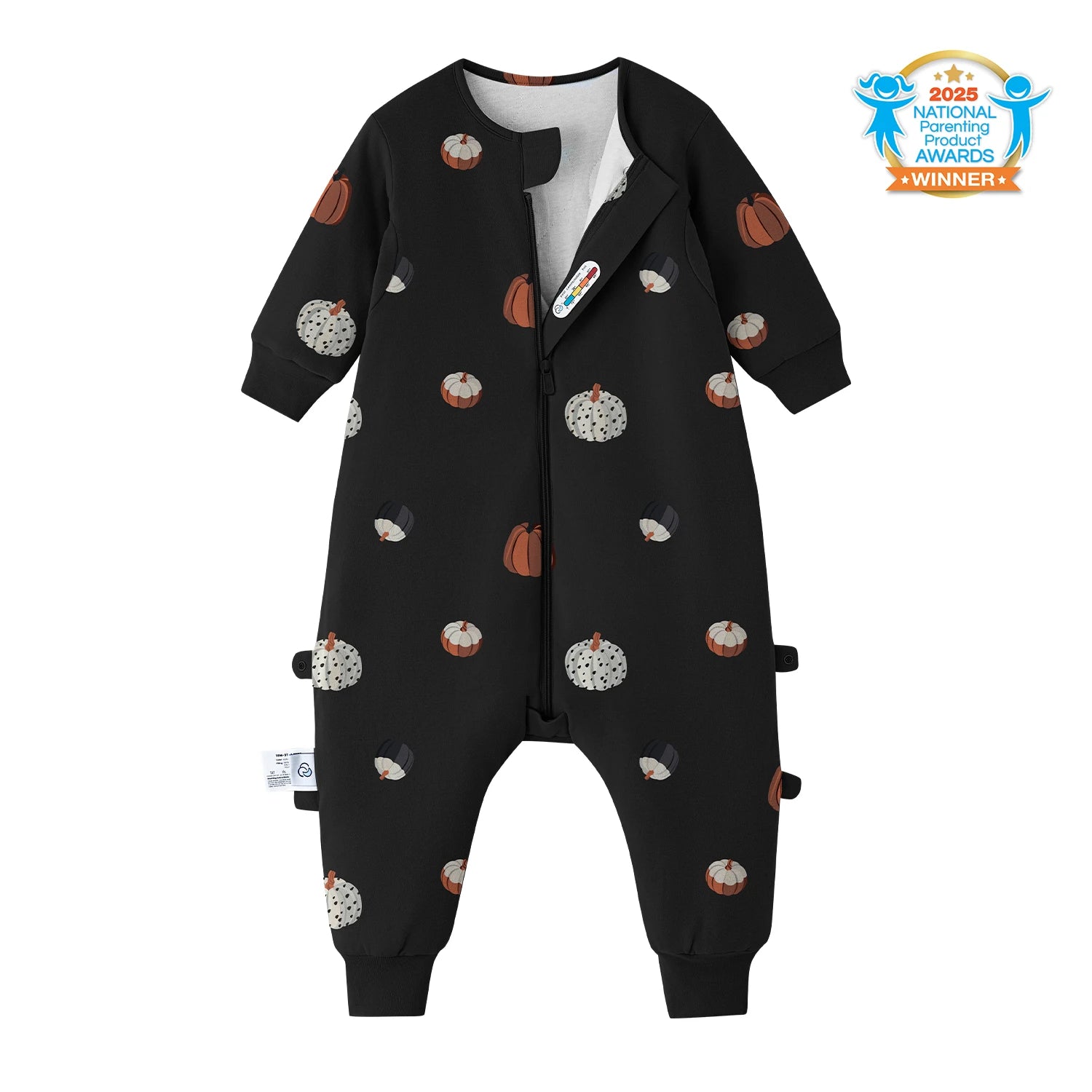
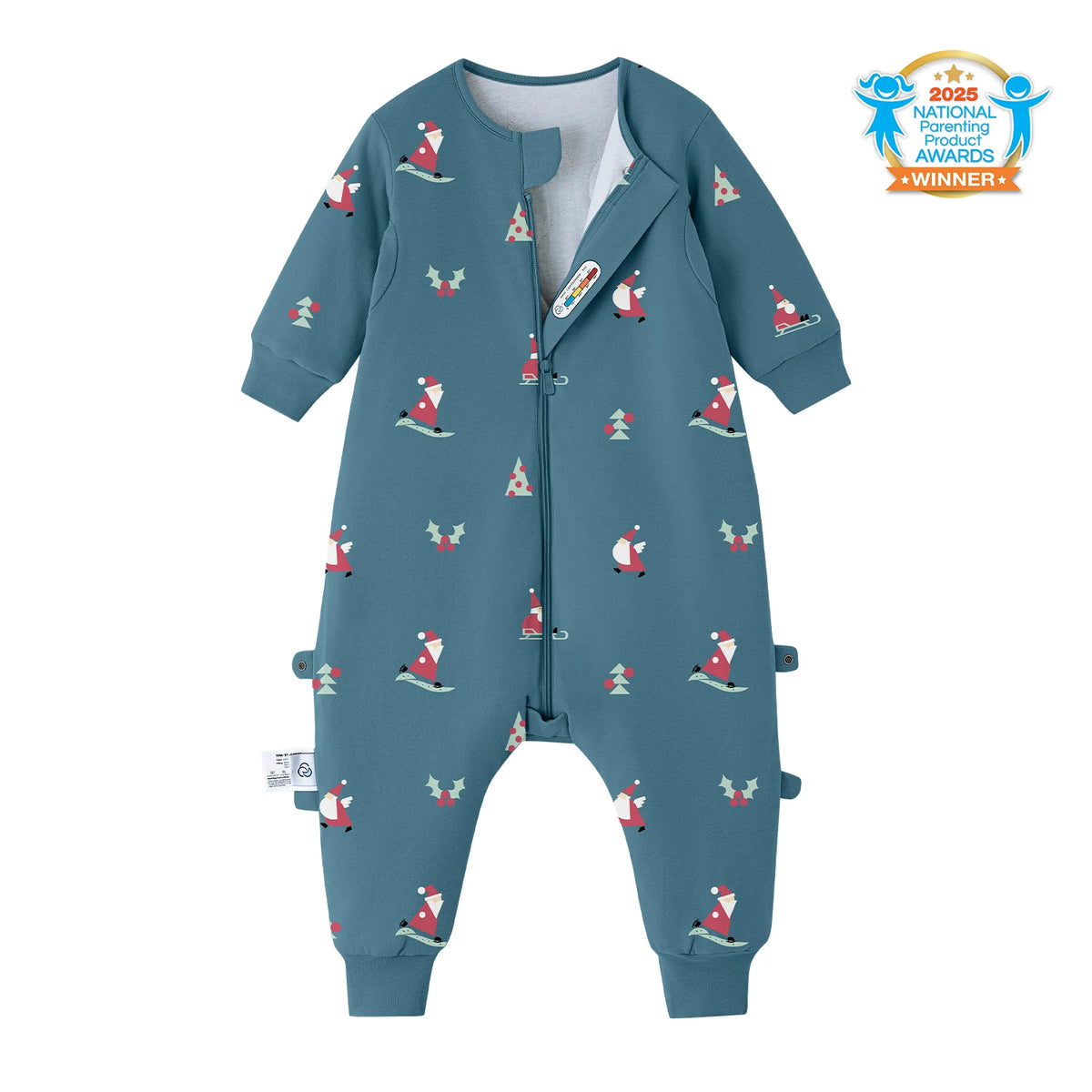
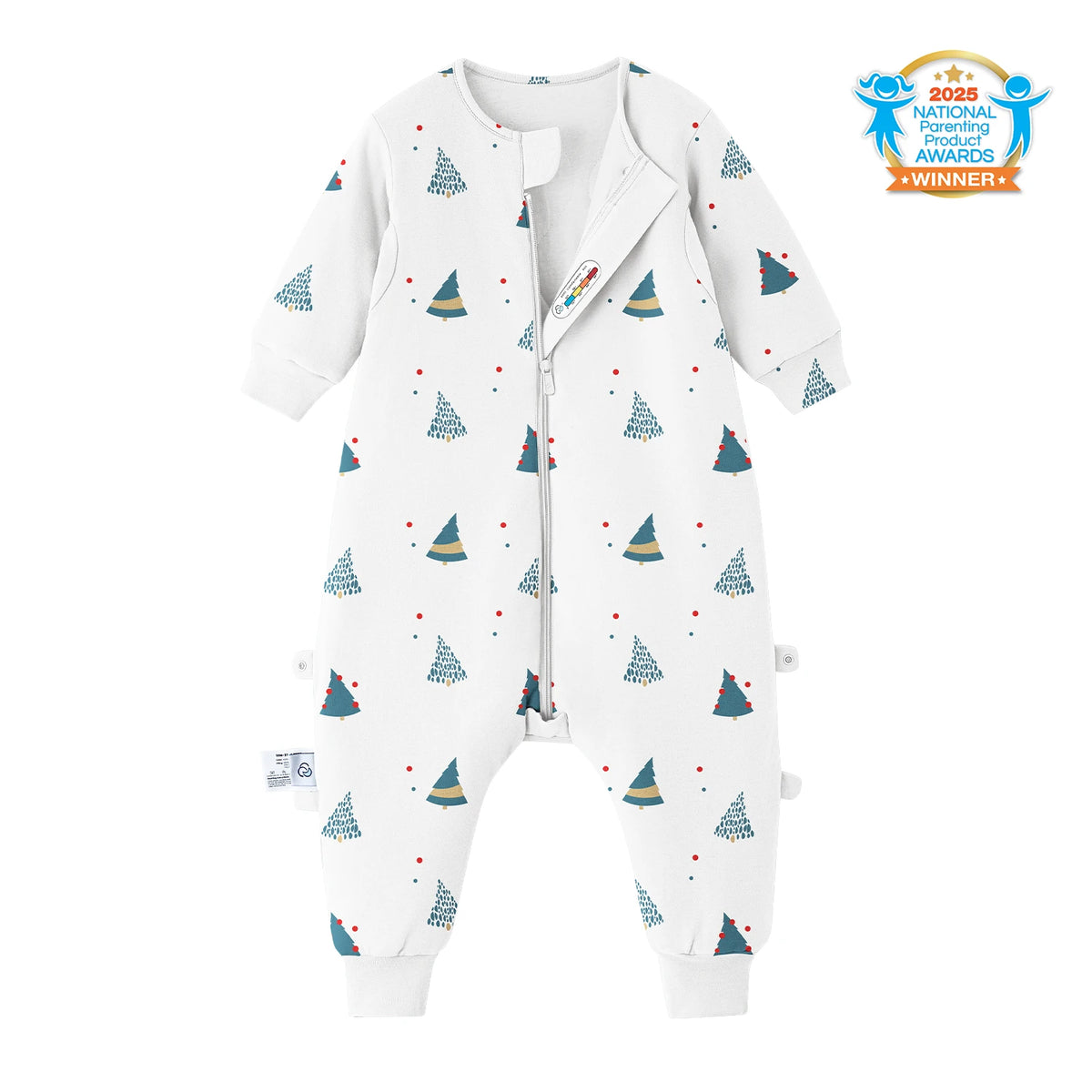
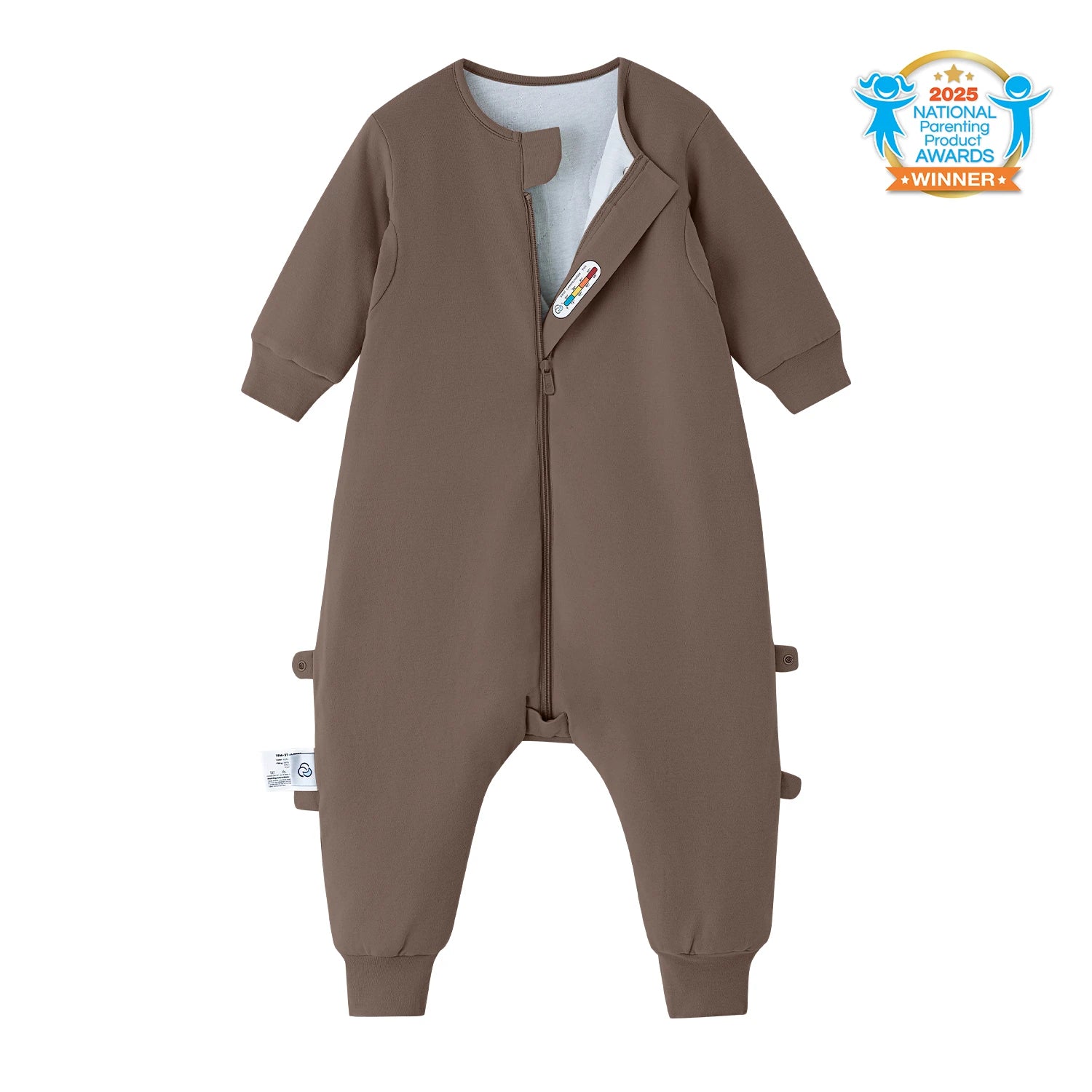
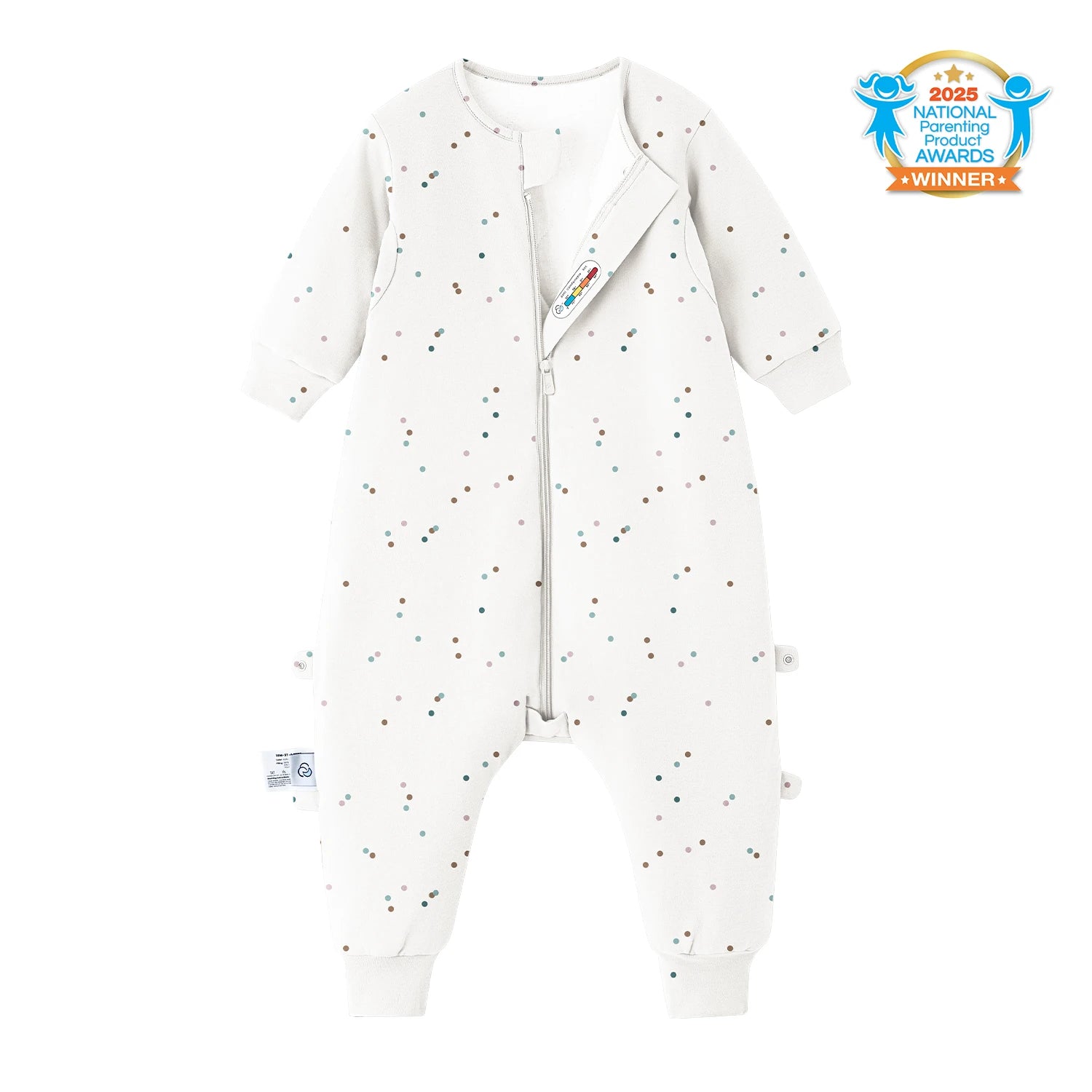
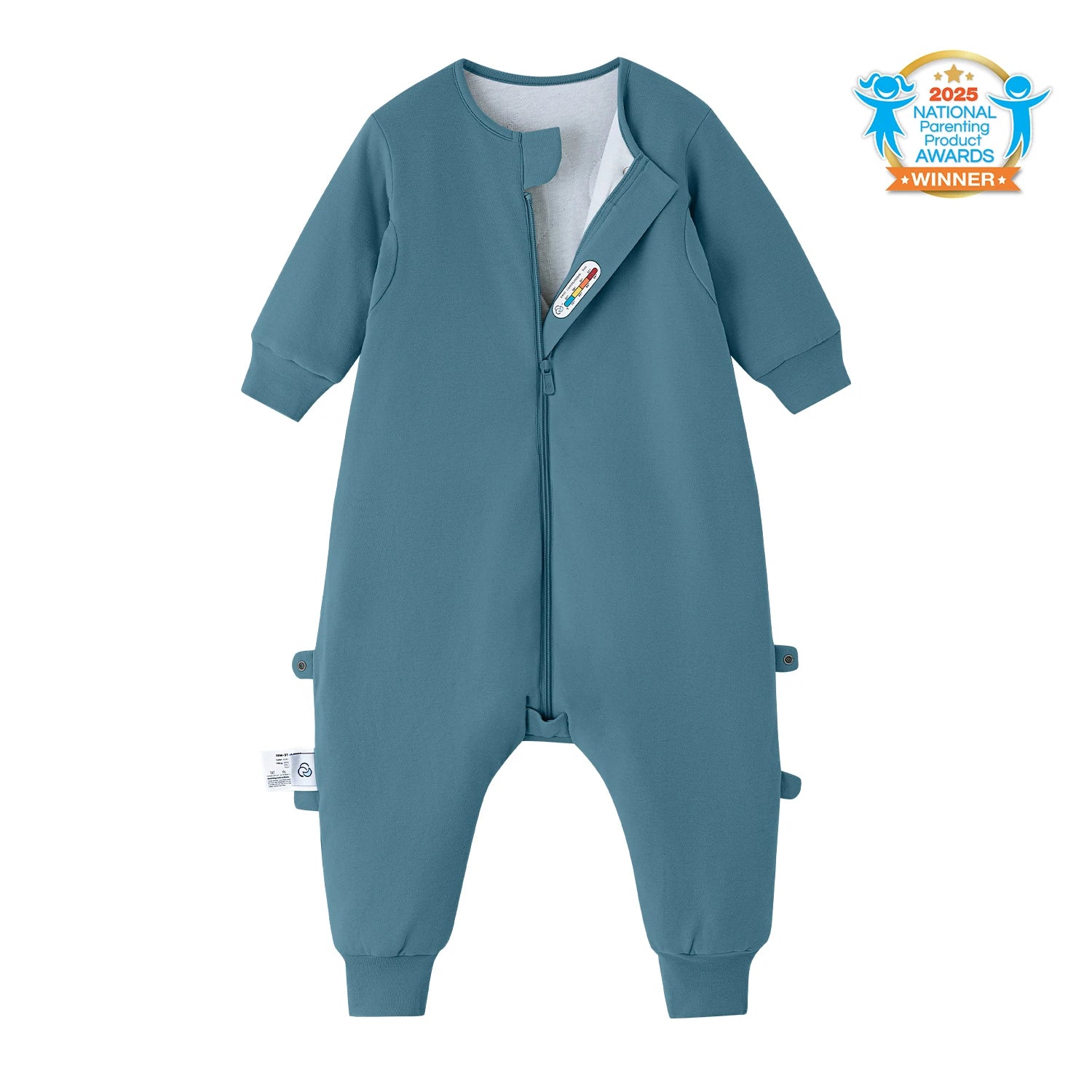
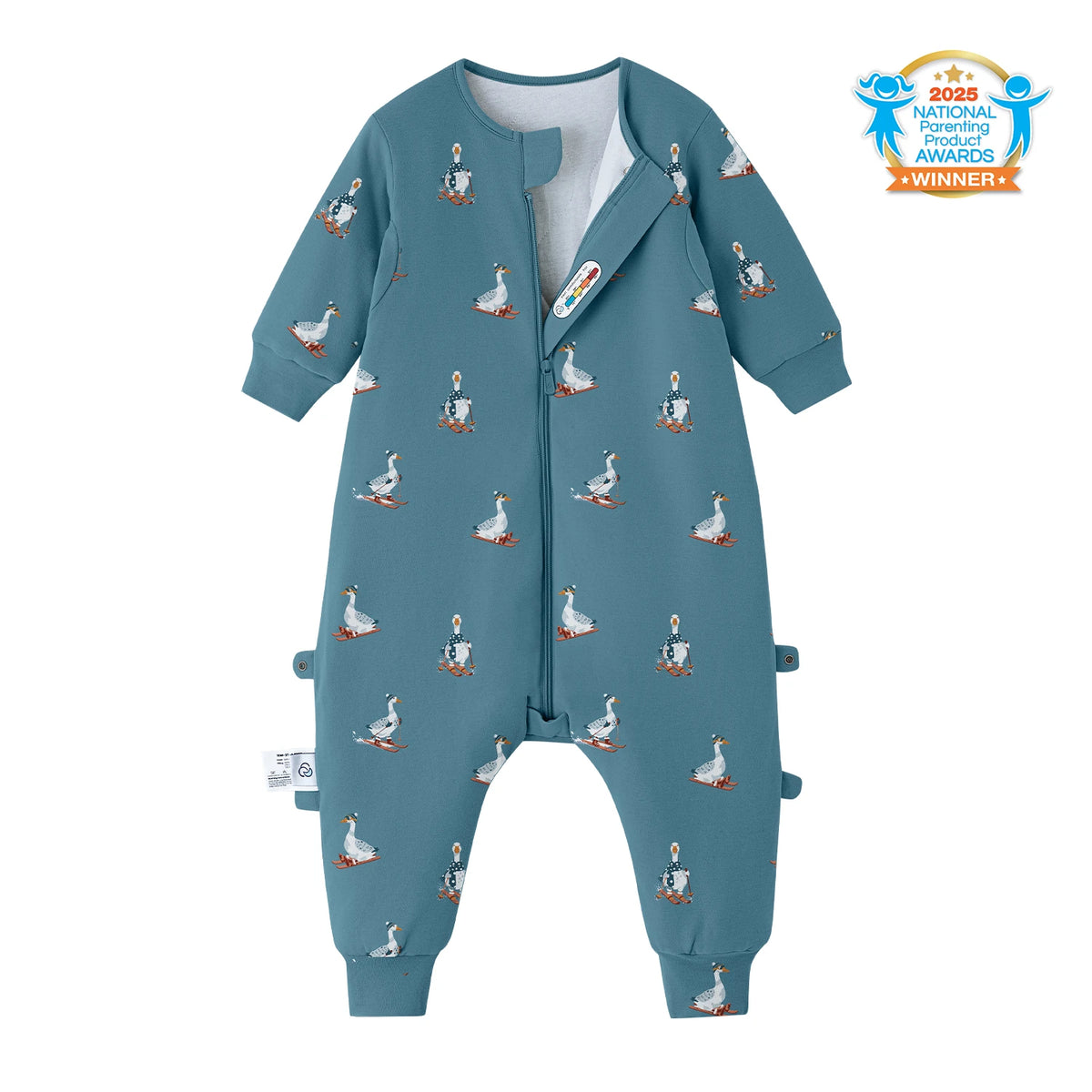
Only if the room is warmer than the sack is rated for, or there are too many layers underneath. Inside 61–68°F (16–20°C) with a single layer, 2.5 TOG gives the right amount of warmth. Every Kaiya Baby sleep sack carries a temperature-sensing sticker so you can check without touching your baby.
Blue means a little cold, yellow means comfortable, orange or brown means too warm. The usual signs of overheating are a damp neck or back, flushed cheeks and fast breathing — hands and feet are normally cooler and are not a reliable guide. The AAP also warns against overheating during sleep; more detail in Is My Baby Too Hot While Sleeping?
Usually not. 2.5 TOG is rated up to 68°F (20°C), and most summer bedrooms sit well above that. Above 68°F move to 1.0 TOG (68–75°F / 20–24°C); in genuinely hot weather use 0.5 TOG (75–80°F / 24–27°C).
Our four TOG bands meet end to end with no gaps, so whatever your room reads, one rating covers it. If you run air conditioning and the room genuinely holds below 68°F overnight, 2.5 TOG still works in summer. See Best Summer Sleep Sack.
Go by the room's overnight low. 61–68°F (16–20°C) calls for 2.5 TOG; 57–61°F (14–16°C) calls for 3.5 TOG. The two bands meet exactly at 61°F (16°C), so there is no overlap to guess at.
If your room sits right on the boundary, choose 2.5 TOG and add a warmer layer underneath — adjusting the layer is easier to get right than committing to a warmer sack you can only use for part of the year.
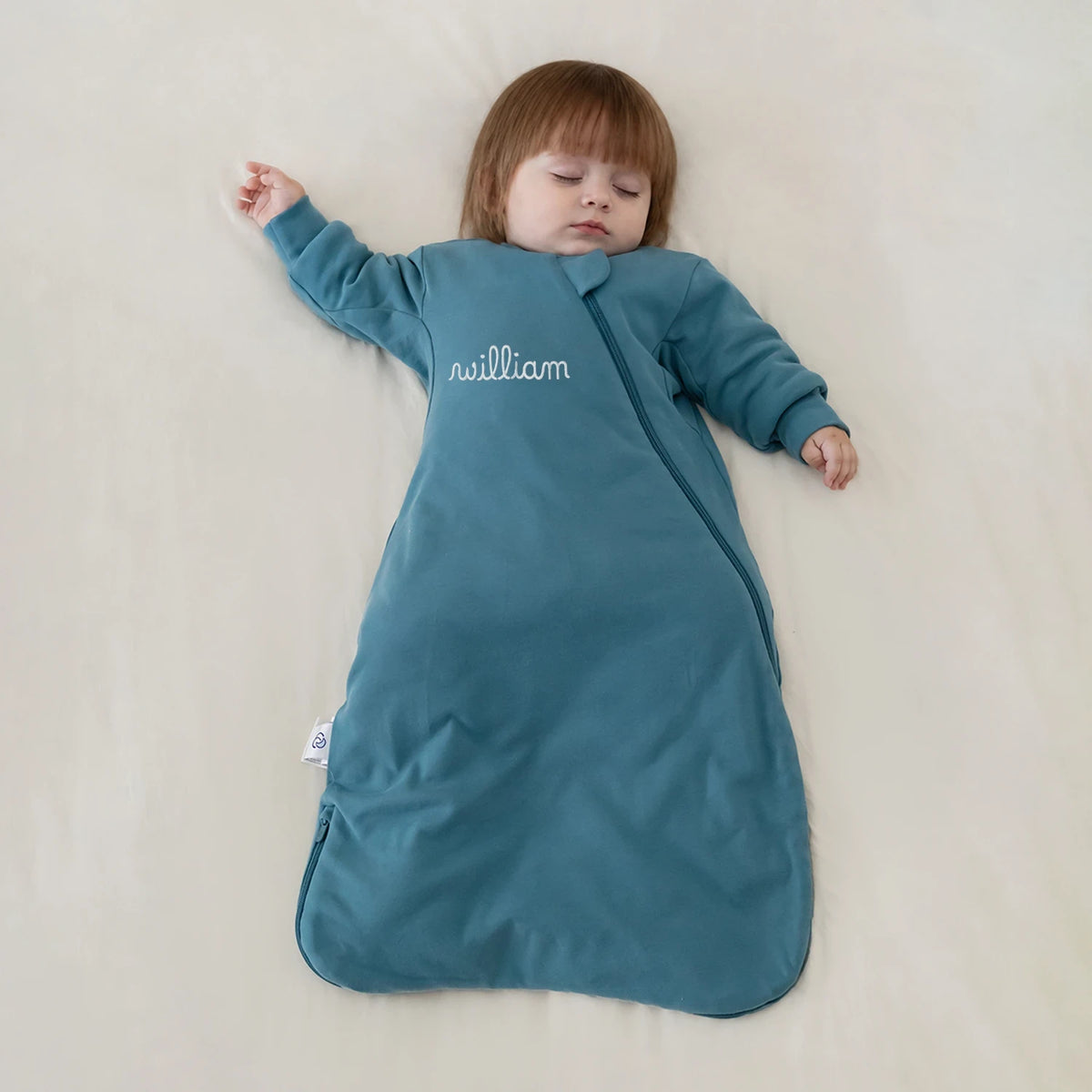
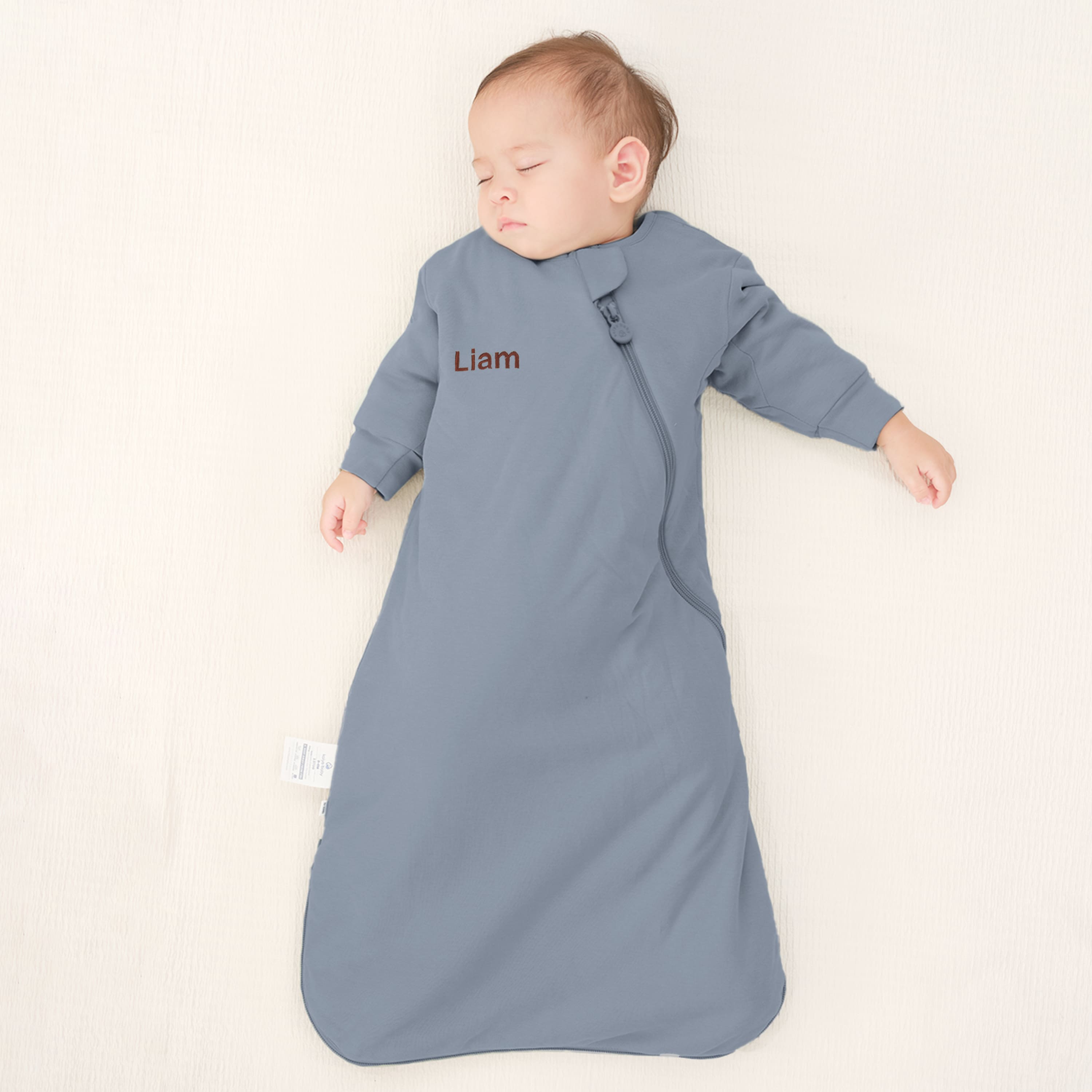
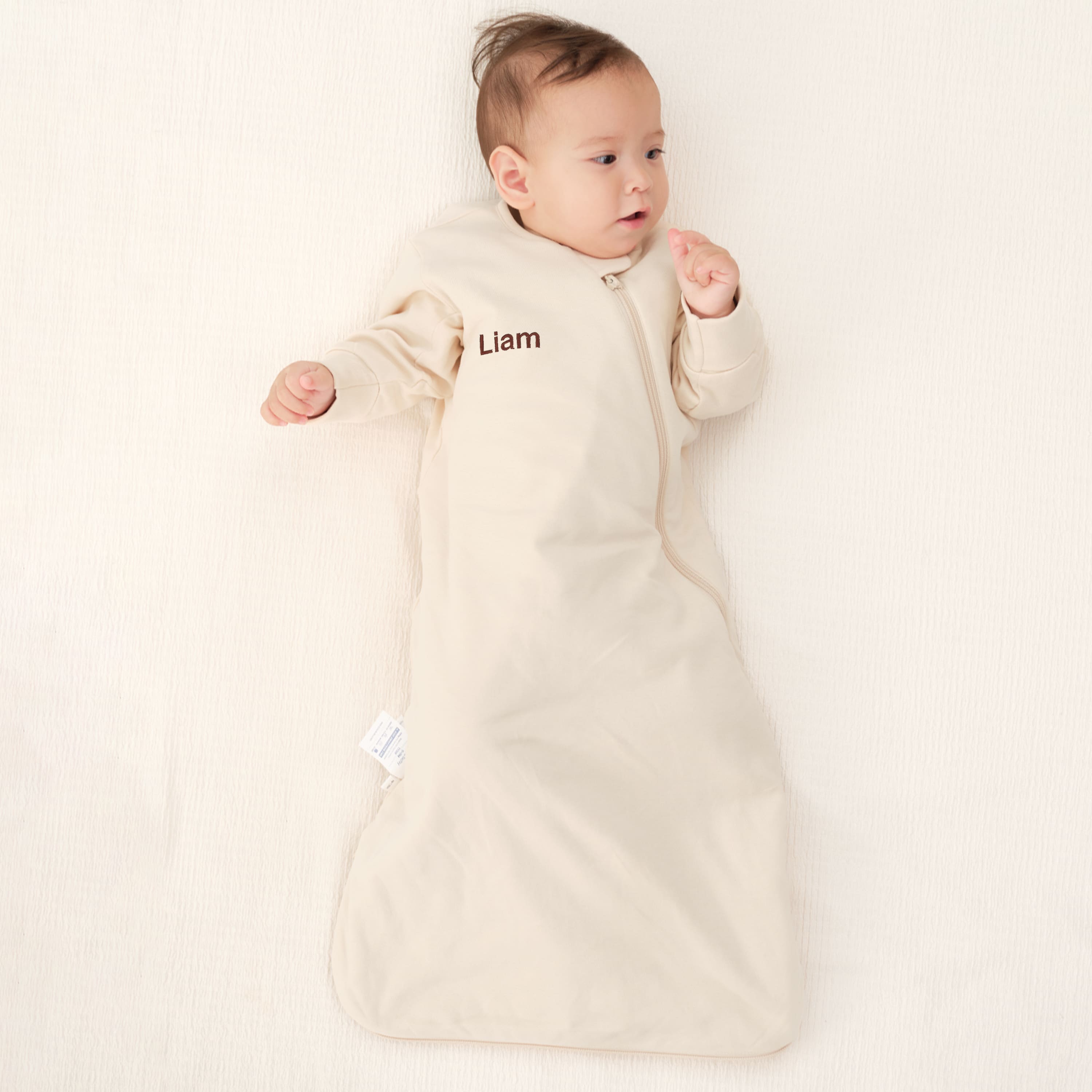
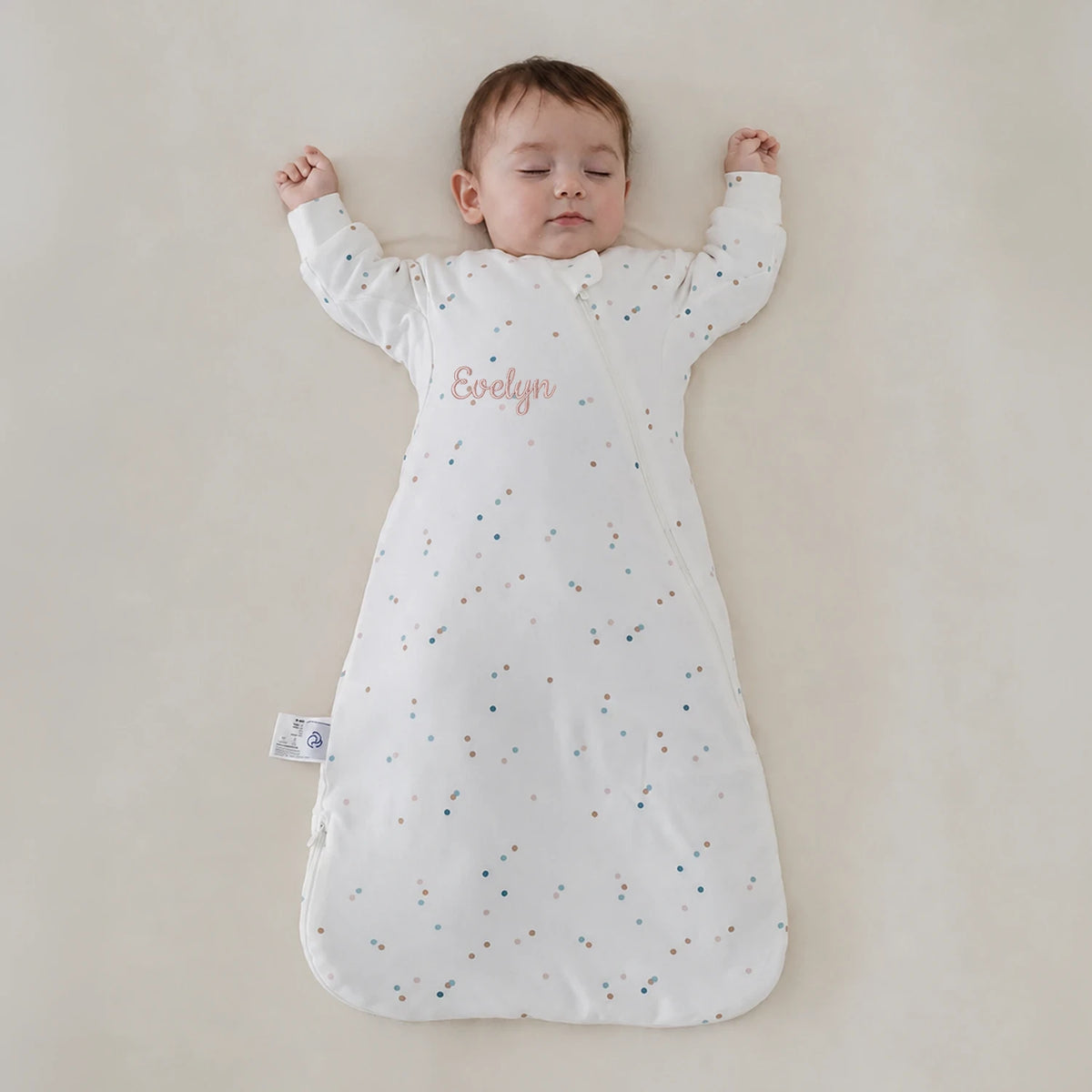
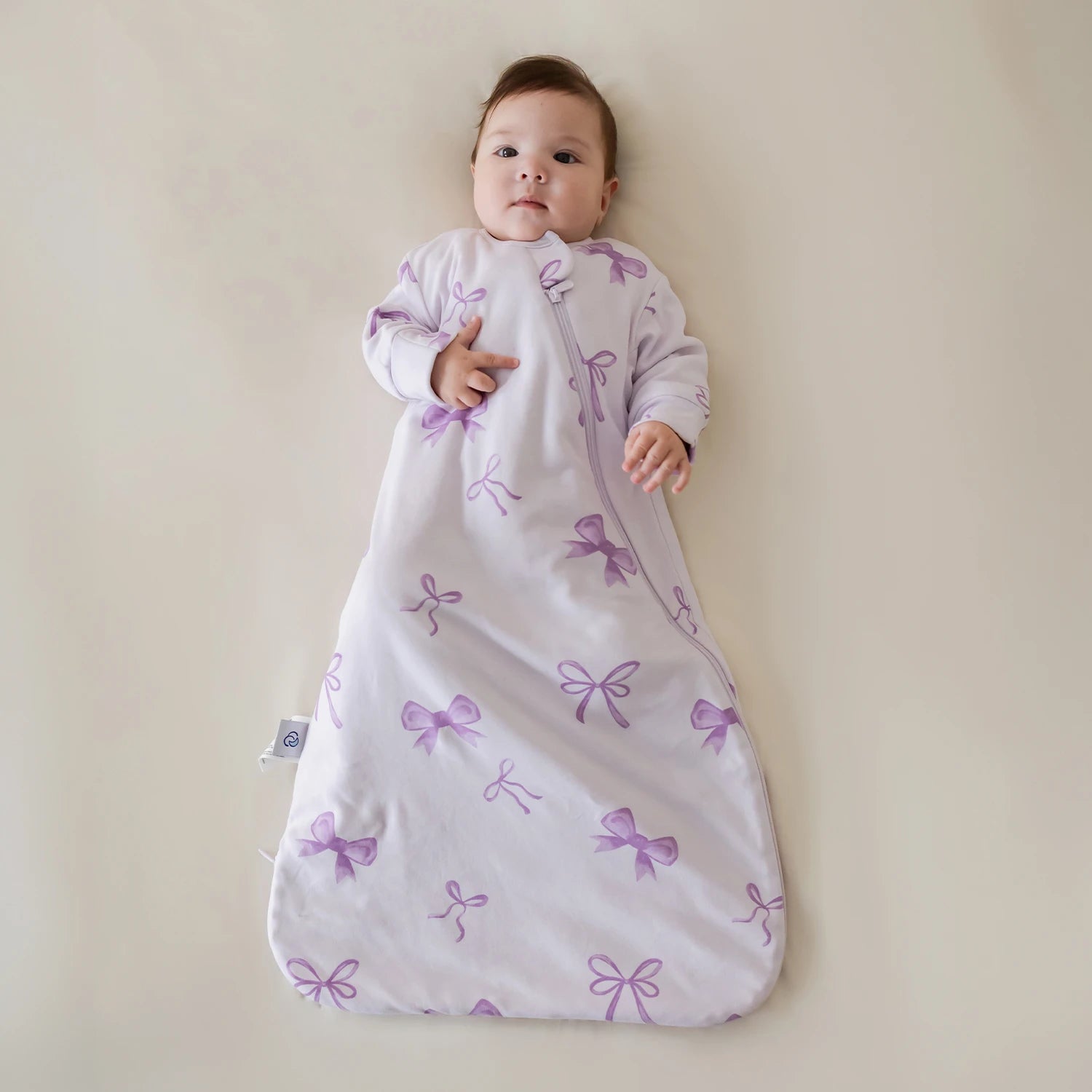
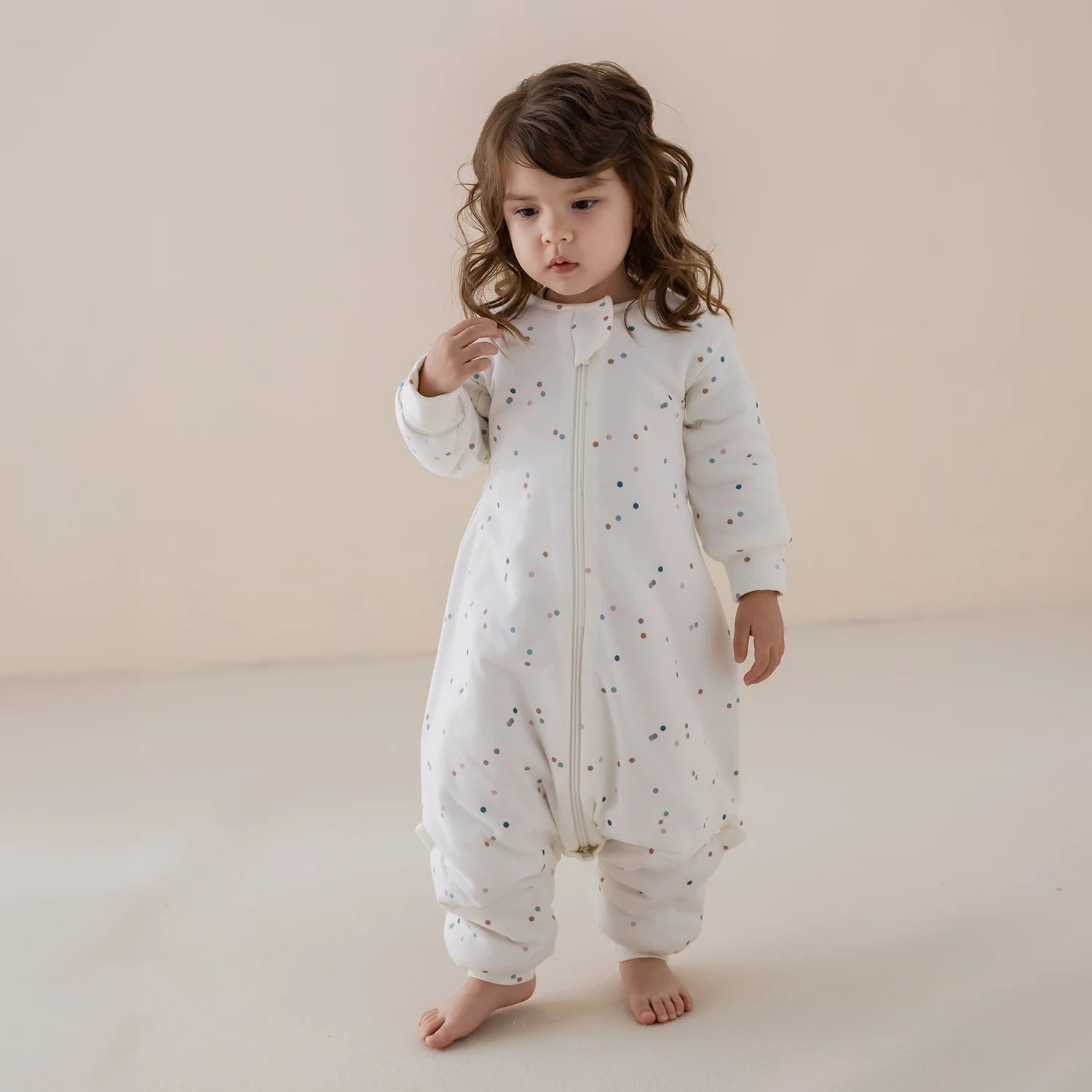
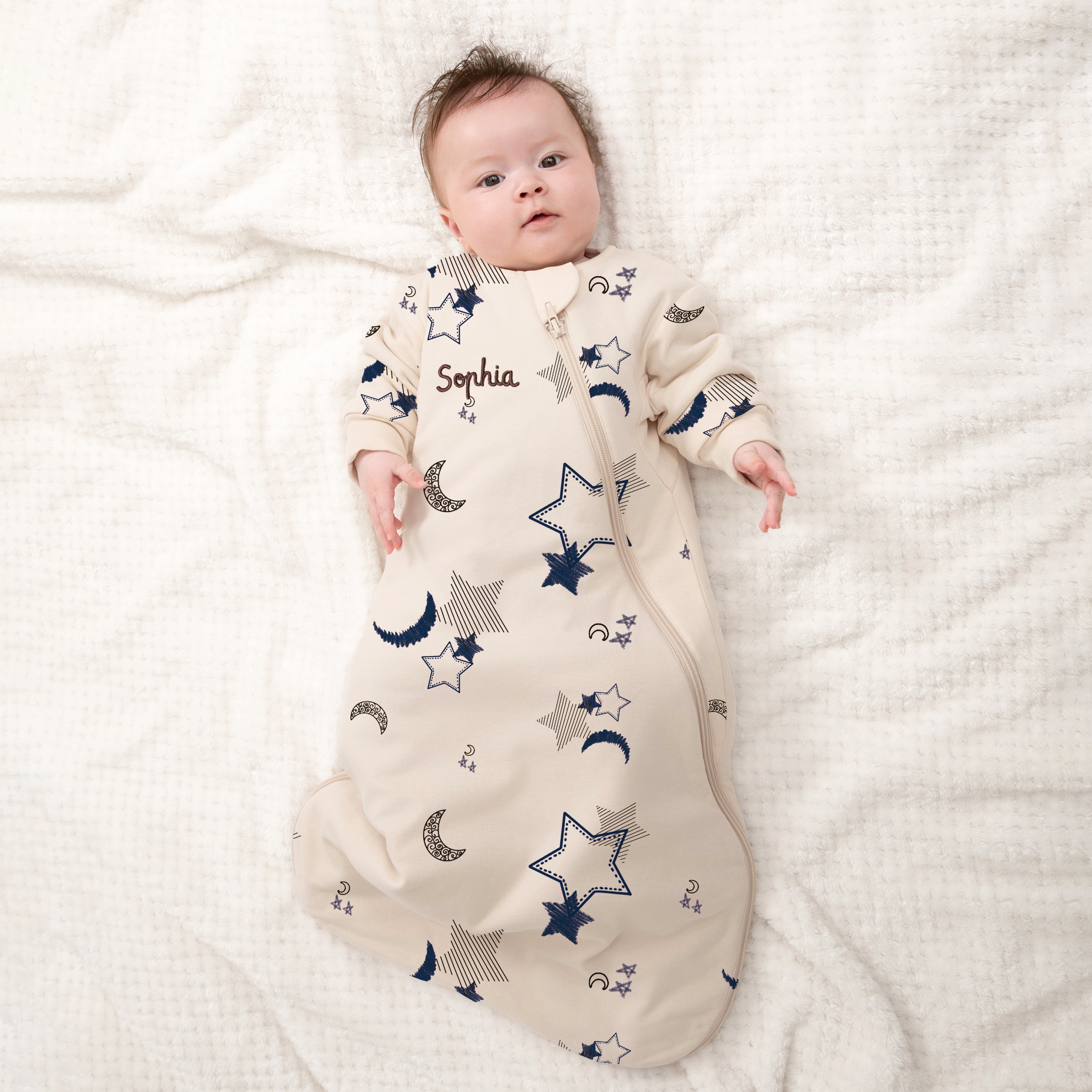
Yes, from 7 lbs (3 kg), provided the fit is right. Our smallest size, 0–6 months, fits babies 21–27" (53–69 cm) and 7–18 lbs (3–8 kg). The neckline should sit close without slipping up toward the chin, the armholes should feel secure, and there should be room below for kicking and stretching.
A sleep sack has no hood and no cords, and it replaces loose bedding in the crib, which is what safe-sleep guidance asks for — see the AAP's safe sleep guidance. Shell and lining are 100% GOTS certified organic cotton; see Safety & Certifications.
Choose by height and weight rather than age, because babies of the same age vary a lot, and fit keeps a sleep sack safe. Our 0–6 month size fits 21–27" (53–69 cm) and 7–18 lbs (3–8 kg); 6–18 months fits 26–33" (66–84 cm) and 16–27 lbs (7–12 kg); 18–36 months fits 32–39" (81–99 cm) and 25–36 lbs (11–16 kg).
Resist sizing up for longer wear. Avoid extra fabric around the chest and neckline; extra room below the hips is fine and even helpful. Full chart in our Size Chart Guide and How Should a Sleep Sack Fit?
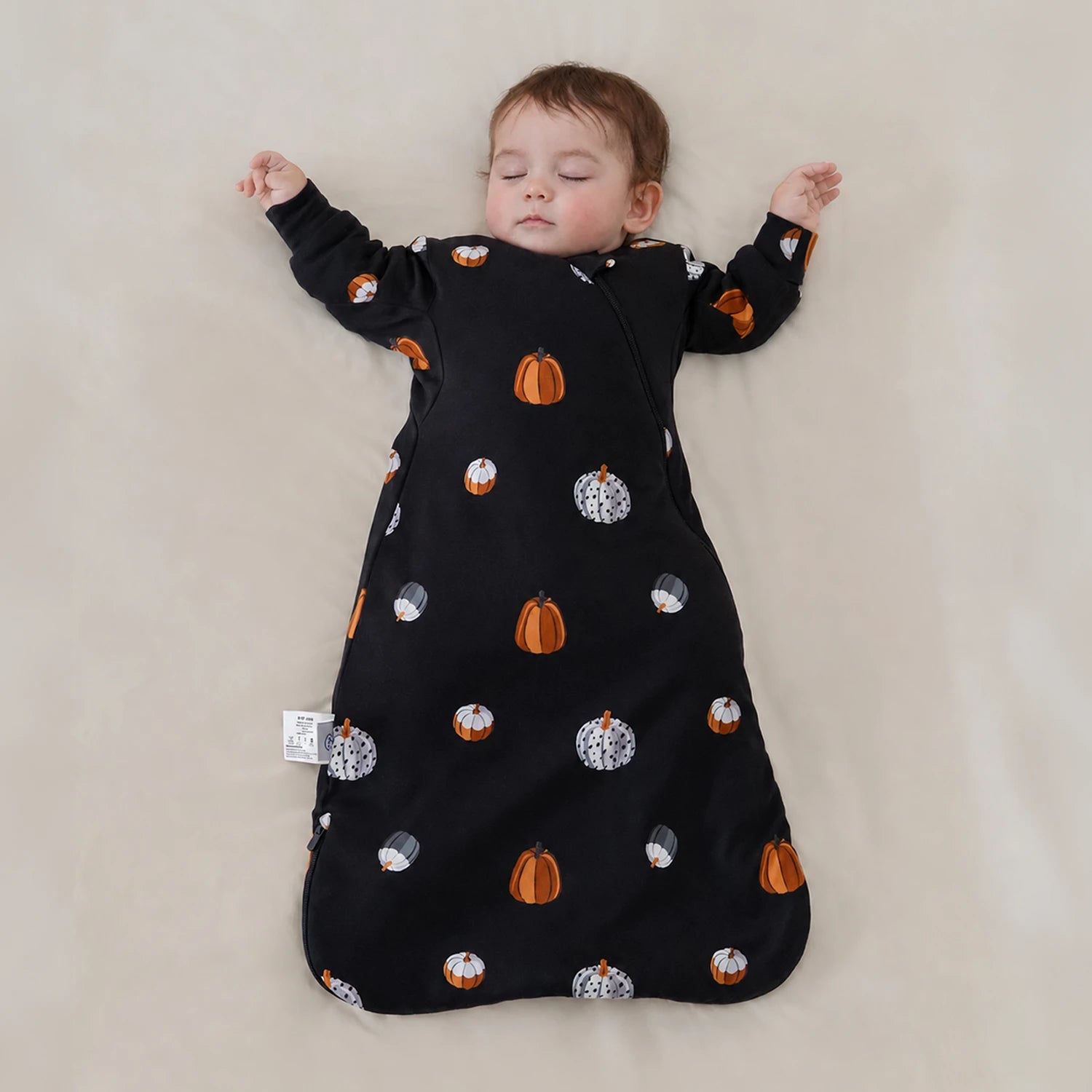
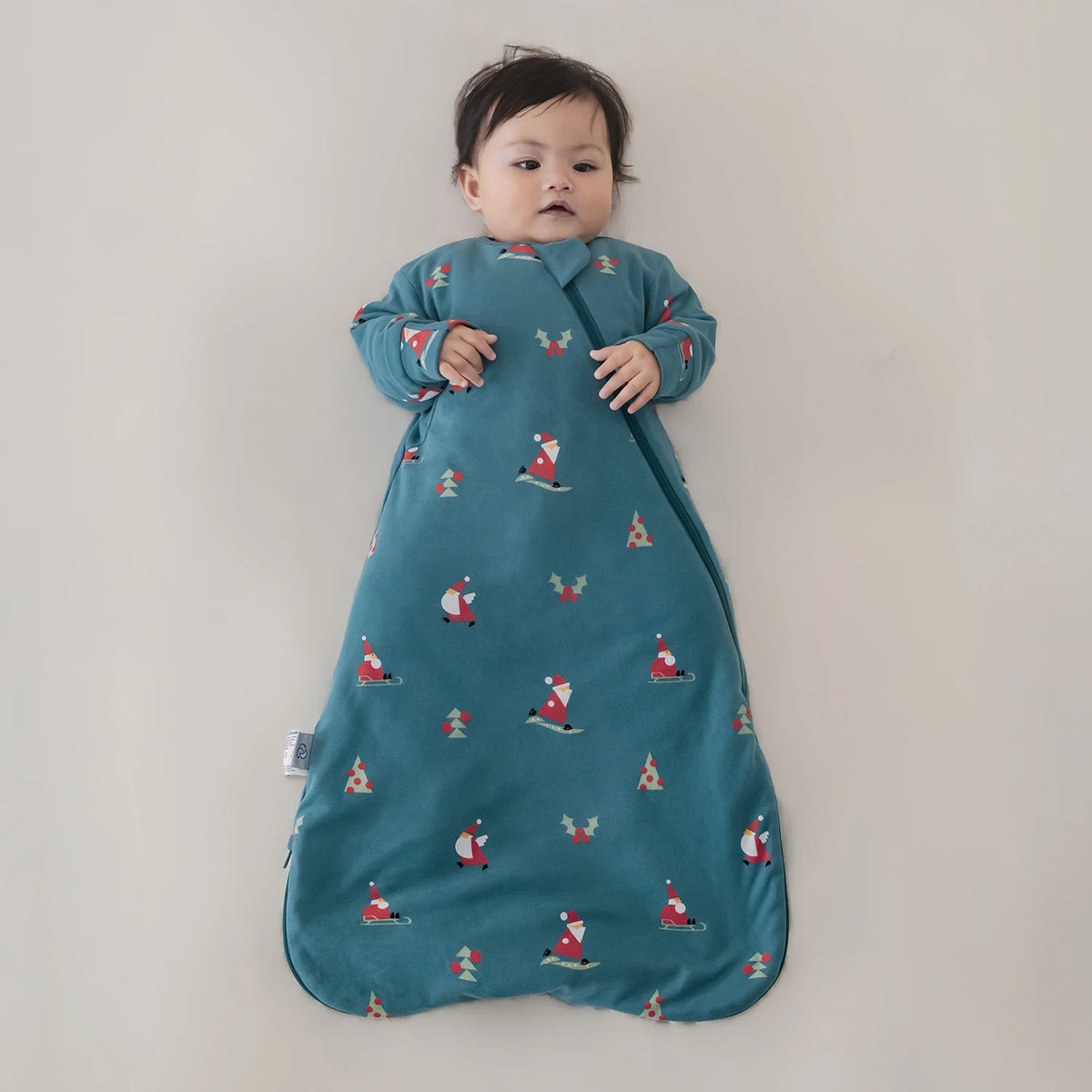
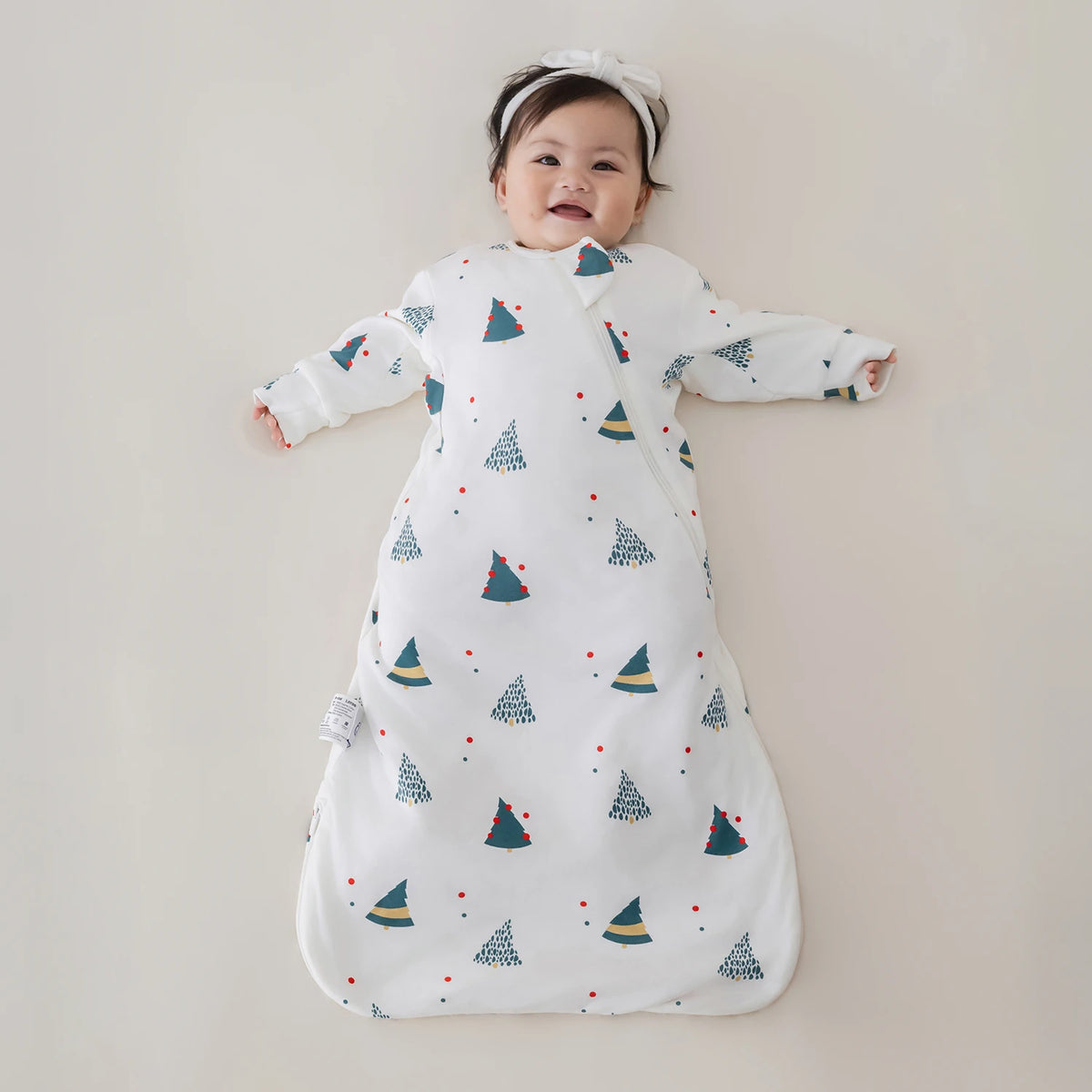
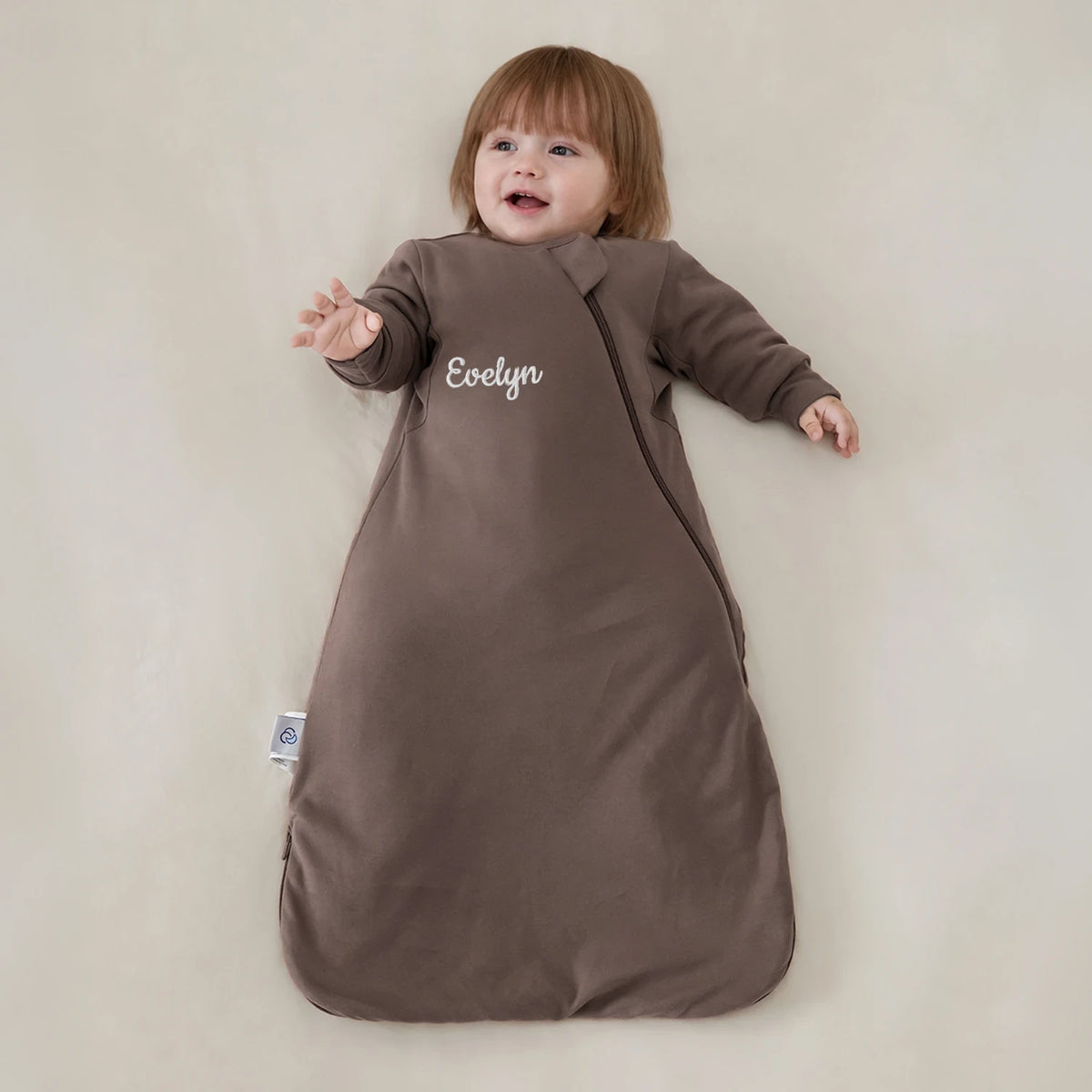
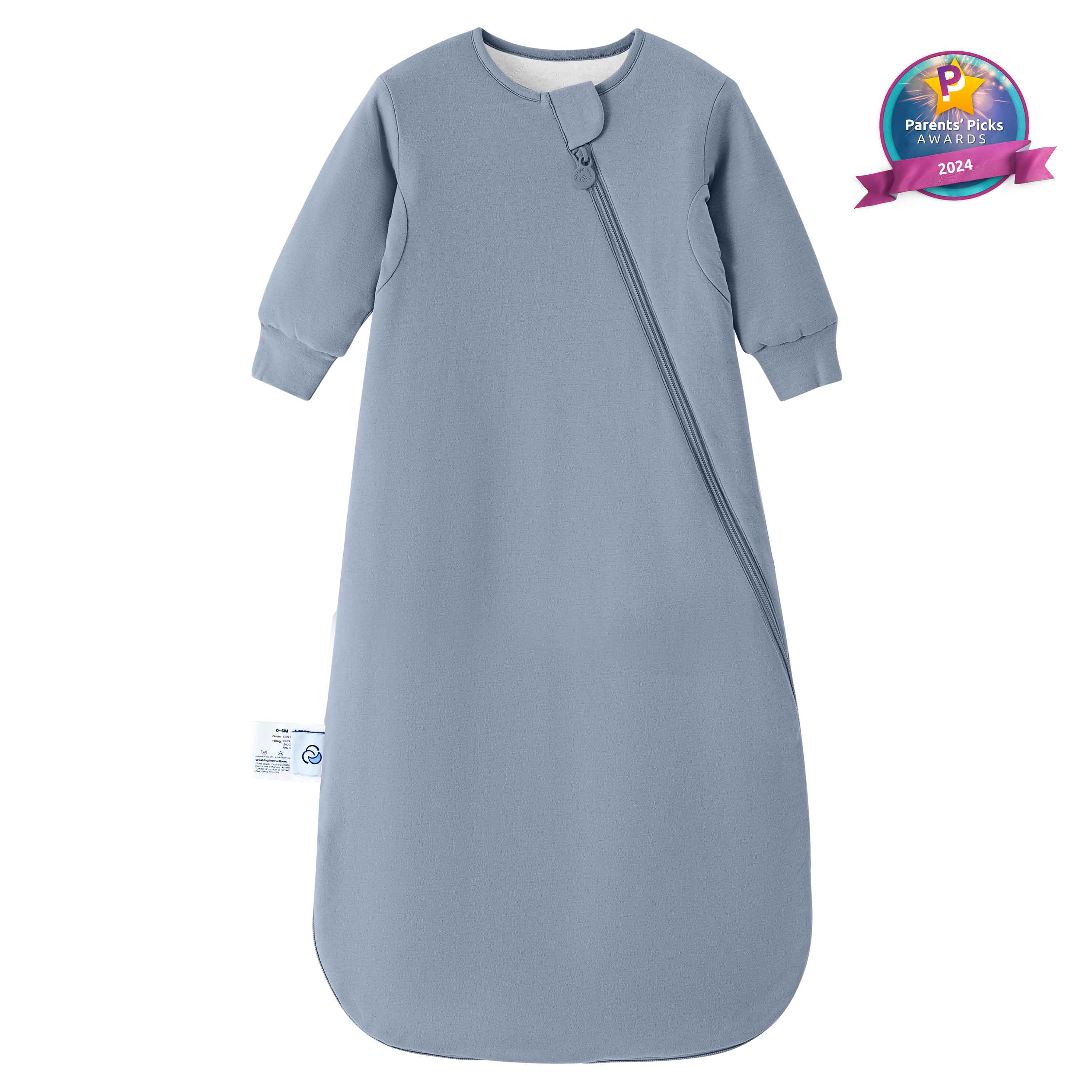
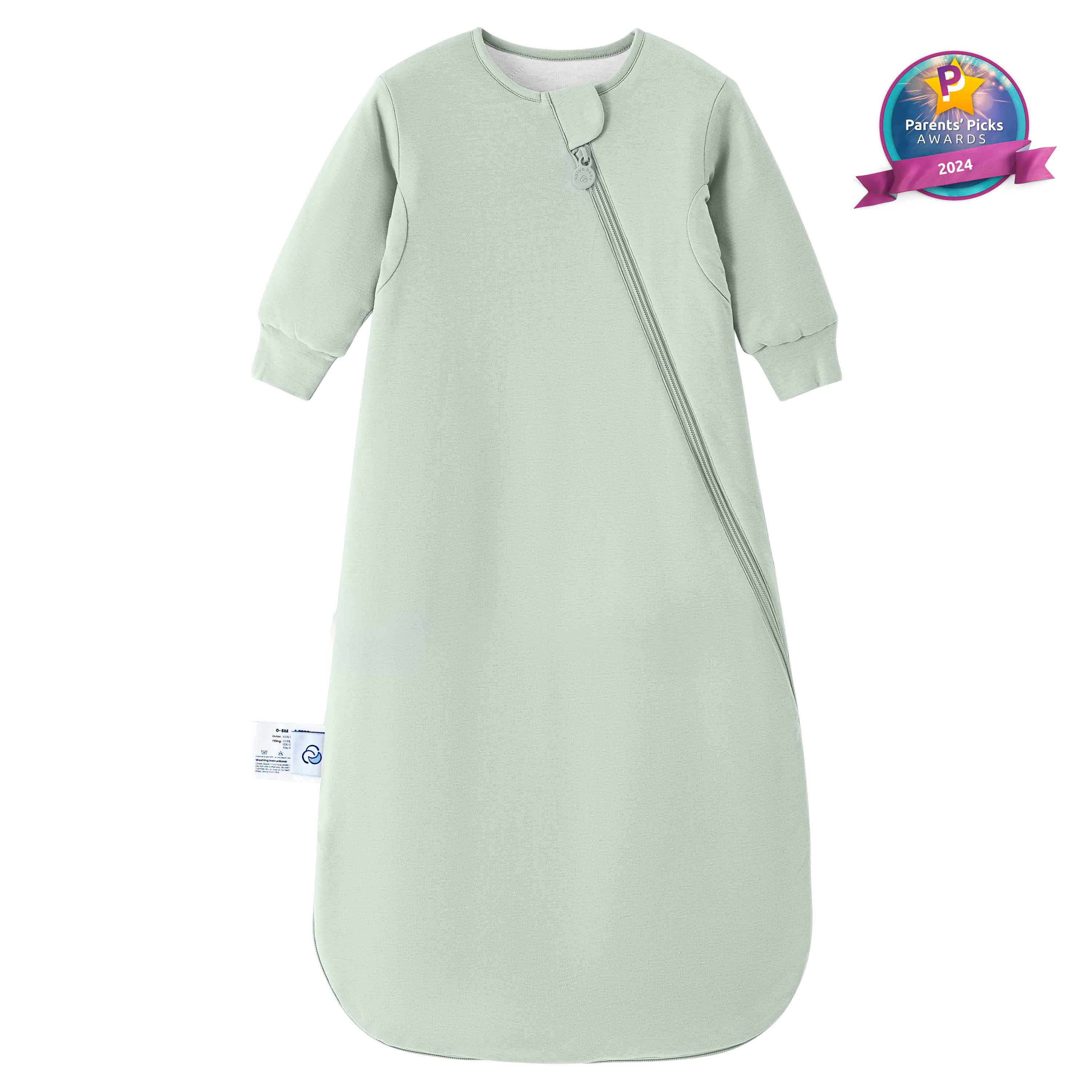
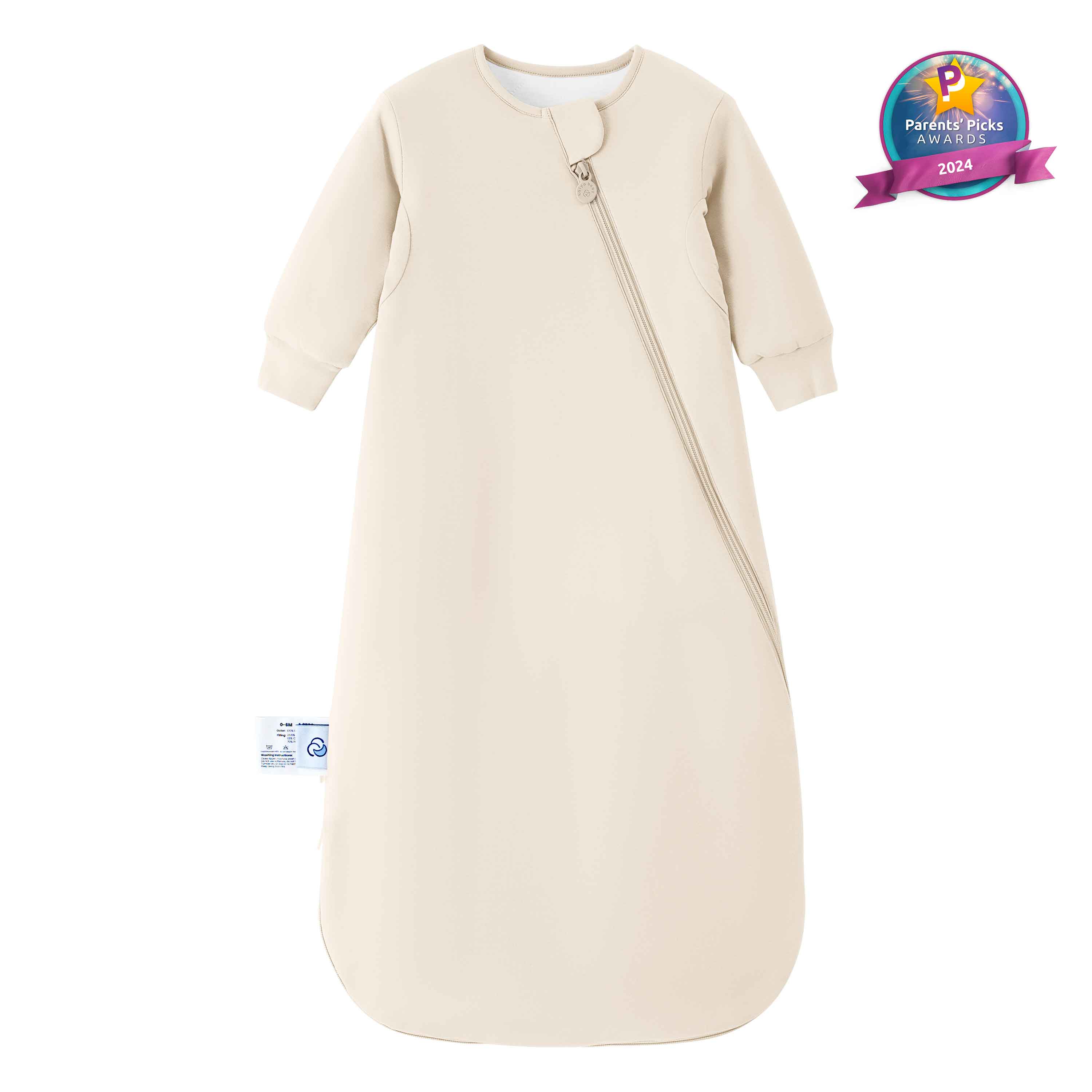
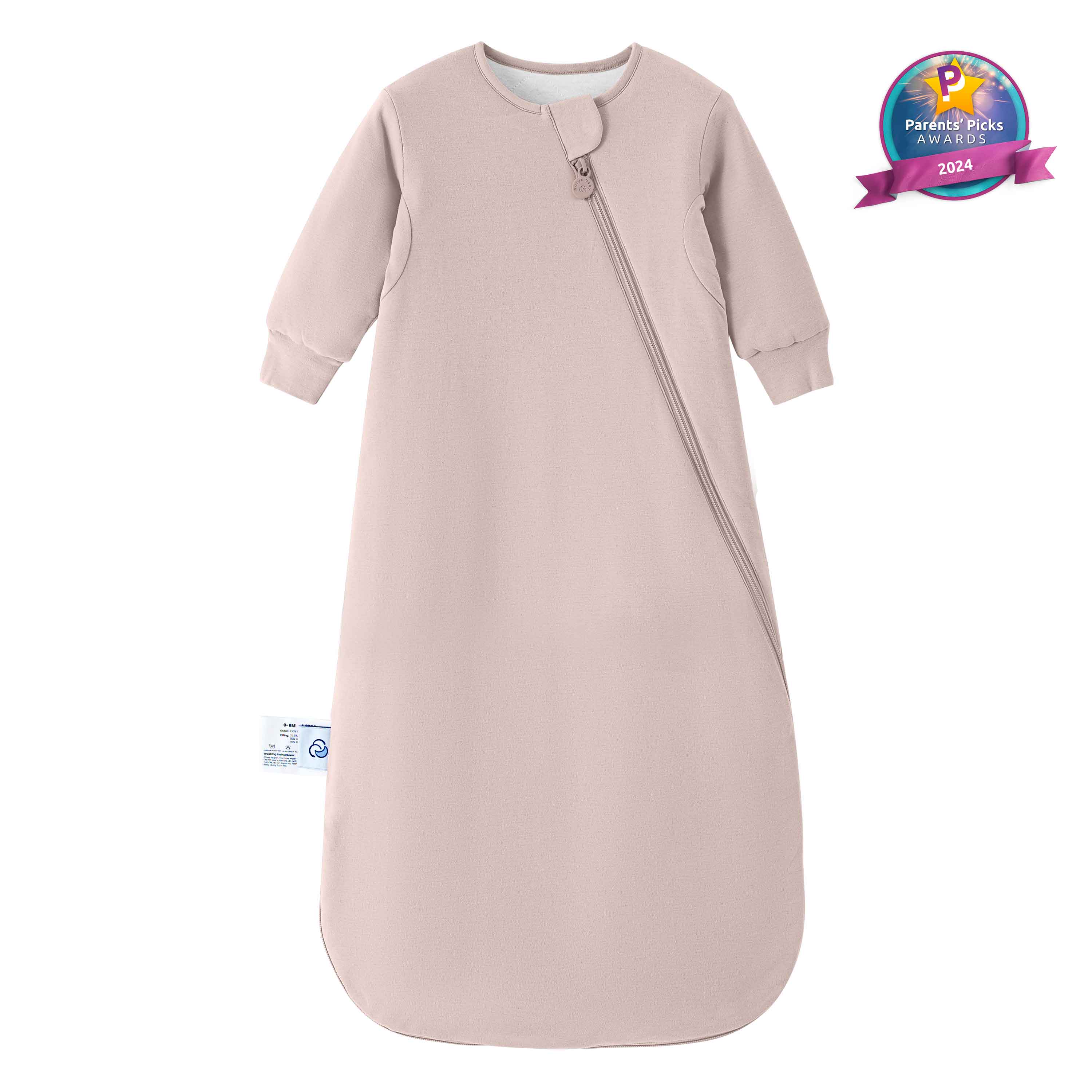
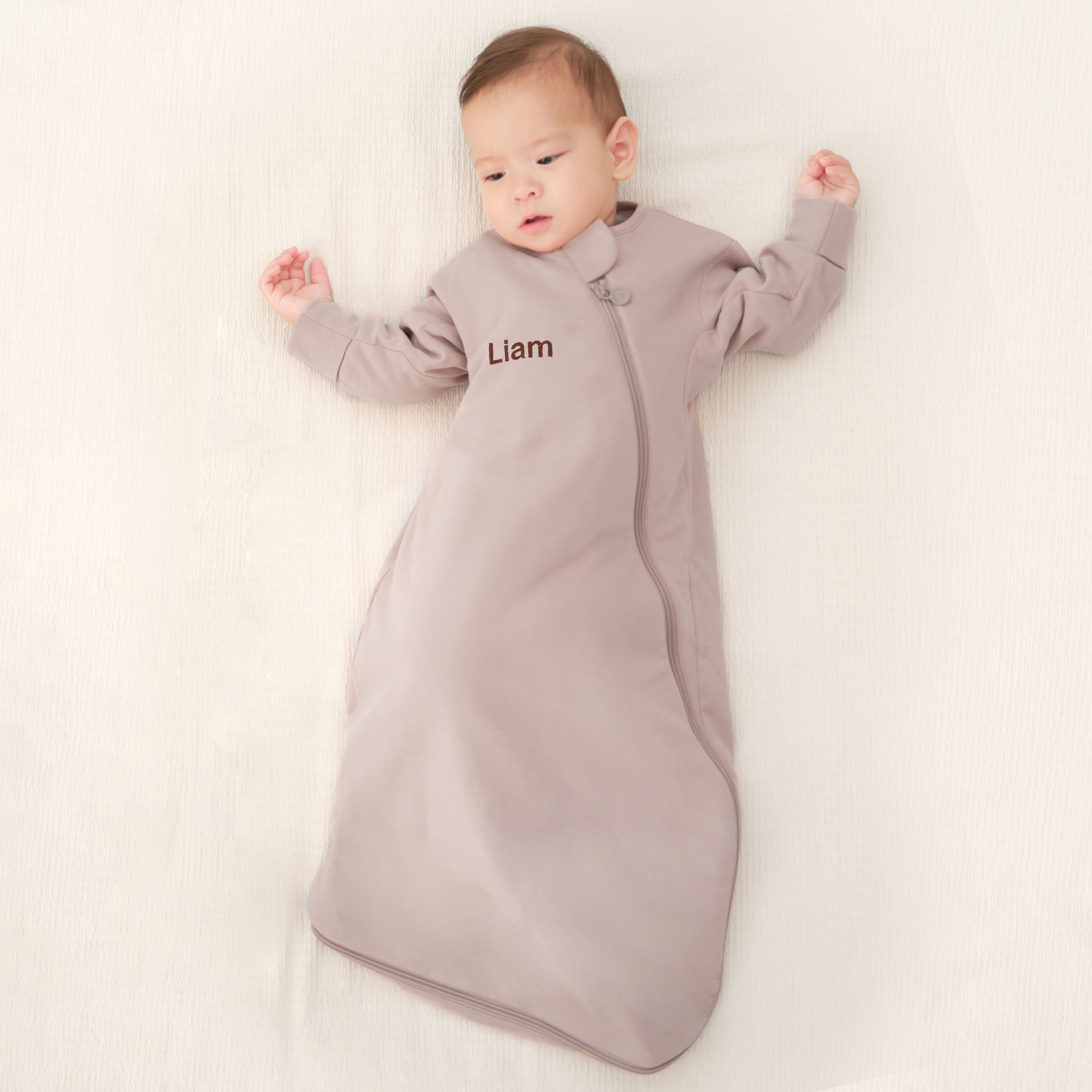
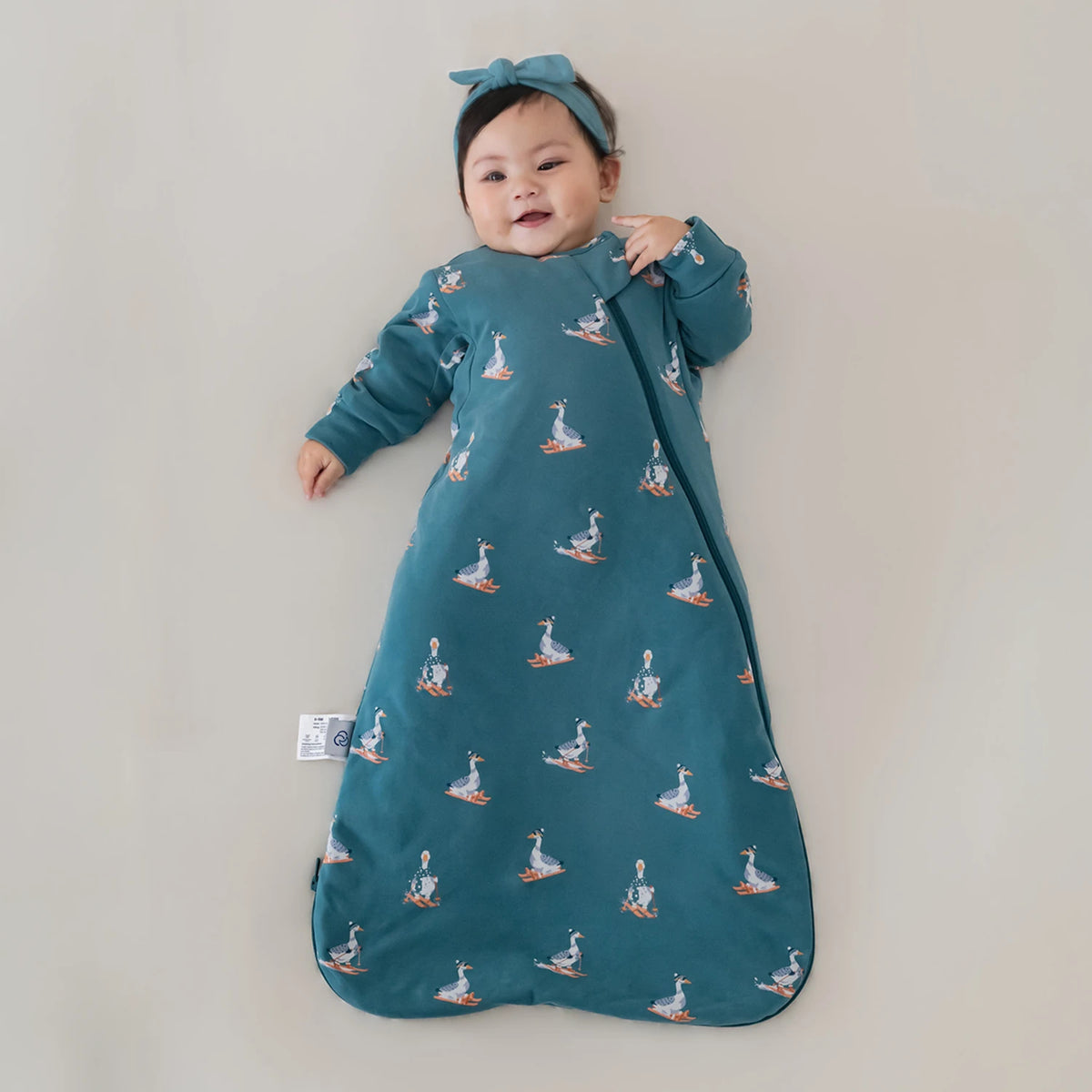
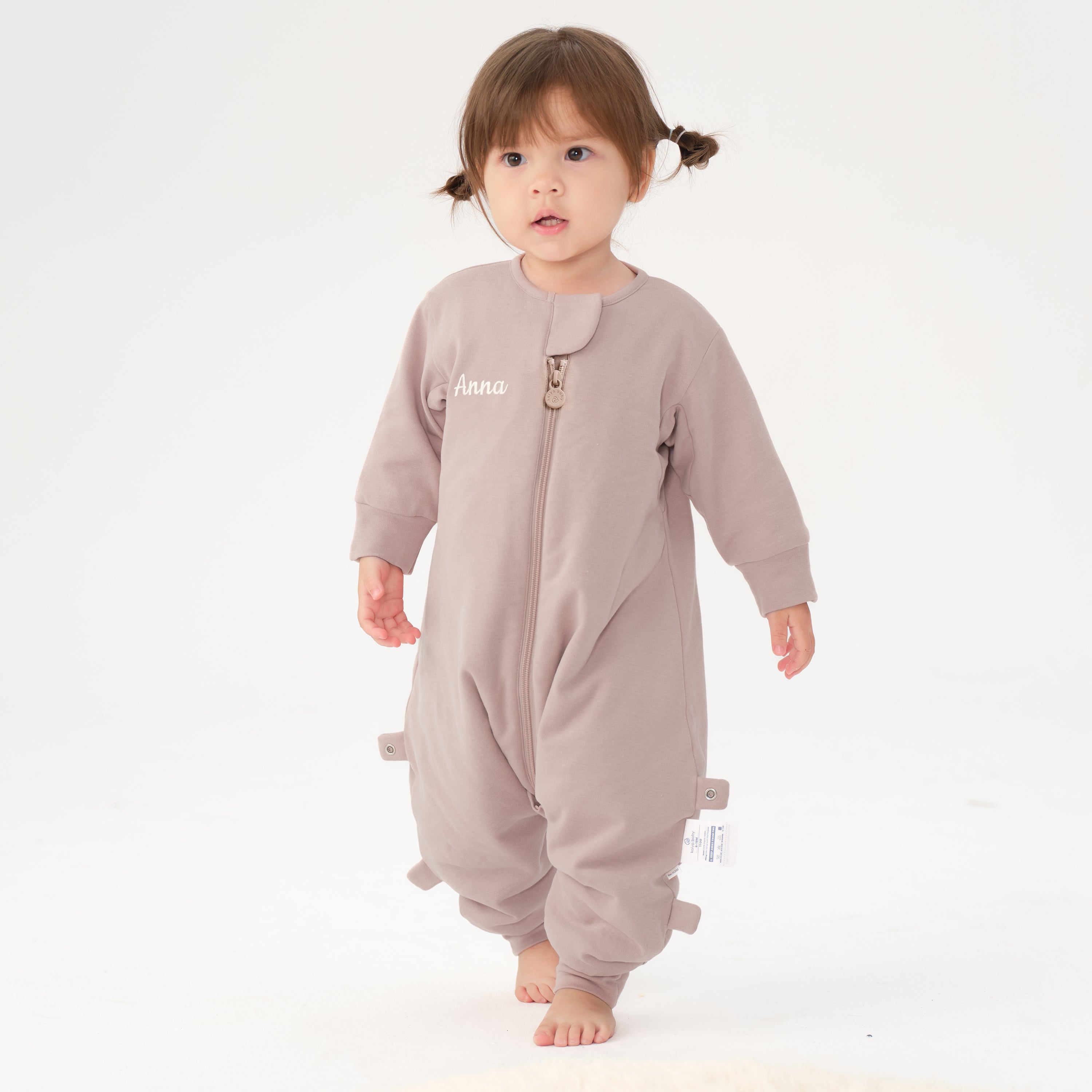
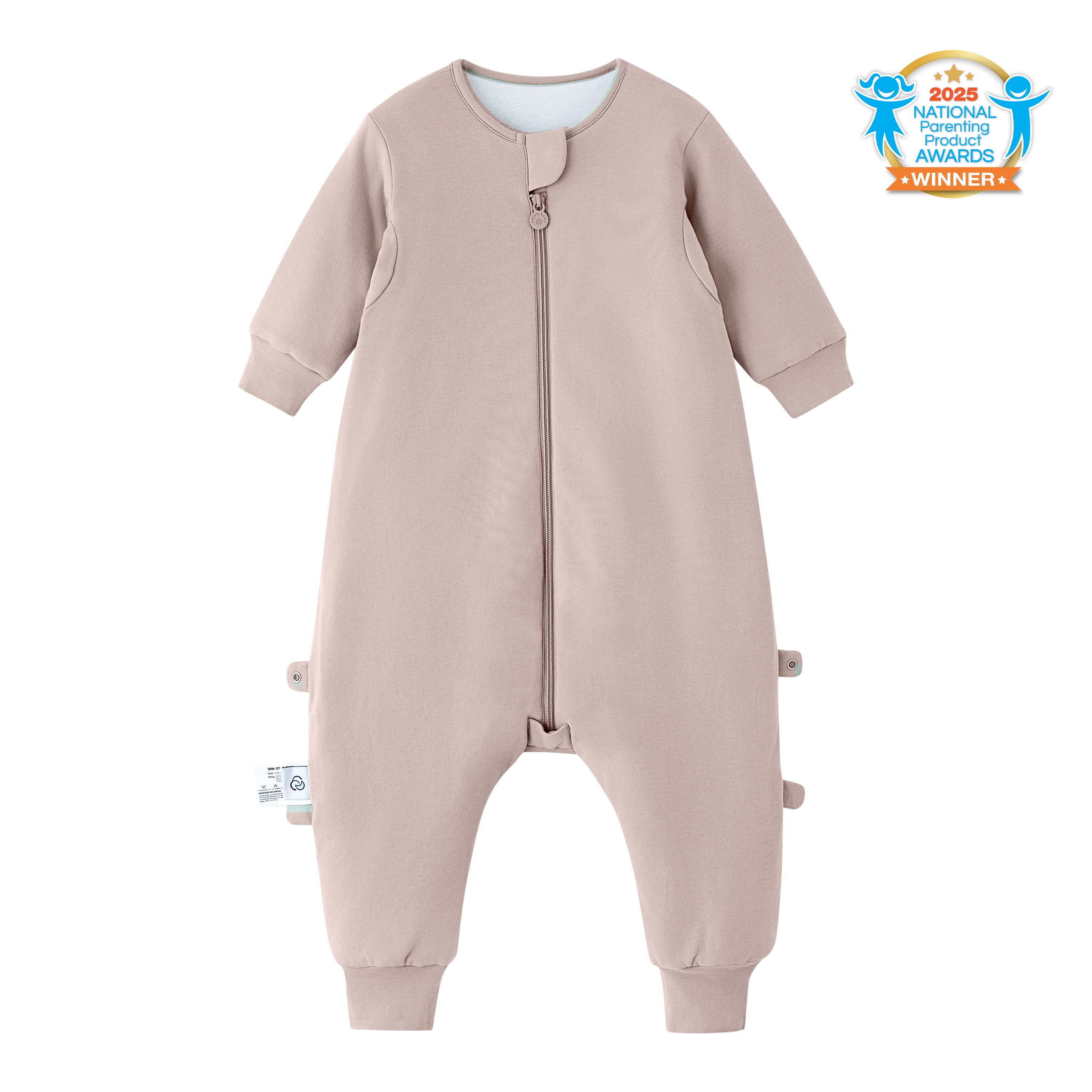
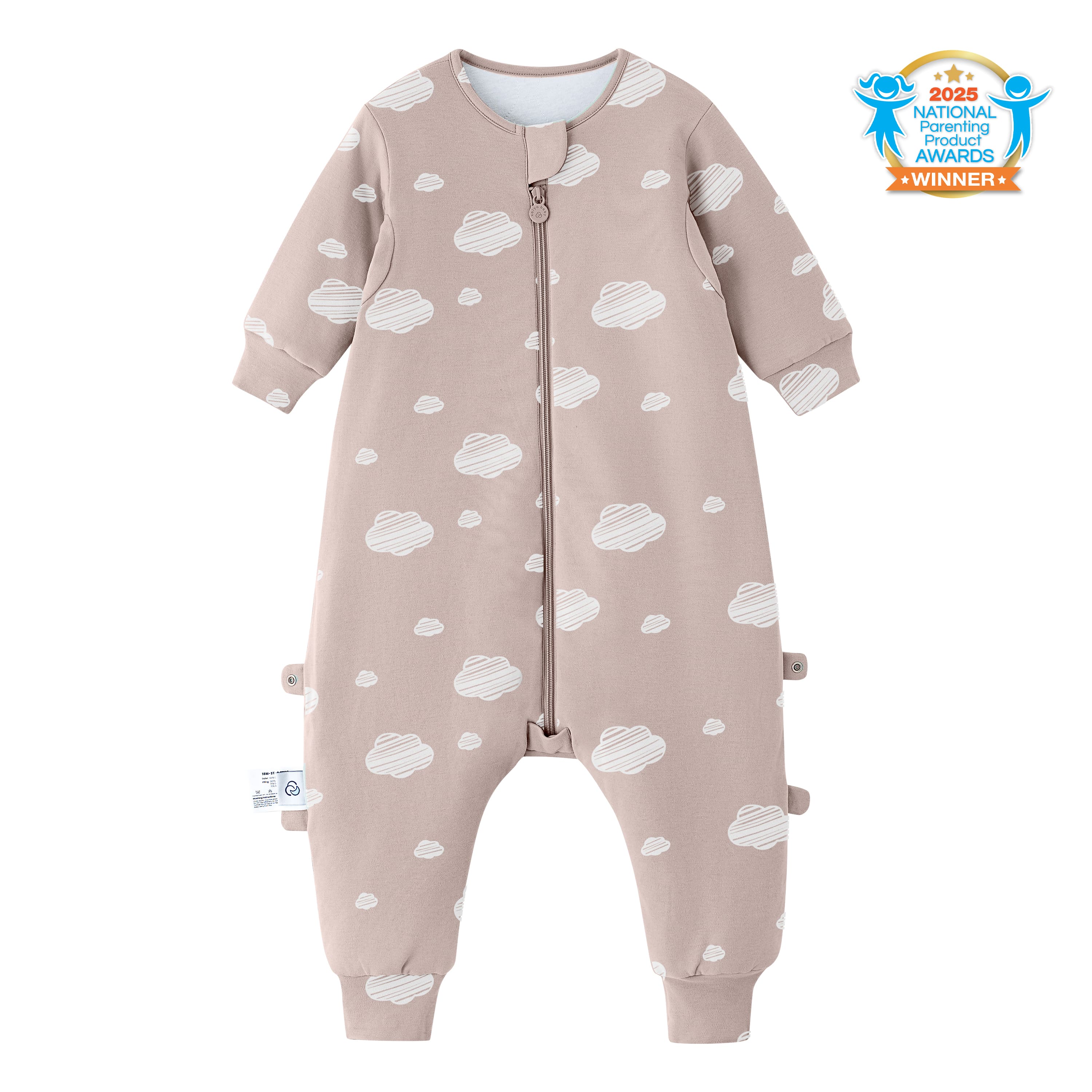
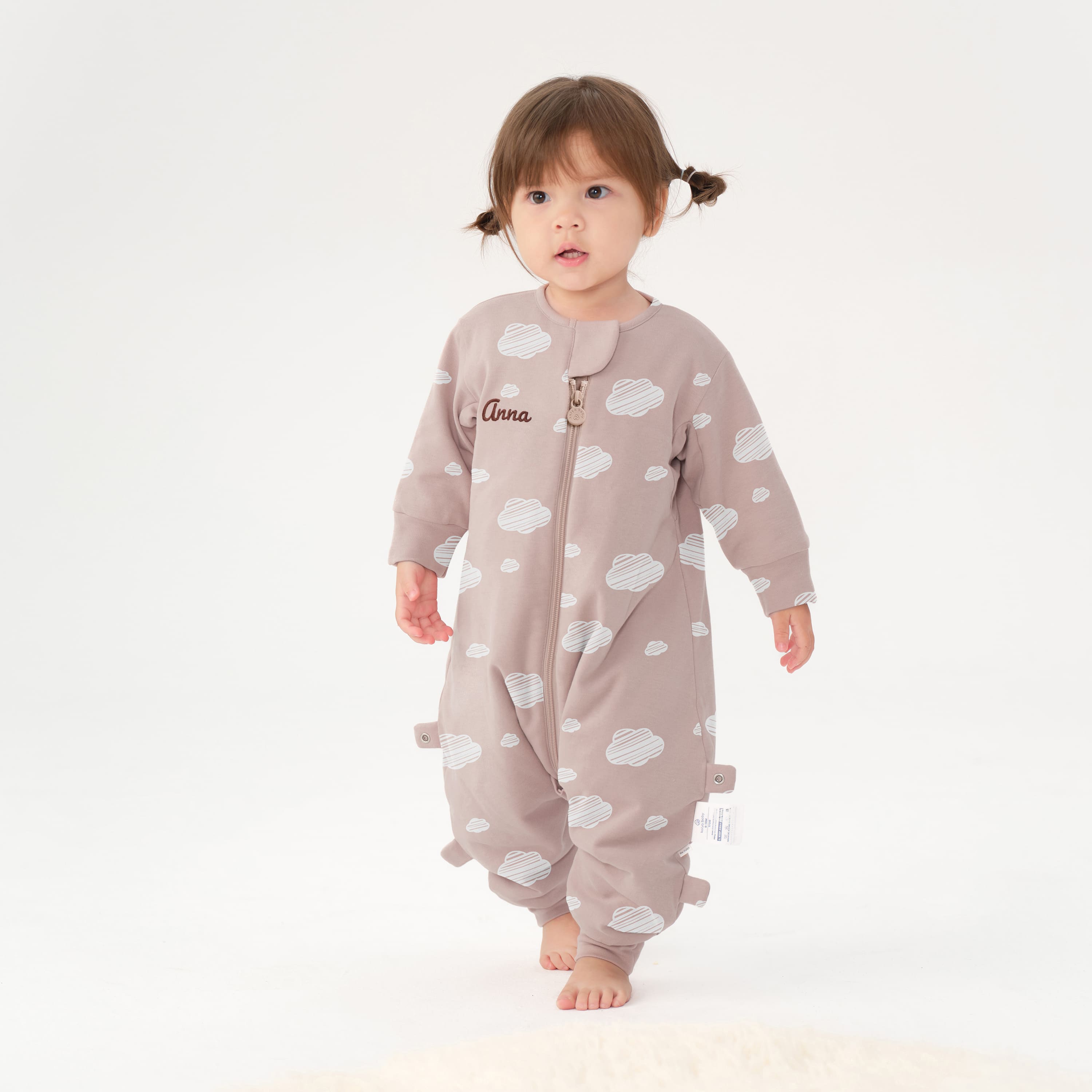
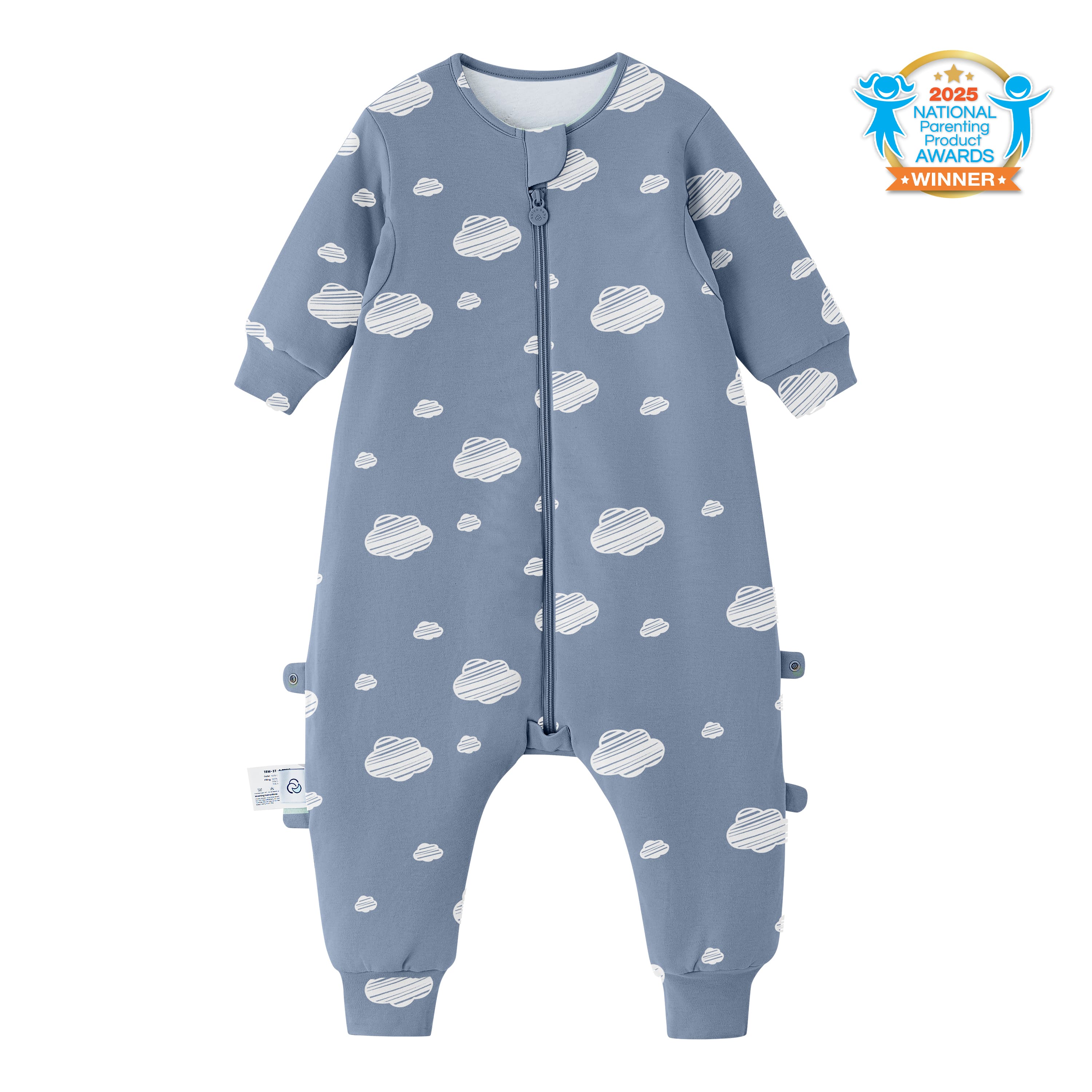
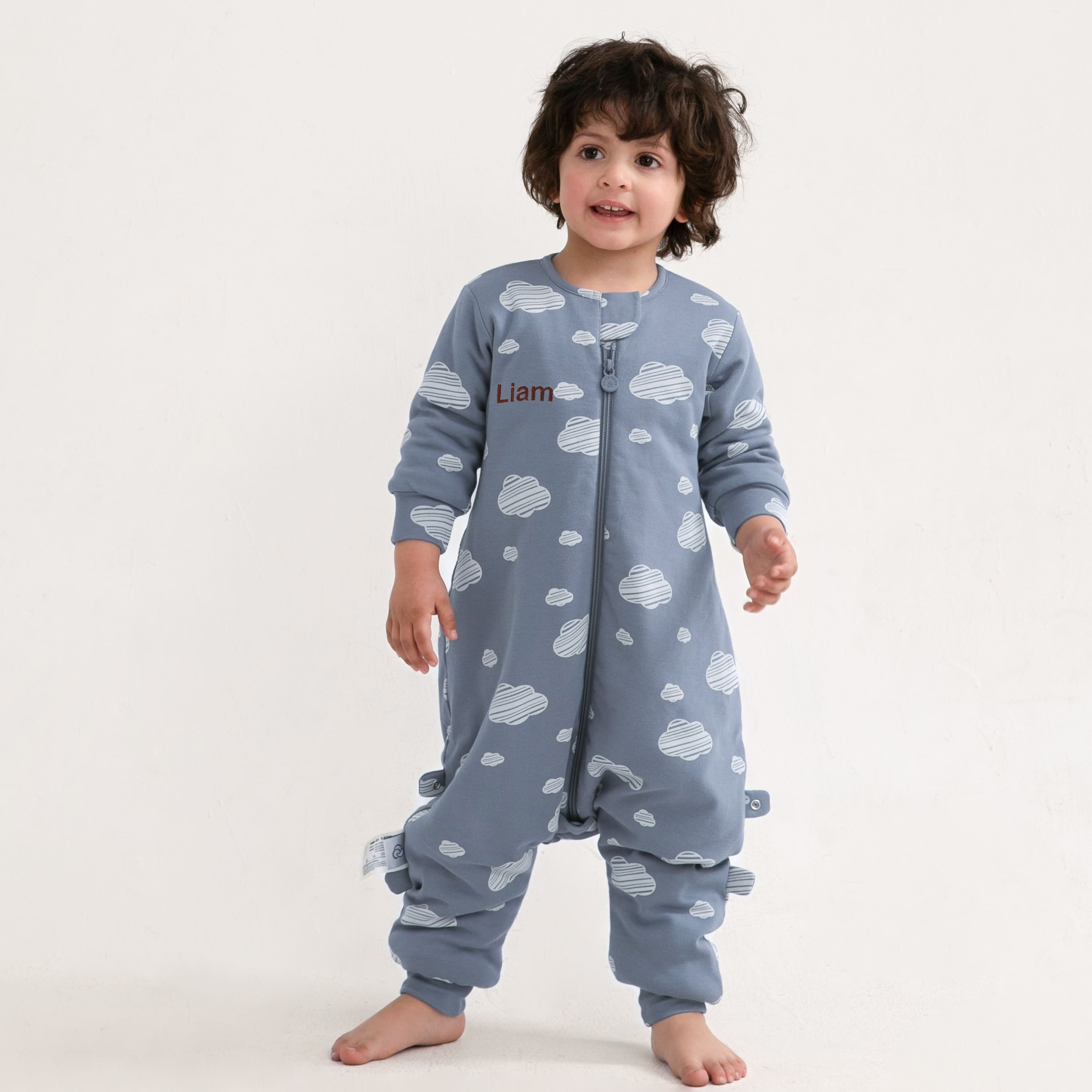
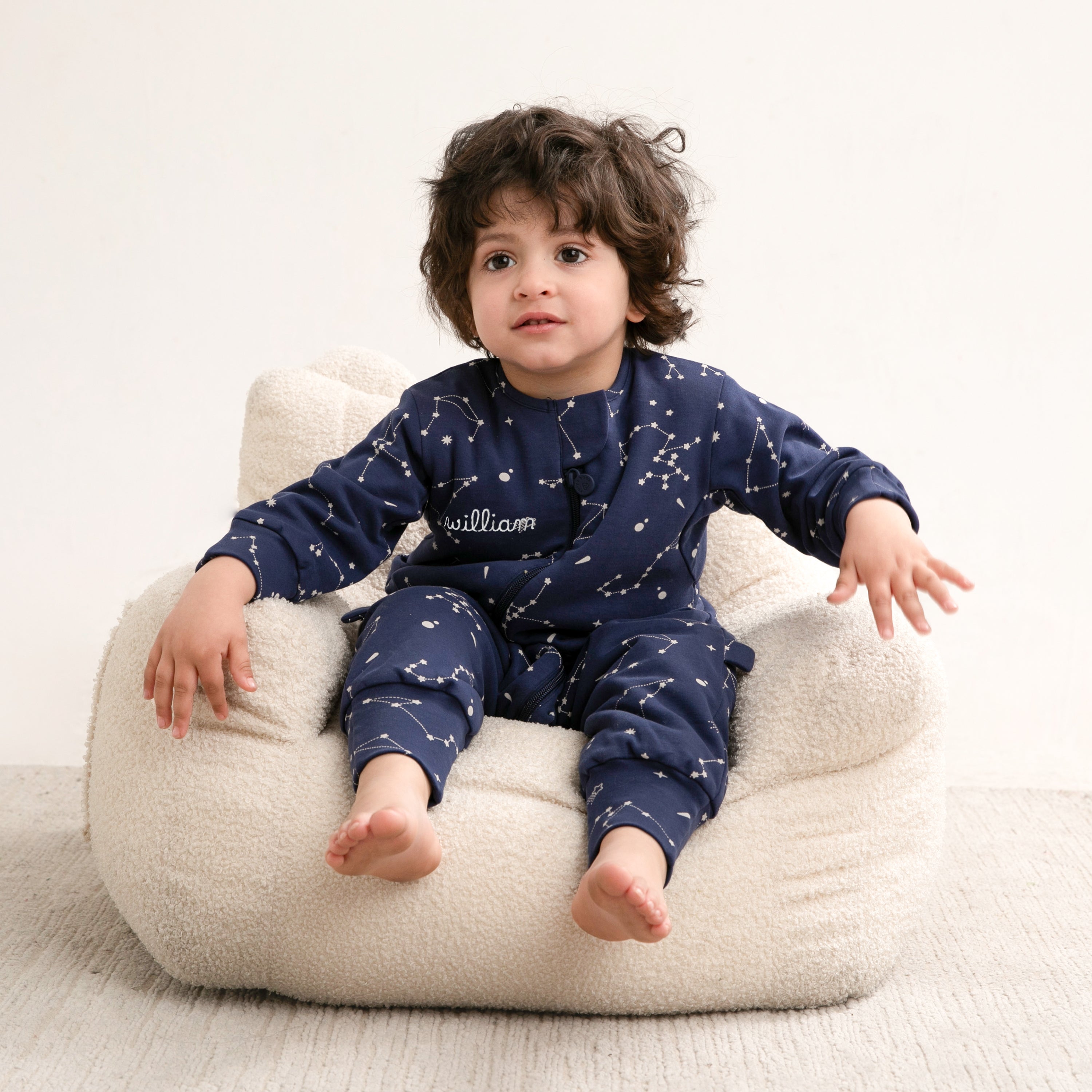
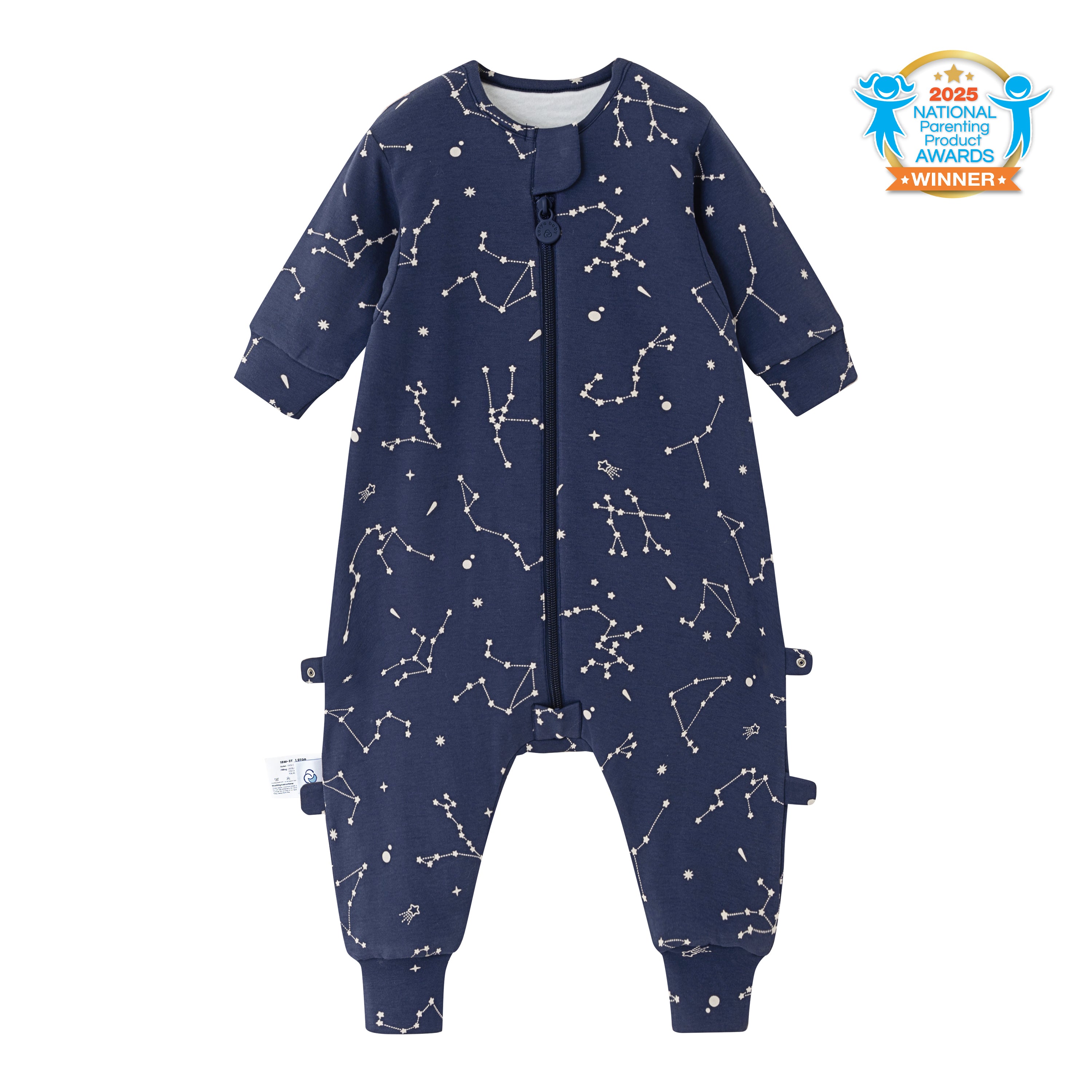
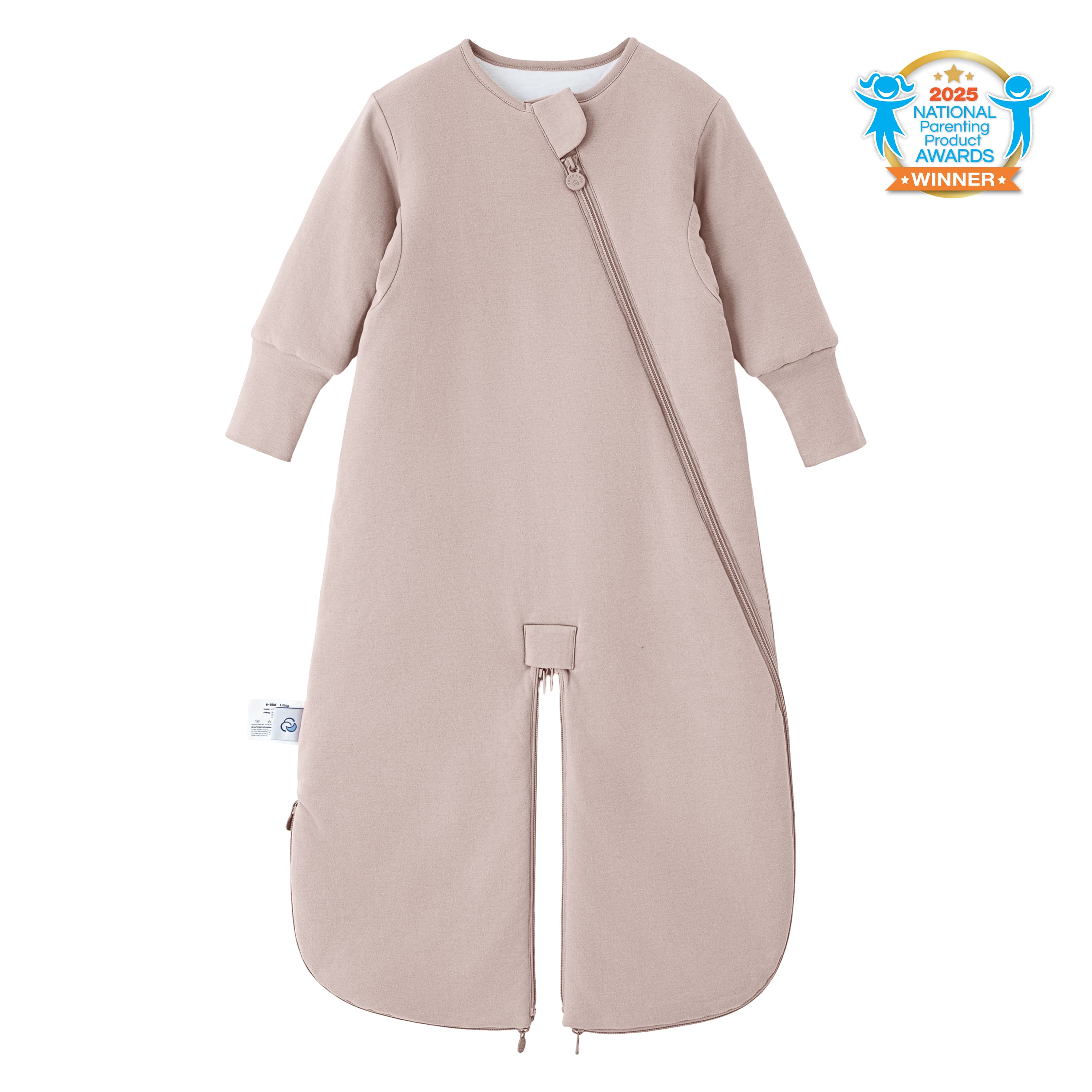
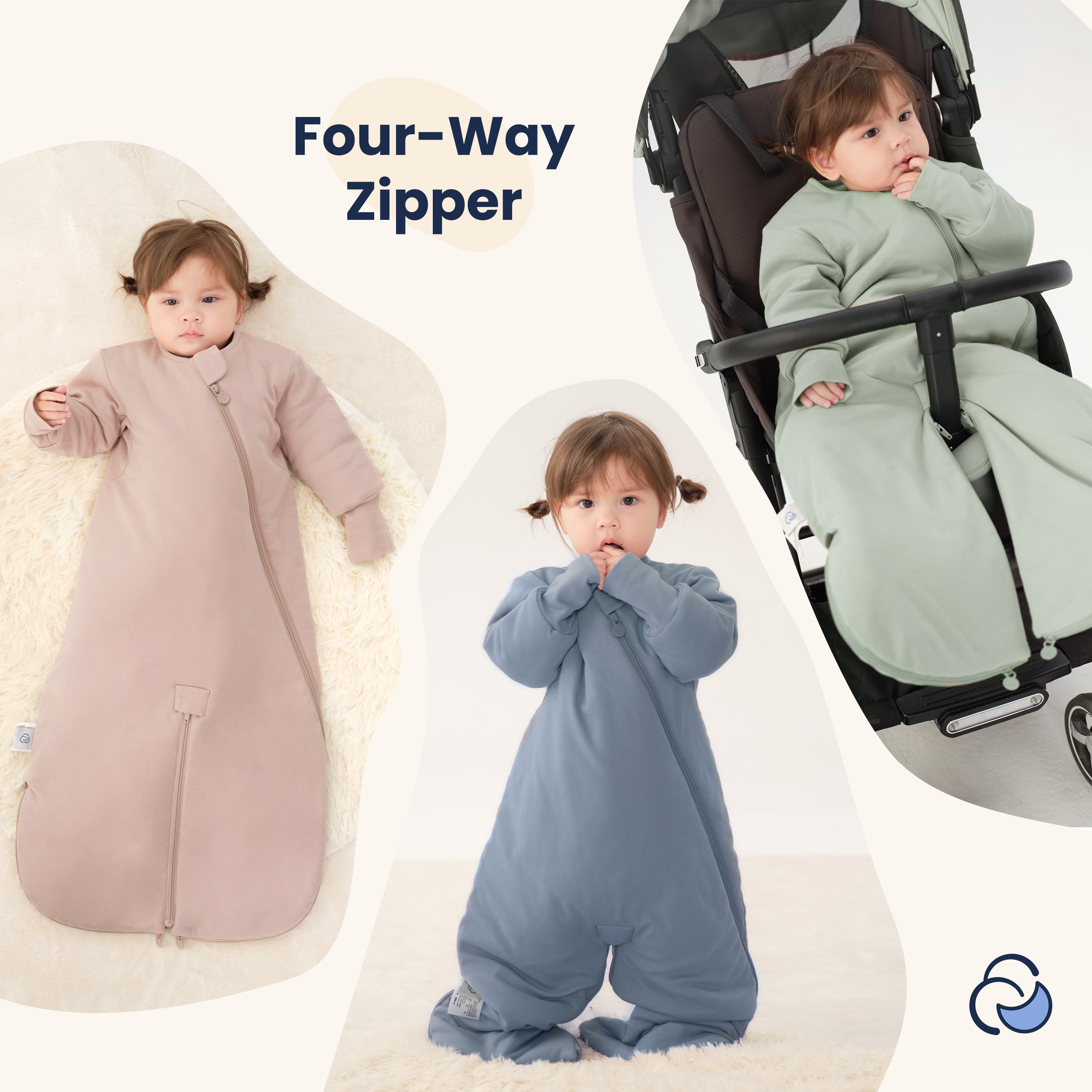
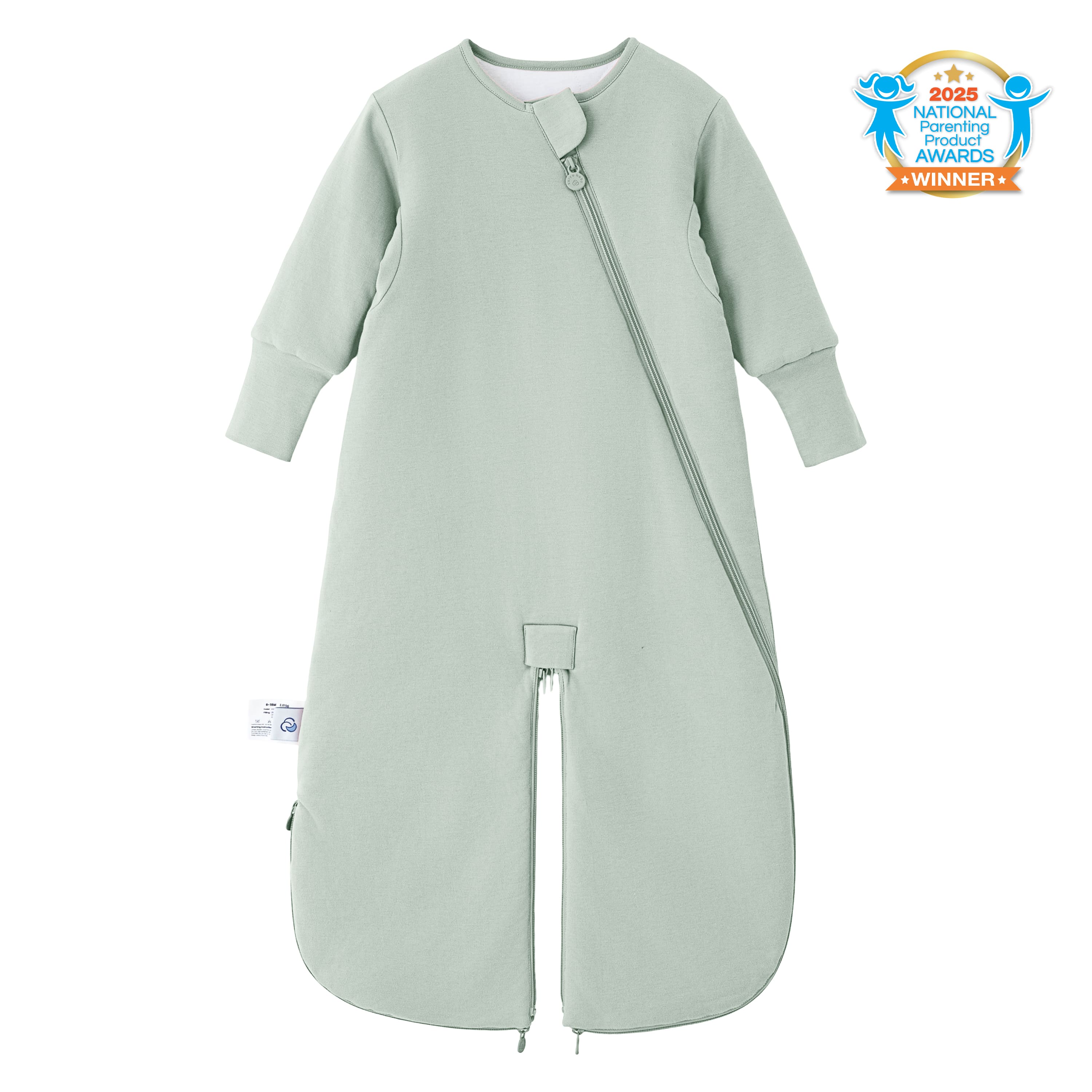
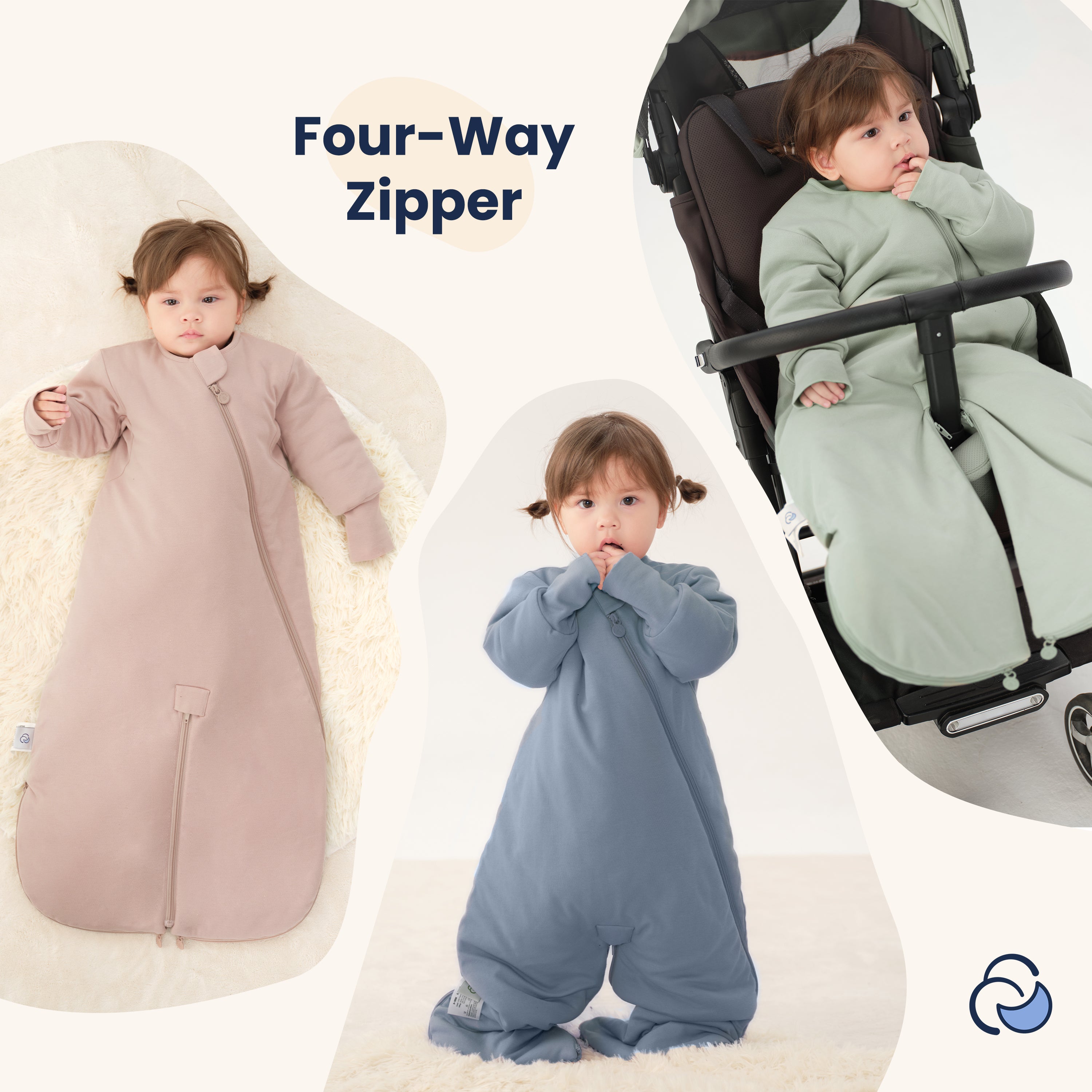
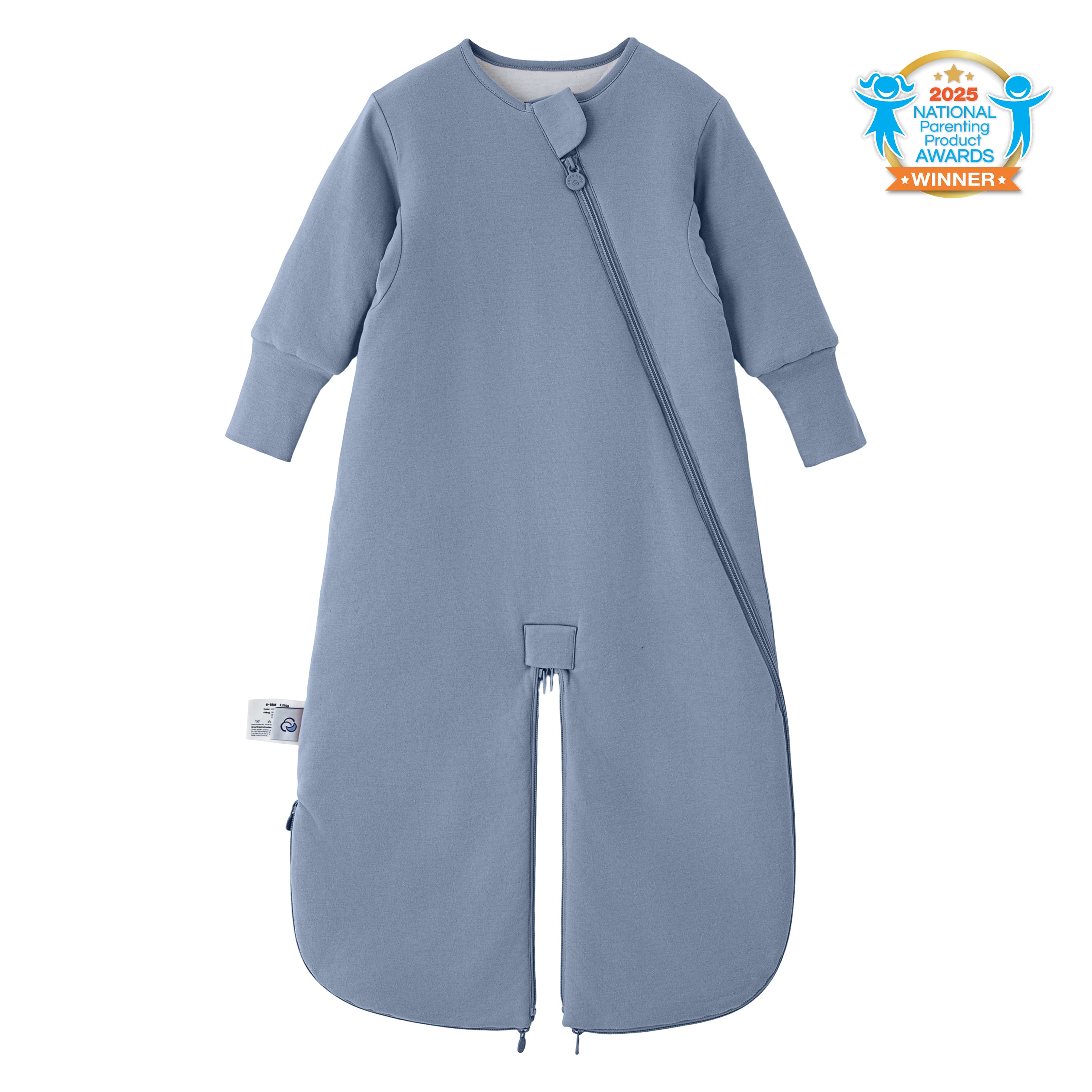
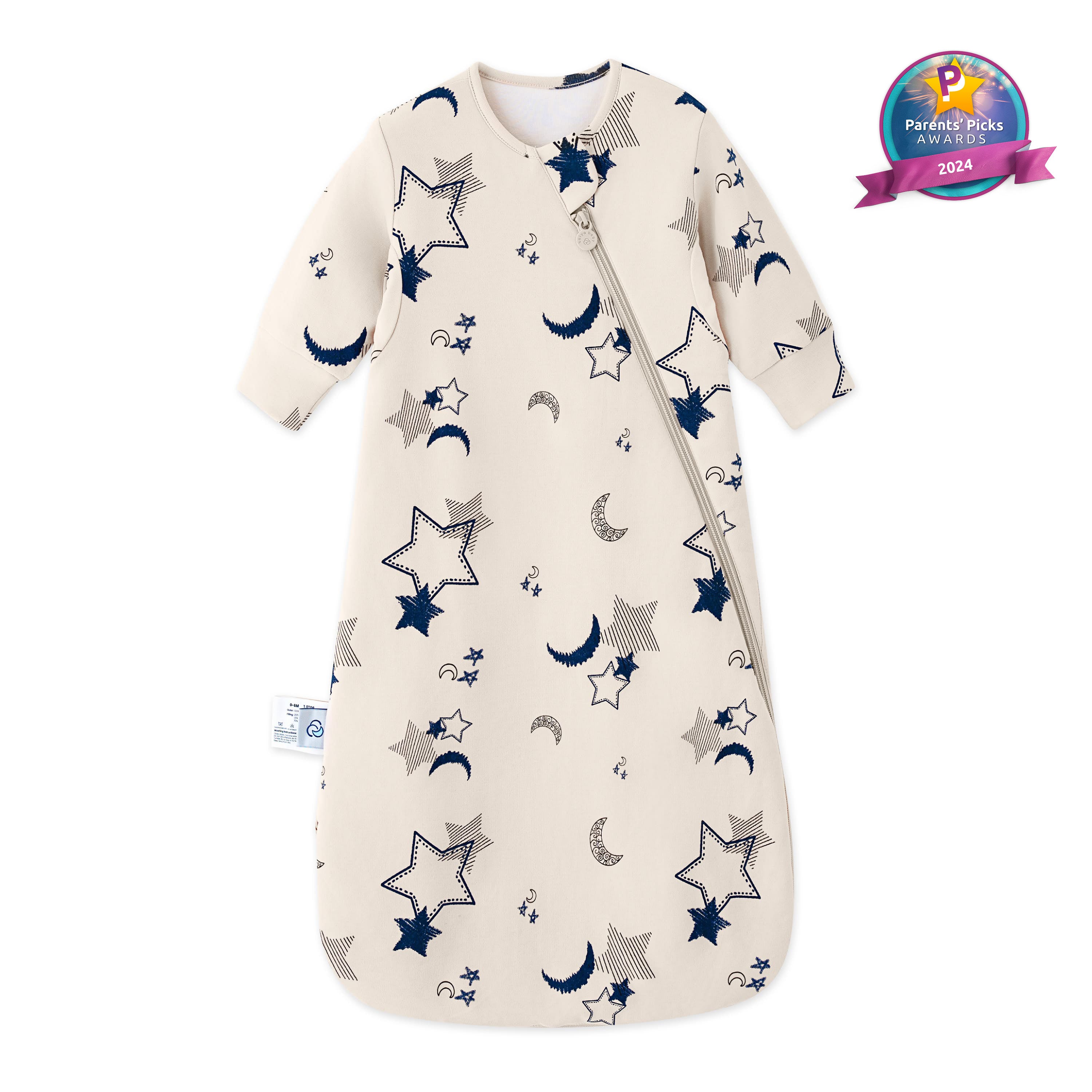
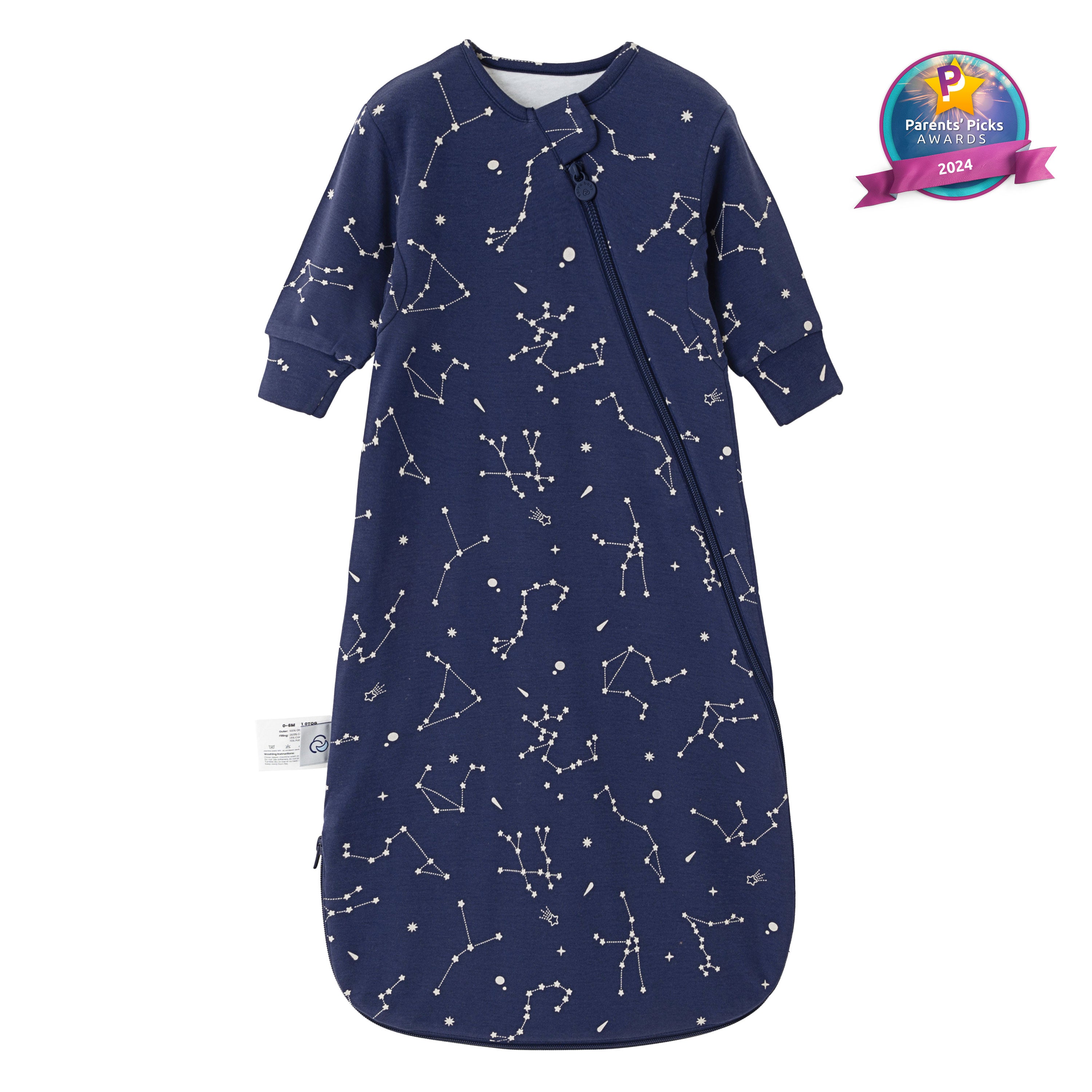
All three 2.5 TOG styles come with sleeves; there is no sleeveless version at this warmth level, because a room cool enough for 2.5 TOG is usually cool enough for covered arms. Choose the style by how your baby moves at bedtime.
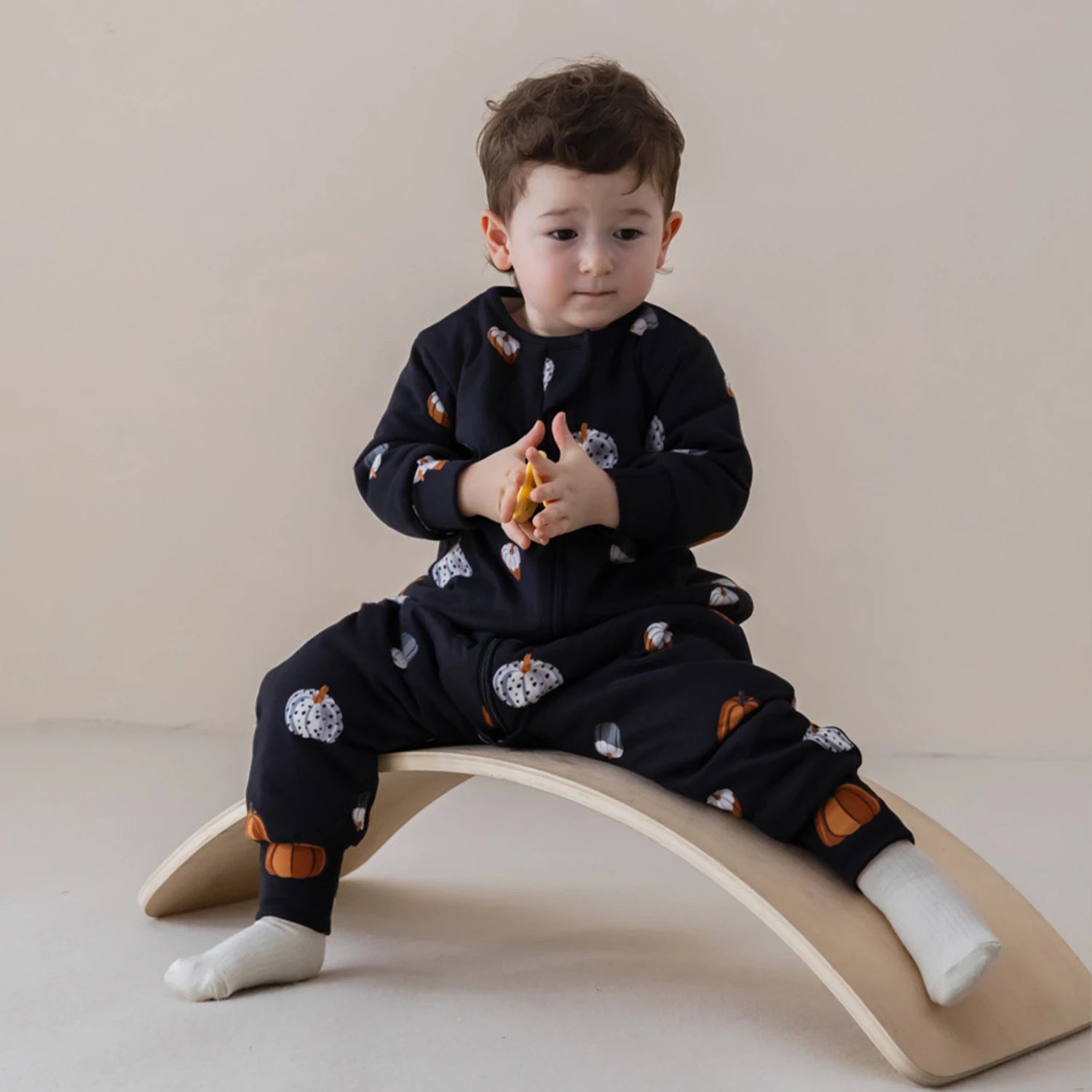
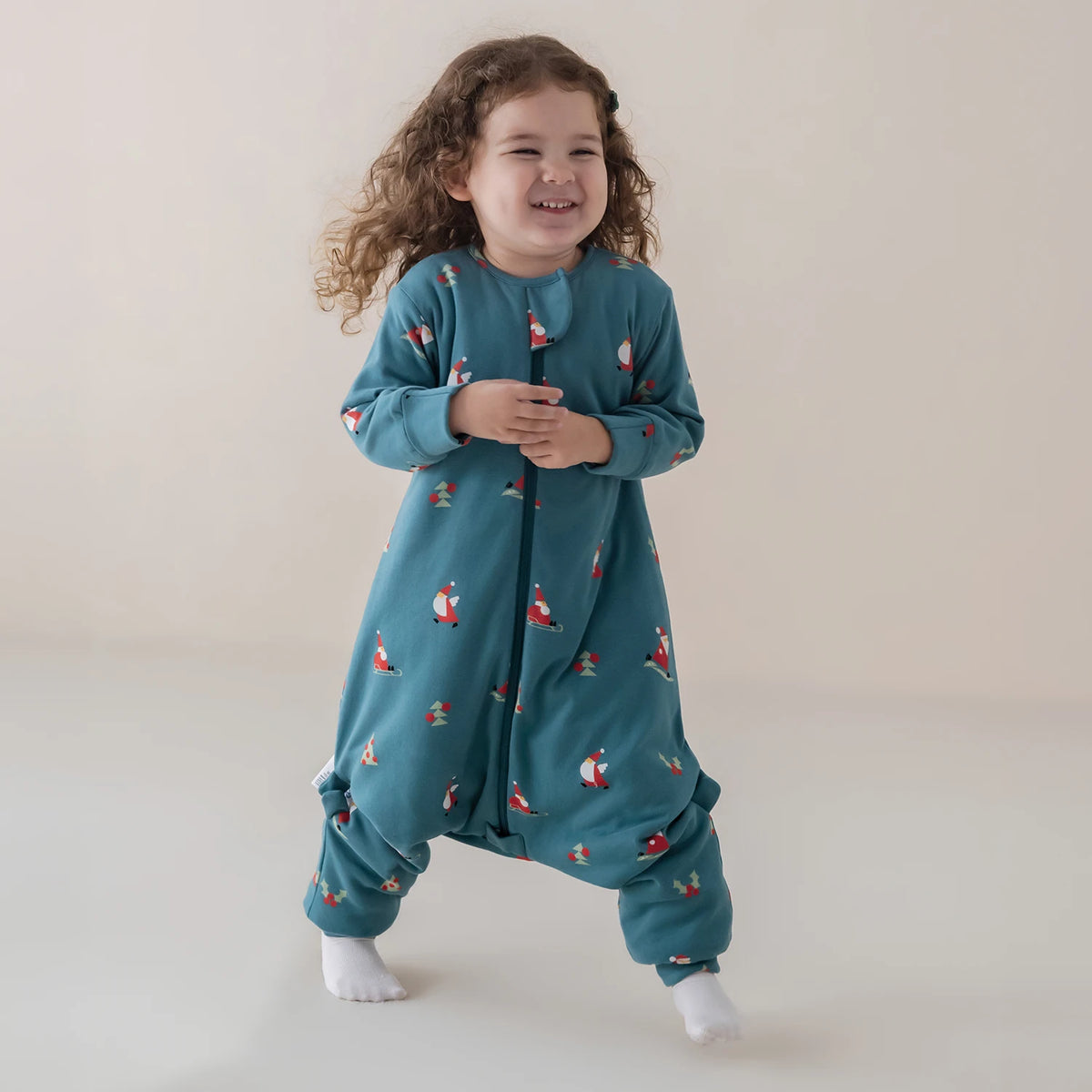
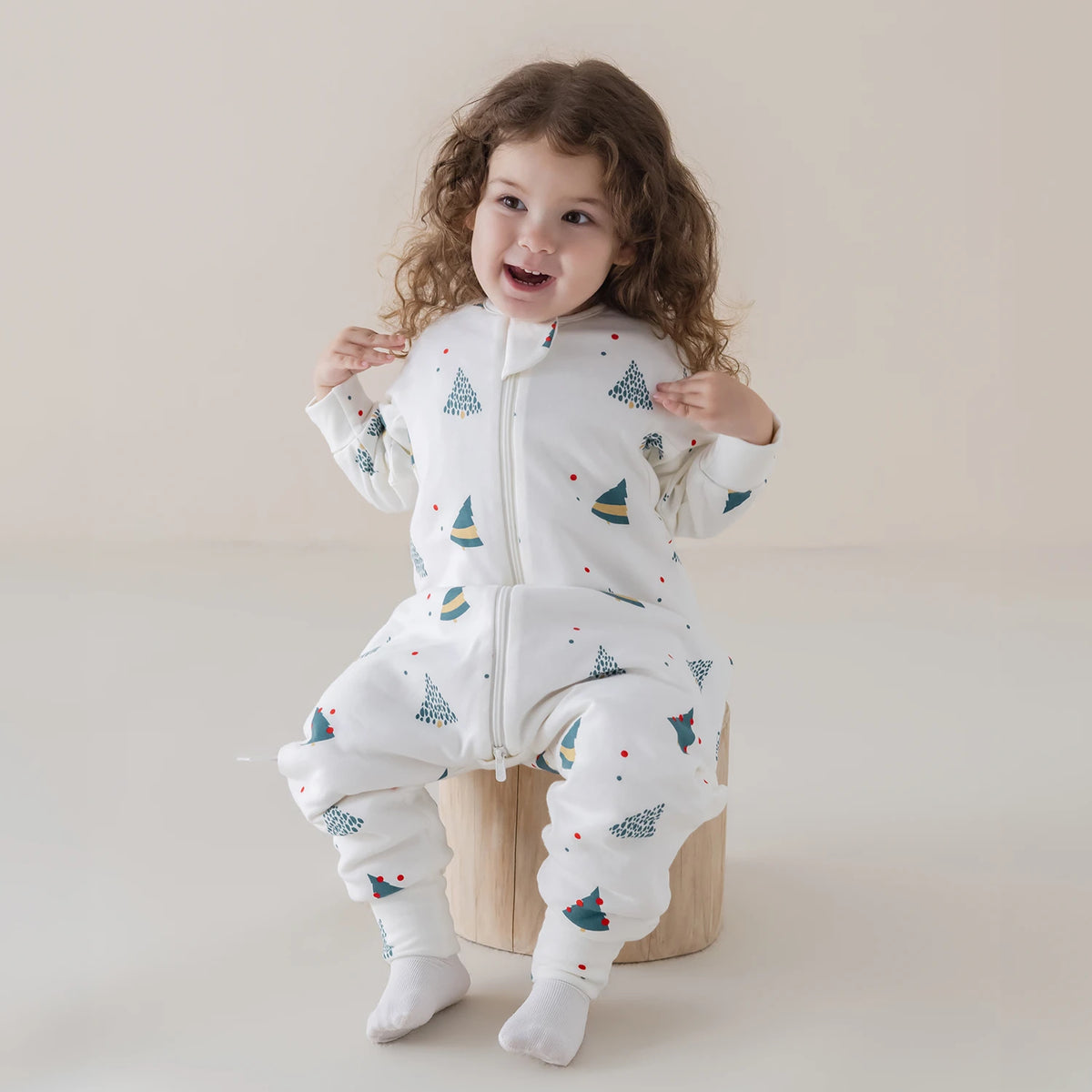
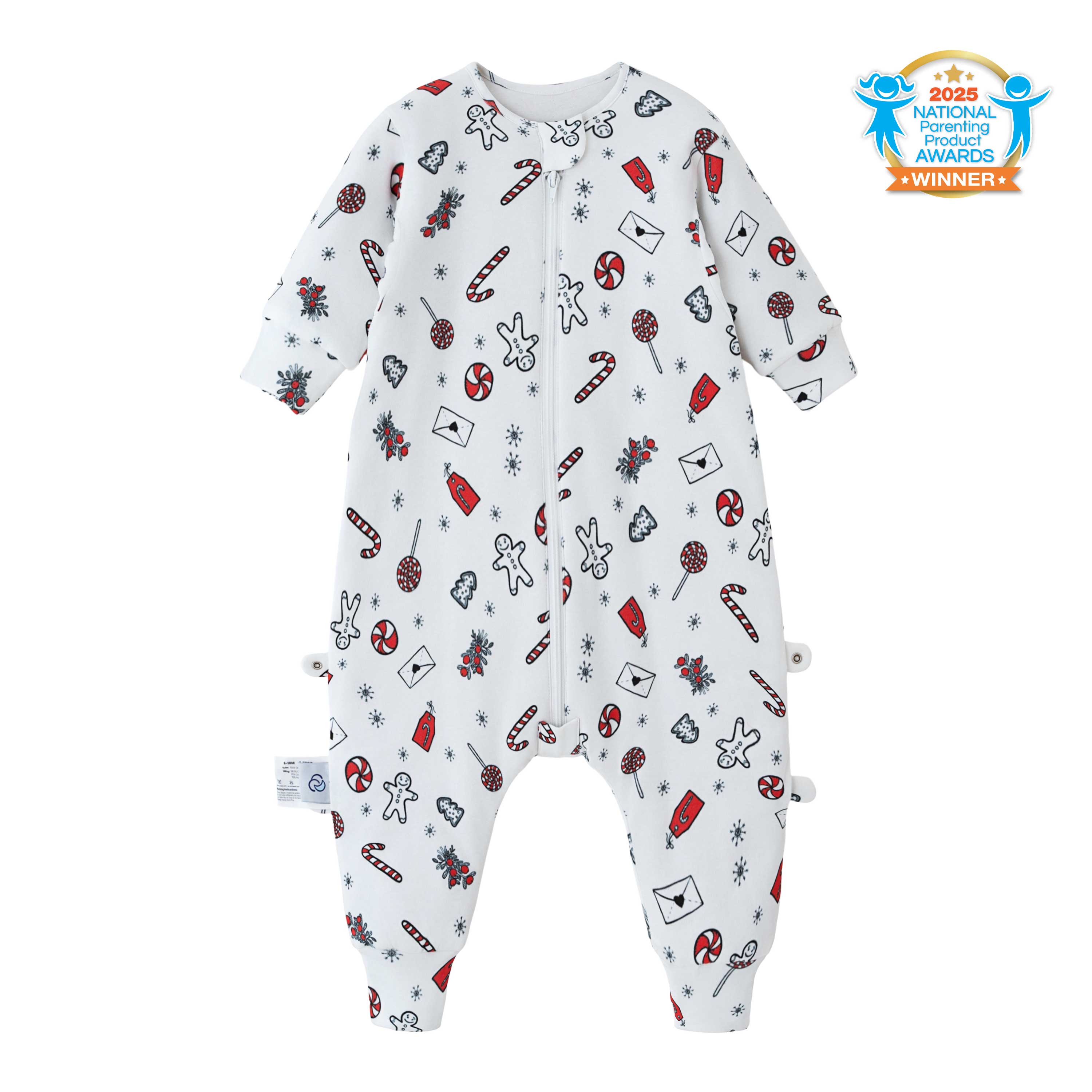
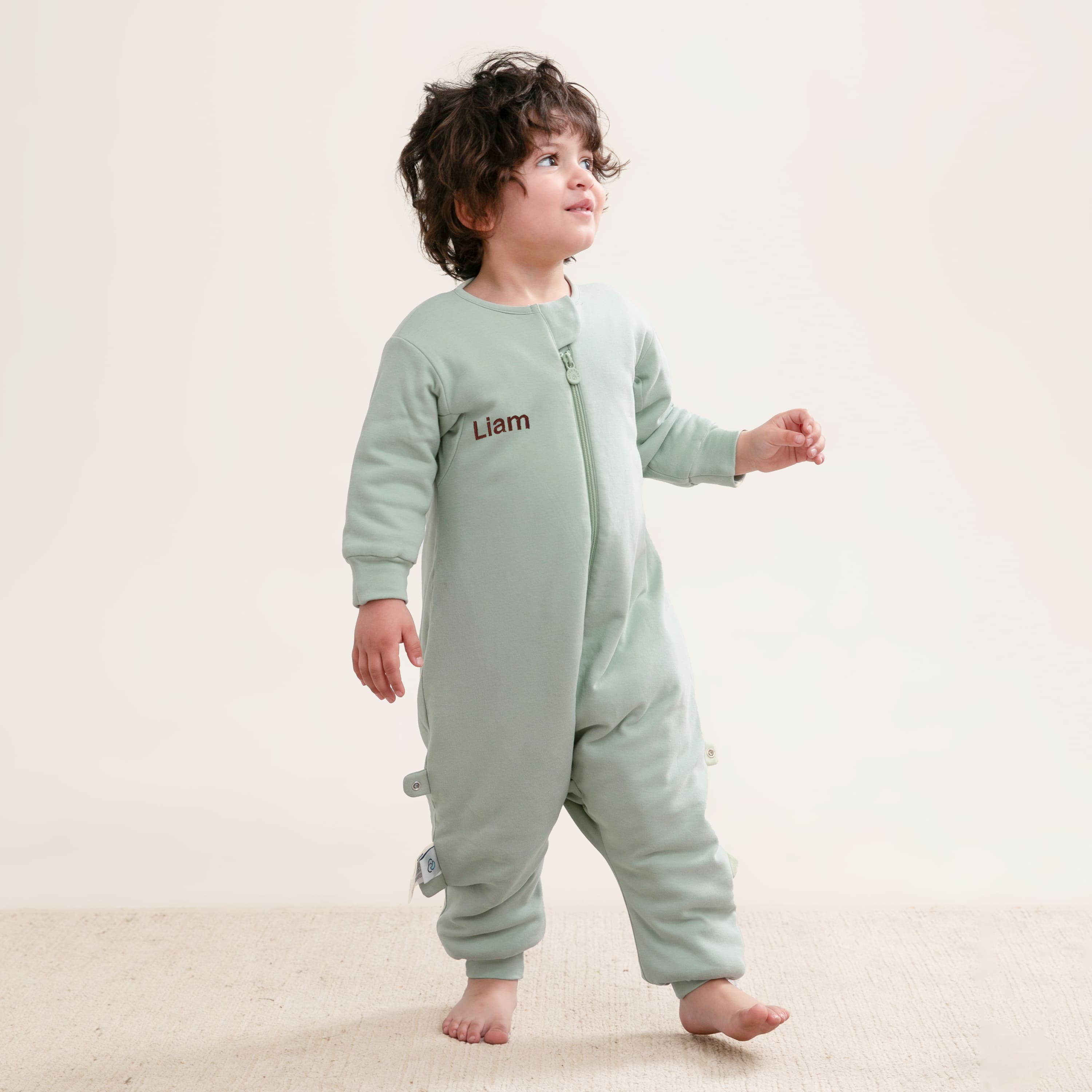
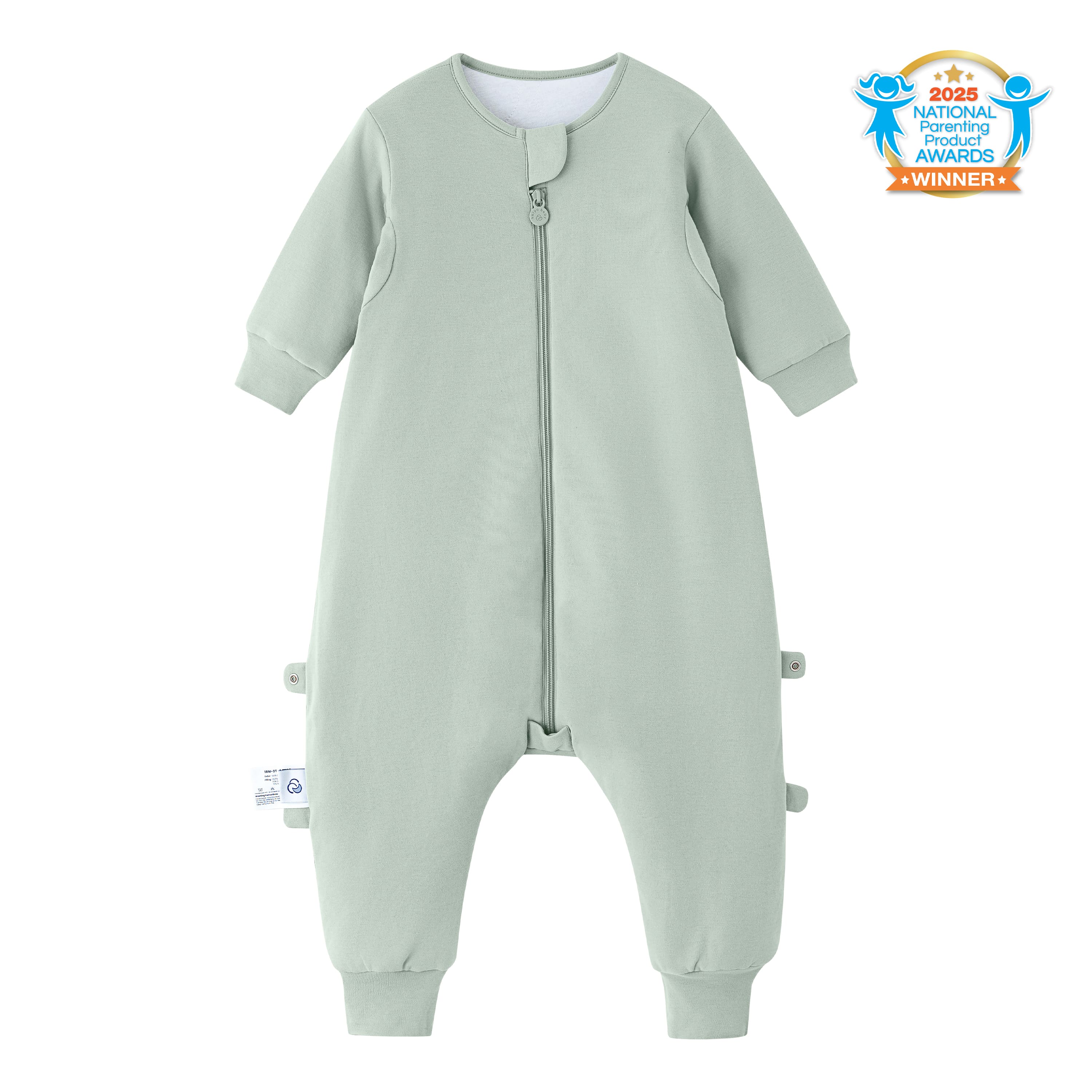
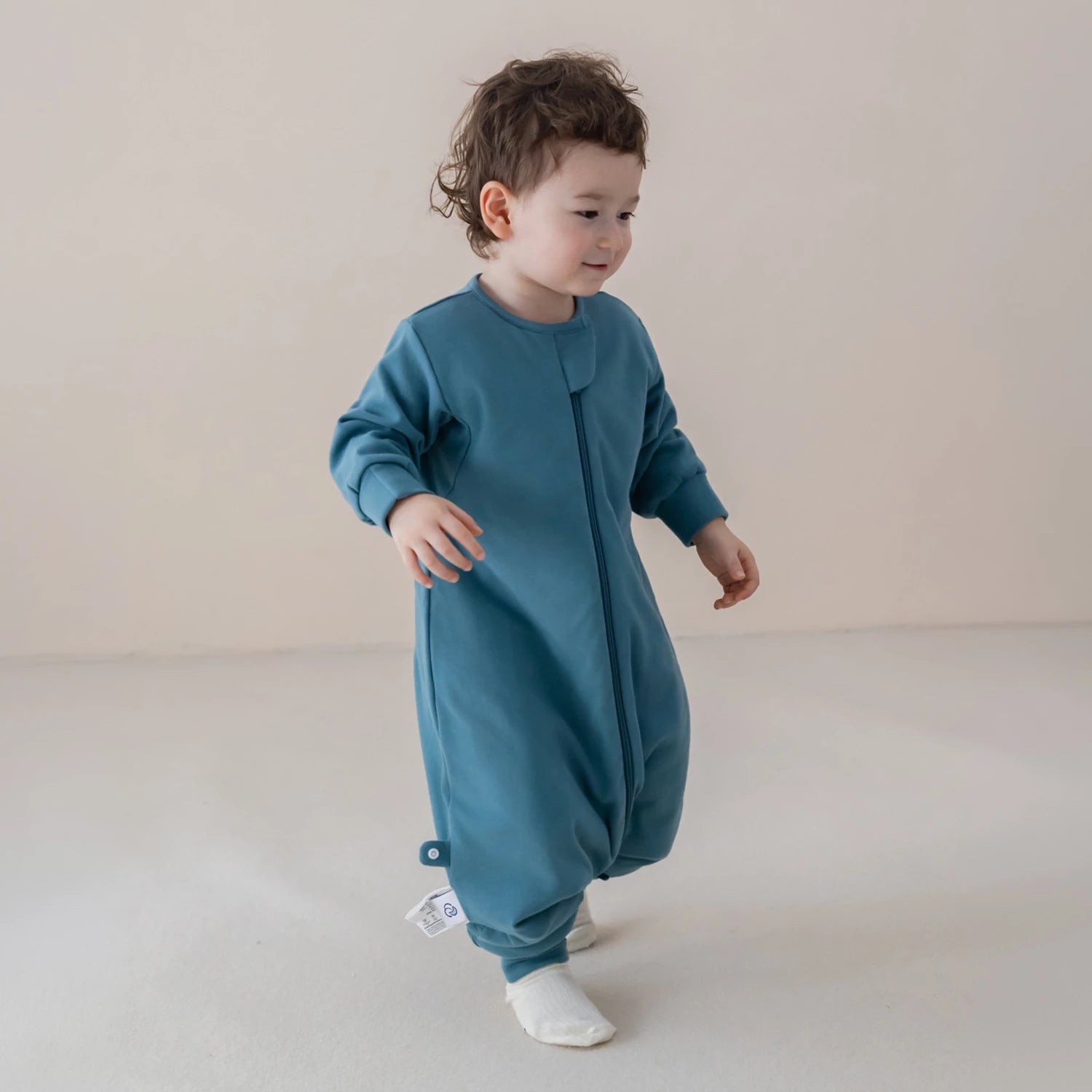
Long Sleeve suits babies who sleep in the crib and roll or shift through the night. Long Sleeve Walker makes sense once your baby is standing, cruising or walking before sleep. Sleep Suit Sack 3-in-1 works as a sack, a walker, or split-leg for stroller and outdoor time.
All three have fold-over cuffs that can cover the hands on colder nights, and a breathable underarm panel.
A sleep sack is a blanket your baby wears, so it cannot ride up over the face or be kicked off in the night. Loose blankets are not recommended in the crib for the first 12 months; the AAP suggests layers of clothing or a wearable blanket instead.
The practical difference shows up around 4 am, when rooms are coldest, and blankets have usually been kicked away. A sleep sack holds the same warmth all night, and over time it becomes part of the bedtime routine itself. More in Are Sleep Sacks Necessary? and When Can a Baby Sleep With a Blanket?
Zip the sack all the way up, put it in a laundry bag, machine wash at 40°C (104°F) with a mild detergent, then tumble dry on low or line dry. No fabric softener, no bleach, no soaking, and no dry cleaning. Low heat iron if needed.
Because the 2.5 TOG is a filled sack — a GOTS certified organic cotton shell over 30% camel wool and 70% SORONA® — there is one extra step most care instructions leave out. Take it out of the washer while it is still damp, unzip it, shake it out by the shoulders, and run your hands over the panels to break up any clumps before it dries. If you tumble dry, add a couple of wool dryer balls to keep the filling moving. Full routine in our Washing & Care guide.
It can, if the filling dries compressed. A filled sleep sack keeps your baby warm by holding still air inside the filling rather than by the fabric itself, and every wash cycle presses that filling down. If it then dries flat it sets in that shape and holds less air, so over enough washes the sack drifts away from the TOG it was made for.
Two habits prevent it, and neither takes effort. Wash the sack only when it is visibly soiled or after a leak — worn over a base layer, it usually needs washing less often than the clothes underneath. And open the filling back up before it dries: unzip, shake it out by the shoulders while still damp, then tumble dry on low with a couple of wool dryer balls.
Yes, we ship all over the world. Shipping costs will apply, and will be added at checkout. We run discounts and promotions all year, so stay tuned for exclusive deals.
Free shipping over $89
Expected Delivery for US standard shipping is 5-12 Business days.
Expected Delivery for US VIP Shipping is 4-10 Business days.
Delivery details will be provided in your confirmation email.
You can contact us through our contact page! We will be happy to assist you.