


What To Do If Baby Spits Up While Sleeping?


If your baby spits up while sleeping, check their breathing, usual color, and responsiveness first. If your baby is breathing normally, looks their usual color, and is settled, wipe away visible milk and let them sleep on their back.
Ordinary spit-up does not make back sleeping unsafe for an otherwise healthy baby. Call emergency services if your baby cannot breathe, cough, or cry effectively, looks blue or gray, or becomes limp.
What is spit-up?
Spit-up is a small amount of milk or formula that comes back up, usually shortly after a feed. It is especially common in newborns and young infants. It tends to roll out of the mouth easily, often with a burp, and most babies are not bothered by it.

Spit-up happens because a baby's stomach is small and the lower esophageal sphincter, the muscle that keeps food down, is still developing. That makes it easy for a little milk to travel back up, especially if your baby burps or is moved soon after eating.
Vomiting is different. Vomiting is forceful, with real pressure behind it rather than an easy dribble. Mayo Clinic advises contacting your baby's healthcare professional for forceful spit-up, or spit-up that is green, yellow, bloody, or looks like coffee grounds.
Ordinary spit-up in a comfortable, growing baby is a normal part of early infancy.
Why do babies spit up?
A few common factors make spit-up more likely, and knowing which ones apply to your baby usually points to the simplest adjustment.
Immature digestive system
Your baby's lower esophageal sphincter is still developing. While that muscle matures, milk travels back up the esophagus more easily than it will later on.
A very full stomach
A very full stomach can make spit-up more likely. Follow your baby's hunger and fullness cues, and discuss feed volume or frequency with a healthcare professional when spit-up is frequent, or growth is a concern.
Swallowed air
Babies often swallow air during a feed, especially when drinking quickly or crying while eating. That trapped air can carry milk back up as it works its way out.
Feeding sensitivities
Ordinary spit-up alone usually does not establish an allergy or feeding intolerance.
Discuss formula changes, milk-protein elimination, feed thickening, or medication with your baby's healthcare professional, particularly when spit-up occurs alongside blood in the stool, eczema, persistent distress, feeding refusal, breathing symptoms, or poor growth.
Why does my baby spit up while sleeping?
Spit-up during sleep usually comes down to timing rather than sleep itself. A recent feed, a full stomach, swallowed air that has not come up as a burp, and a still-developing sphincter are the mechanisms that matter.
Being placed flat after a recent feed is the part parents notice most. Without gravity helping to keep milk down, a little can travel back up, and it becomes visible on the sheet rather than absorbed into a burp cloth on your shoulder.
This is why some babies seem to spit up only when laid down, or spit up in the bassinet shortly after being put down for the night.
Being laid flat makes spit-up more noticeable. It does not mean the sleep surface should be tilted. NIH's Safe to Sleep campaign states that raising one end of a crib or mattress does not reduce reflux and can create breathing and sliding hazards.
A firm, flat, level surface remains correct, including for a baby who spits up in the bassinet most nights.
Is it dangerous if my baby spits up while sleeping?
Ordinary spit-up does not make back sleeping unsafe for an otherwise healthy baby. This is one of the most common fears parents have, and the reassurance behind it is specific rather than vague.
The American Academy of Pediatrics states that back sleeping does not increase the risk of choking or aspiration, even in babies with reflux, because babies have protective airway mechanisms. Healthy babies usually swallow or cough up fluid through those reflexes. NIH's Safe to Sleep campaign makes the same point.
That reassurance applies to ordinary spit-up in a healthy baby. It does not mean every episode of vomiting or breathing difficulty is harmless.
Telling apart effective coughing from an emergency
Knowing what to watch for takes a great deal of fear out of the middle of the night.
Effective coughing or crying means some air is still moving. Stay with your baby and keep watching their breathing, color, and responsiveness until they settle.
A weak or absent cough, an inability to breathe, cough, or cry effectively, high-pitched abnormal sounds, blue or gray coloring, limpness, or reduced responsiveness requires immediate emergency action.
Call emergency services and follow the dispatcher's instructions, and if you are trained, begin the appropriate infant choking response. The American Red Cross offers infant CPR and choking first aid courses, and taking one before you need it is worth the time.
Why tilting the crib is not the answer
Putting a wedge, positioner, or rolled towel under one end of the mattress is advice that used to circulate widely, and it is no longer considered safe.
Federal rules prohibit infant sleep products with unsafe inclines, and the Consumer Product Safety Commission covers safe infant sleep requirements. Wedges, positioners, and rolled towels are not necessarily the same legal product category, but none of them should be added to create an inclined sleep surface.
NIH's guidance is that raising one end does not reduce reflux and may let a baby slide into a position that compromises breathing.
What to do if the baby spits up while sleeping?
Start by checking your baby rather than cleaning up. Once everyone is settled, a few feeding adjustments can reduce how often it happens.
In the moment: check your baby first
Check breathing, usual color, and responsiveness before anything else.
If your baby is breathing normally, has their usual color, and is settled, wipe visible milk from the face or around the mouth if needed.
Do not reposition your baby onto their side because of spit-up. A small spit-up on its own does not require waking an otherwise settled baby.
If your baby is coughing or crying, stay with them and keep watching their breathing, color, and responsiveness. If breathing looks difficult, coloring changes, or your baby becomes limp or hard to rouse, call emergency services immediately.
Should you change clothes or bedding?
Keep a clean, tightly fitted spare sheet ready so a change is quick when one is needed.
Change clothing or the sheet when it is wet enough to touch your baby's face, chill them, irritate their skin, or make the sleep surface uncomfortable. A slightly damp patch your baby has already slept through does not need a full change at three in the morning.
If the mattress manufacturer permits a waterproof protector, it should fit securely beneath a tight-fitting sheet without changing the mattress's firmness or level surface.
Do not add loose cloths, receiving blankets, puppy pads, towels, or improvised absorbent layers to the sleep surface.
Holding your baby upright
If your baby is already sleeping safely, breathing normally, and has produced only a small spit-up, there is no need to wake them for an upright holding period.
If you have picked your baby up for cleaning and the feed was recent, you can hold them upright while they are awake and supervised.
Do not let your baby continue sleeping in an inclined product, swing, bouncer, or car seat.
Do not fall asleep while holding your baby. If your baby falls asleep in your arms after a feed, return them to a firm, flat sleep surface as soon as practical.
Pause to burp during and after feeds
Pausing to burp during and after a feed may release swallowed air before it brings milk back up. This can be particularly useful for babies who drink quickly or swallow a lot of air.
Offer smaller, more frequent feeds
Smaller feeds given more often keep your baby's stomach from becoming overfull, which reduces the chance of milk coming back up. This can help babies who spit up most in the evening.
Keep the sleep position the same
Place your baby on their back for every sleep, including babies who spit up. Avoid switching to a stomach or side sleep position to manage spit-up. Side or stomach sleeping is not a safer way to manage spit-up and increases sleep-related risk.
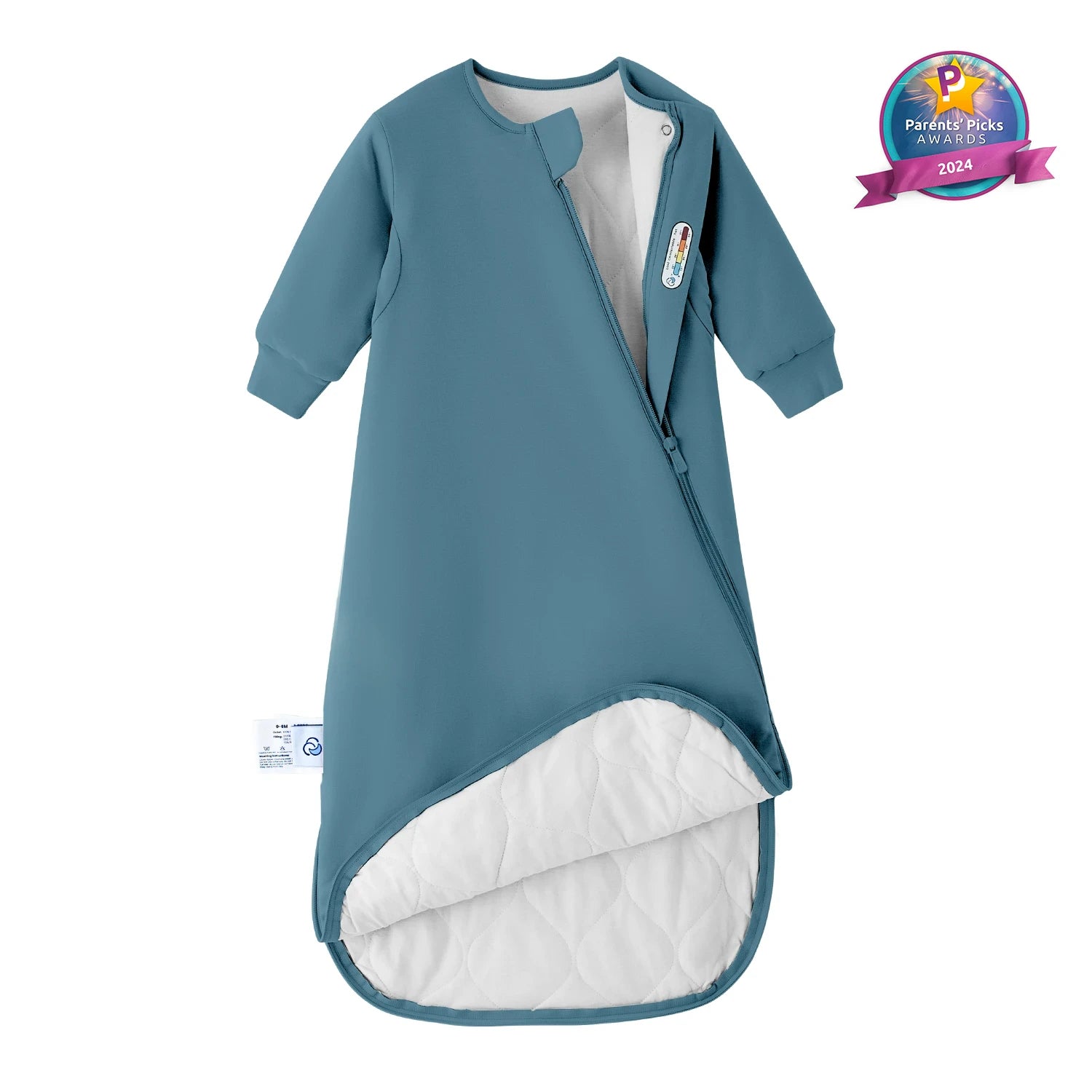
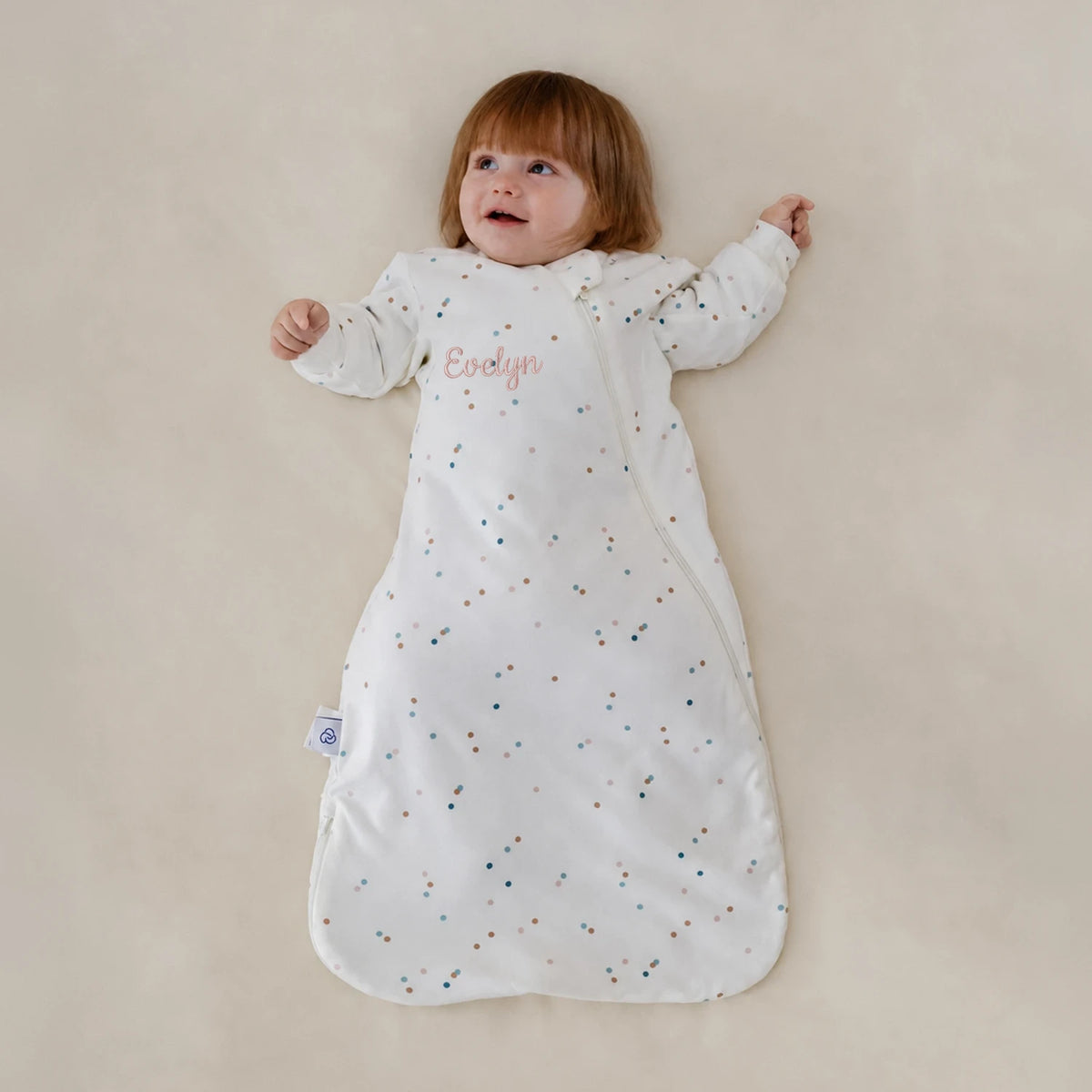
If your baby needs an extra layer, a correctly fitting, unweighted sleep sack can replace a loose blanket without adding loose bedding near the face.
When should you call your pediatrician?
Most spit-up needs nothing more than a burp cloth. A few specific signs are worth a call, and they are easier to act on when you know them in advance.
According to Mayo Clinic, contact your baby's healthcare professional if your baby:
- is not gaining weight
- spits up forcefully
- spits up green or yellow fluid
- spits up blood, or something that looks like coffee grounds
- refuses to feed
- has blood in the stool
- has trouble breathing or other signs of illness
- begins spitting up at 6 months or older
- cries more than usual, or seems unusually irritable
- has fewer wet diapers than usual
A sudden marked change in the amount or frequency of spit-up also deserves medical advice when it occurs with pain, fever, feeding refusal, breathing difficulty, unusual sleepiness, poor weight gain, or fewer wet diapers.
Trouble breathing, a change in coloring, or a baby who cannot be roused needs emergency care rather than a phone call.
When do babies stop spitting up?
Spit-up usually becomes less frequent as the lower esophageal sphincter matures and babies spend more time upright. The timing varies, but Mayo Clinic states that most babies stop spitting up by 12 months.
Some babies follow a different timeline, so the first birthday is not a hard cutoff.
If frequent spit-up continues past the first birthday, mention it to your pediatrician, especially if it comes with discomfort, feeding problems, forceful vomiting, or poor weight gain.
Conclusion
Spit-up during sleep is common in the early months, and ordinary spit-up does not make back sleeping unsafe for an otherwise healthy baby.
Check breathing, usual color, and responsiveness first, wipe away visible milk, and let a settled baby sleep on their back on a firm, flat surface.
Pause to burp during and after feeds, and try smaller, more frequent feeds if spit-up is frequent.
Skip wedges, positioners, and tilted mattresses, which do not reduce reflux and introduce real risk.
Call your pediatrician for forceful or discolored spit-up, poor weight gain, feeding refusal, or signs of illness, and call emergency services if your baby cannot breathe, cough, or cry effectively.
Frequently Asked Questions
Is it okay if my baby spits up in their sleep?
Yes, for an otherwise healthy baby sleeping on their back. Babies have protective airway reflexes that let them swallow or cough up fluid. Check that your baby is breathing normally and has their usual color, then let them sleep.
How do babies not choke on spit-up when sleeping on their back?
Airway anatomy and protective reflexes. The American Academy of Pediatrics confirms that back sleeping does not increase choking risk, even for babies with reflux.
Why does my baby spit up hours after eating?
Milk can stay in the stomach and come back up later, particularly while the digestive system is still developing. Persistent delayed spit-up alongside pain, forceful vomiting, feeding refusal, poor growth, breathing symptoms, or illness needs medical advice.
Is curdled spit-up normal?
Curdled-looking spit-up is often normal because milk can change texture after mixing with stomach acid. Green, yellow, bloody, or coffee-ground-like spit-up, or forceful vomiting, does need a call to your pediatrician.
If my baby spits up, should I feed again?
Follow your baby's hunger cues rather than a rule. A baby who seems hungry and settles well with a feed can be fed. A baby who is content afterward does not need to make up the volume, since spit-up usually looks like far more milk than it is.
Best Sellers










Read more

You have zipped the swaddle, stepped back, and something looks wrong. A swaddle can be too tight, and the check takes about ten seconds: two or three fingers should slide flat between the chest and...
Read more
When to Stop Swaddling Your Baby?
Stop swaddling at the first sign your baby is trying to roll. Trying is the signal, not managing it. A baby who rolls toward their side, or who arches and twists as though working toward it, has re...
Read more
Leave a comment
This site is protected by hCaptcha and the hCaptcha Privacy Policy and Terms of Service apply.