


Do Babies Need a Summer Sleep Sack?


Most questions about summer sleep sacks come from the same place. The nursery feels warm at bedtime, but by early morning, after the air conditioning has been running for hours, it feels noticeably cooler.
That is where the question of whether sleep sacks are necessary for summer begins. This guide explains how to read your room, how to choose between 0.5 and 1.0 TOG, and when a light bodysuit alone is honestly enough.
Do babies need a summer sleep sack?
The answer depends less on the season and more on how your baby feels in a specific nursery overnight.
The short answer
It depends on the room temperature. Some babies sleep well in a light bodysuit with nothing more, and in a warm nursery that stays warm; that is a perfectly reasonable setup.
But in rooms that cool down overnight, or for babies who move constantly and end up uncovered, a summer sleep sack is often the more practical choice.
Visit here to choose a wonderful summer sleep sack for baby to enjoy cozy and comfortable sleepy nights:
Why do babies still wear sleep sacks in the summer?
The main reason is temperature unpredictability. A nursery that feels warm at bedtime can shift abruptly by 3 a.m. once the air conditioning begins to work, and a light sleep sack gives your baby a steady layer through that change without any extra warmth needed.
That is the key reason. A summer sleep sack is not for more warmth, but more steadiness across the night where the temperature cannot hold same all the time.
What makes a sleep sack right for summer?
Not every sleep sack is suitable for the summer or hot days. Below are 3 points that you can consider when you balance one:
A lower TOG
TOG measures warmth, and for summer, most parents are looking at 0.5 or 1.0 TOG. In warm nurseries, anything higher usually adds more insulation than summer nights call for.
That said, a low TOG number on the label is only the starting point. Hold the sleep sack before you decide.
If it feels thick or padded in your hands, it will feel that way on your baby overnight, and even likely more so.
Babies cannot regulate body temperature the way adults do, so what feels merely warm to you can feel hotter to them. The tag is not always the most correct indicator.
Breathable fabric
Cotton, muslin, and bamboo rayon usually breathe better than most synthetic blends, and for babies who naturally run warm, that difference matters.
If your baby often wakes with damp hair or a sweaty neck, fabric may be a bigger factor than the room temperature itself. That is worth knowing before you buy.

Lightweight feeling
A good summer sleep sack should feel light in your hand. Some babies resist sleepwear that feels heavy or restrictive, and that usually shows up right at bedtime, when you need things to go smoothly.
In summer, lighter and softer usually works better.
0.5 TOG vs 1.0 TOG for summer
0.5 TOG and 1.0 TOG are close in warmth, but the difference begins to work when in daily life. Therefore, it's recommended to check what your nursery actually reaches overnight before you decide.
When is 0.5 TOG suitable for your baby?
For nurseries that stay warm overnight, around 24 to 27°C or 75 to 80°F, 0.5 TOG is usually the more practical option.
It works well with one light layer underneath and suits homes without much overnight cooling. Families in warmer climates, or homes where the nursery holds heat through the night, often land here.
When is 1.0 TOG suitable for your baby?
A 1.0 TOG suits rooms that sit between 20 and 24°C or 68 to 75°F, which covers many air-conditioned nurseries.
It also works well on nights when the room feels comfortable at bedtime but gets cooler by early morning, which is common in homes where the air conditioning runs through the night.
Room temperature matters more than the season
July in an air-conditioned apartment and April in a mild room can call for the same sleepwear. A thermometer in the nursery tells you more than the calendar ever will.
Once you start thinking about it that way, the TOG decision usually gets much simpler.
When a summer sleep sack helps most?
A sleep sack does not suit every nursery setup, but most parents find it an essential property in the following scenarios:
1. In air-conditioned rooms
The outside temperature in August means very little if the nursery runs cool overnight. Many parents are surprised to find that their baby feels slightly cool through the night, even in the middle of summer.
In that kind of room, a light sleep sack often turns out to be exactly the right layer.
2. For babies who kick blankets off
You tuck your baby in at 8 p.m., and by 9 p.m., you find that the blanket has already slipped to their feet.
You go to the baby room and tuck the little one up, and again and again, your sleep time is completely broken. This always drives you crazy, especially for the parents who need to go back to work during the day.
A sleep sack stays on the baby all night, even if the little one is kinda adventurers. A lightweight summer sleep sack not only keeps the baby from overheating, but also lowers the chance of the baby getting cold.
Tips you should know before buying
Summer buying decisions usually come down to a short list. The main things worth checking are TOG, fabric breathability, enough room in the hip and leg zone for free movement, and a two-way zipper that works in the dark without disturbing a settled baby.
One thing worth mentioning is that if your baby is already walking before bed, a walker-style sleep sack can make more sense than a classic one, especially in summer when you want movement to feel easy and natural.
For a fuller breakdown of sizing and fit across different ages and stages, we have walked you through the whole process with our detailed guide:
Why do parents choose the Kaiya Baby sleep sack for summer?
If the sections above helped you narrow things down, this is where Kaiya Baby fits into the picture.
Our summer range uses soft GOTS-certificated organic cotton that breathes well through warm nights, with TOG options suited to both warm nurseries and air-conditioned rooms.
A bottom-opening zip makes night changes easier without fully undressing your baby, and the temperature-sensing sticker gives you a quick read on the room without touching or disturbing a sleeping baby.
On top of that, babies spend much of the night on their backs, so that the back area often gets warm first. That sets our special design out!
Some of our 1.0 TOG long sleep sacks leave the back unpadded, so your baby stays comfortable without building up heat where they rest against the mattress.
These details are not there simply to fill a product page. They respond to the specific things that make summer nights feel harder than they should.
If you are ready to find the right option, you can browse our full summer sleep sack collection and filter by TOG and room temperature.
Frequently Asked Questions
What TOG Is best for summer?
For hot rooms that stay warm overnight, 0.5 TOG is often the better fit. For cooler or air-conditioned nurseries, 1.0 TOG is usually the better choice. Room temperature at night is a more reliable guide than the season on the calendar.
Can a baby wear a sleep sack in hot weather?
Yes, as long as the TOG and fabric match the room. A 0.5 TOG in breathable cotton is a reasonable choice even on warm nights. If the room stays very hot and does not cool down at all, a light bodysuit alone may be more comfortable.
Is a sleep sack better than a blanket in summer?
For most babies, it is. Simply because it stays in place through the night. Whether it is the right choice depends on the room and how much your baby moves, but parents who have spent a night readjusting a kicked-off blanket always prove this.
What should baby wear under a summer sleep sack?
In a warm room, a short-sleeved bodysuit is usually enough. In a cooler air-conditioned room, light-footed pajamas often work well. The base layer should follow the room temperature instead of the season.
Can a baby sleep without a sleep sack in summer?
Yes, if the room stays consistently warm overnight and your baby sleeps well uncovered. A sleep sack makes sense mostly in rooms that temeprature shift suddenly through the night, or for babies who move too much for a blanket to stay in place.
Read more
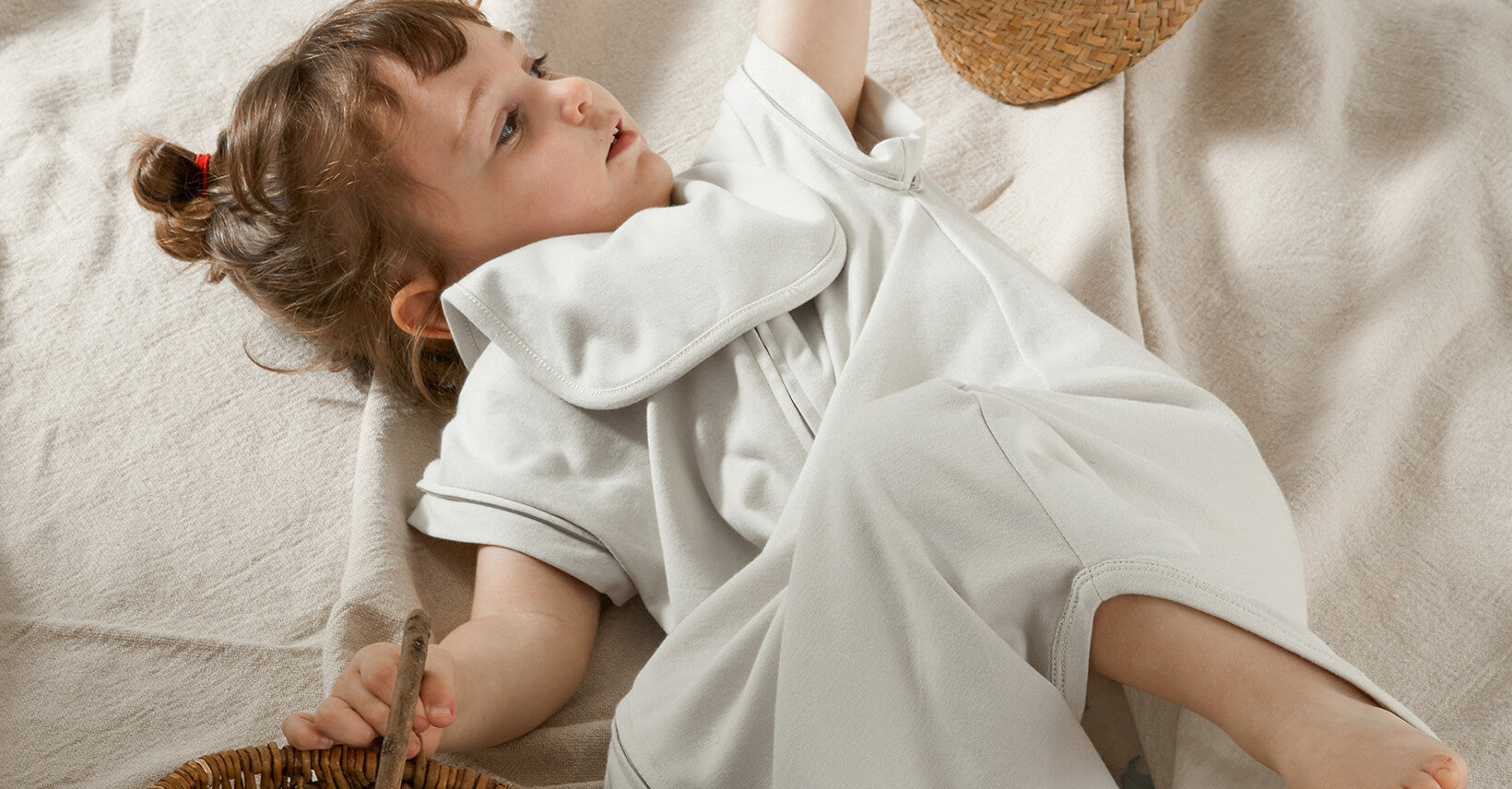
If you have ever stood over the crib at night, wondering whether your baby is warm enough, whether the blanket is safe, or whether you should have bought that sleep sack everyone seems to mention, ...
Read more
Washing and Drying Baby Clothes: How to Do It Right
Properly washing and drying baby clothes is crucial to ensure the comfort and well-being of your little one. Babies have delicate skin and are more sensitive to irritants, making it essential to fo...
Read more
Leave a comment
This site is protected by hCaptcha and the hCaptcha Privacy Policy and Terms of Service apply.