


Why Does My Baby Wake Up Screaming From Naps?


Many parents wonder why their babies wake up screaming or crying hard from their naps. This is a common problem that can be distressing for both the baby and the parents.
Several factors may be at play, including hunger, discomfort, and an abrupt, startling sleep cycle transition. Understanding these reasons behind waking up screaming can help parents solve the problem more effectively and ensure that their baby feels safe and comfortable.
Why do babies scream during naps?
This is specifically about the moment a nap ends, when your baby wakes up screaming or crying right at the point one sleep cycle finishes, and the next hasn't started. The causes below explain that exact moment, not general fussiness during the night or crying in the middle of a sleep stretch.
Hunger
Babies often wake up screaming from their naps because they are hungry. Babies' stomachs are small and cannot hold much food, so they need to eat often.
If babies don't have enough to eat before a nap, hunger may wake them up, and they will express their needs by crying.
Discomfort
Discomfort is another common reason why babies wake up screaming. This can be because of a dirty diaper, feeling too hot or cold, or sleeping in an uncomfortable position.
Checking and addressing these basic needs can often help your baby sleep soundly.
Sleep cycle transitions and confusional arousal
Babies cycle through light and deep sleep roughly every 30 to 60 minutes, far more often than adults do. Waking at the edge of one of these cycles, before the next one has fully started, is one of the most common reasons for a startled, screaming wake-up.
Sometimes this shows up as a specific pattern that catches parents off guard: the baby's eyes are open, they may thrash or arch their back, and they seem hard to comfort for a minute or two, almost as if they don't recognize you.
A baby may appear partly awake, disoriented, or difficult to comfort during a sleep transition, but the same behavior may also occur with hunger, discomfort, pain, or illness, so it should be treated as a possible pattern rather than a diagnosis.
Sleep specialists may describe a pattern like this as a confusional arousal, a partial awakening from deeper non-REM sleep. Behavior alone, however, cannot confirm that explanation in an infant.
If the baby is breathing normally and appears safe, parents can keep stimulation low and allow a brief moment for the baby to finish waking.
Persistent, unusual, or changed crying still requires checking for hunger, temperature, diaper needs, pain, or illness. This can happen after a short nap or a long one.
A baby can wake up screaming after a full, well-timed nap and still not be fully settled out of that deep-sleep transition, so a screaming wake-up on its own does not mean the nap was too short, too long, or that something went wrong. Keeping the room dim and stimulation low can help while the baby finishes waking.
How this looks at different ages
The pattern shifts a little as your baby grows, though the underlying causes stay largely the same.
Newborns, up to about 3 months, wake often and abruptly between naps mainly because their sleep cycles are still short and immature, so a startled, crying wake-up is common on its own and not usually a sign of a problem.
Around 3 to 4 months, changes in sleep structure can make short naps and abrupt sleep-cycle transitions more noticeable. This does not mean that every screaming wake-up is a confusional arousal.
By 6 months, many babies link cycles more reliably, though sleep cycle transitions can still play a role. Schedule mismatch, overtiredness, a growth spurt, new mobility, or a developmental leap are additional possibilities to consider at this age.
When it happens every single time
If your baby wakes up screaming from nearly every nap, it helps to look for a pattern rather than assume the worst.
Consider nap length, how long it has been since the last feed, the room temperature, whether the wake-up happens at roughly the same point in each nap, how quickly your baby settles once you reach them, and whether the pattern is stable, worsening, or new.
If your baby wakes crying and then goes back to sleep, they may have surfaced briefly between sleep cycles without being ready for the nap to end.
It is worth checking in with your pediatrician if the episodes are worsening, or if they come with breathing changes, fever, vomiting, feeding difficulty, unusual lethargy, poor weight gain, or behavior that is clearly different from your baby's normal pattern. An isolated, ordinary wake-up that resolves within a few minutes is not, on its own, a cause for concern.
Teething pain
Teeth moving through the gums may cause mild gum tenderness or swelling, and this can disturb sleep for some babies. Severe or persistent crying should not automatically be blamed on teething, since it can also point to something else worth checking with your pediatrician.
Illness
If your baby is sick or not feeling well, they may wake up screaming from their nap. Common illnesses such as ear infections, colds, and even mild fevers can cause discomfort and disrupt sleep.
Overstimulation
Before naps, babies may be overstimulated by too much activity. This overstimulation can make it more difficult for babies to settle down and fall asleep, leading to frequent waking and crying.
Sleep regression
Sleep regression is a temporary stage in which your baby's sleep pattern changes. It may occur at different stages such as around 4 months, 8 to 10 months, and 18 months. During this period, your baby may wake up frequently and have difficulty falling asleep.
Separation anxiety
Separation anxiety occurs as early as 6 months of age. At this stage, babies begin to understand that objects are permanent and realize that people and things exist even if they can't be seen. If they wake up and find themselves alone, they may scream out of fear or anxiety.
Night terrors (less likely for babies)
Night terrors occur most often in toddlers and preschool-aged children, so this is not the first explanation to consider for a baby waking distressed at the end of a nap.
Night terrors involve sudden, intense distress during deep sleep, and parents cannot reliably tell a night terror apart from other causes based on how loud or intense the crying sounds.
For a baby waking up screaming right at the end of a nap, an abrupt sleep transition is a more practical possibility to check first. Unusual movements, breathing changes, poor responsiveness, any injury risk, or a change that is clearly different from your baby's normal pattern are worth discussing with your pediatrician.
Do babies have nightmares?
Whether or not babies have nightmares is a topic of concern for many parents. While it can be difficult to determine what babies experience during sleep, experts believe that younger infants are less likely to have nightmares.
This is because nightmares are thought to be associated with more advanced cognitive and emotional development, which usually occurs later in babyhood.
Babies go through different stages of sleep, including rapid eye movement (REM) sleep, which is associated with dreaming. However, the content and nature of dreaming in infants are poorly understood. What looks like a nightmare in a young baby is far more often an abrupt sleep transition or a response to discomfort such as hunger, a dirty diaper, or teething pain.
As they get older and their brains develop, babies begin to form more complex thoughts and emotions. Nightmares may begin as early as about 6 months, although they are more common and easier to recognize in older children.
In a younger infant who wakes crying at the end of a nap, hunger, discomfort, overtiredness, or an abrupt sleep transition are usually the more practical explanations to check first.
How do you help a screaming baby fall asleep?
Most of what helps here is prevention: routines and an environment that make it easier for your baby to settle back down on their own when a wake-up happens.
Establishing a consistent bedtime routine
Maintaining a bedtime routine can help your baby feel secure and know that it's time to go to sleep. A bedtime routine may include activities such as a warm bath, reading a short story, or singing a lullaby. Being consistent helps signal to your baby that it's time for bed.
Create a comfortable sleep environment
Making sure your baby's sleep environment is comfortable can help them fall asleep more easily. This includes a cool, quiet room with dimmed lights.
Using a white noise machine can help mask background noise that could wake your baby.
It's also worth checking that your baby has a clean diaper and is dressed appropriately for the room temperature.
Offer calm, consistent comfort
What settles a baby fastest is usually calm consistency rather than any specific object: a familiar voice, the same soothing words each time, and a predictable routine your baby comes to recognize. The bigger factor is almost always the routine and tone around sleep, not any single item.
Practice gentle rocking or swaying
Gentle rocking or swaying can be very soothing for your baby. Holding your baby and gently rocking them back and forth can mimic the comforting movements they had in the womb. This helps to soothe your baby and make it easier for them to fall asleep.
Try feeding before naps
Making sure your baby is fed before they fall asleep helps prevent them from waking up hungry partway through a nap. Feeding or nursing for a short while before a nap or bedtime can keep your baby comfortably full.
Using a pacifier
For some babies, sucking on a pacifier can be very soothing and help them fall asleep. Pacifiers provide comfort and satisfy your baby's natural sucking reflex. It can be helpful to offer a pacifier at naptime if your baby finds it comforting.
Stay patient and calm
Babies can usually sense the emotions of their caregivers. Staying calm even if your baby is upset helps create a soothing environment. Speaking softly to your baby can help them settle.
Swaddling your baby
For younger babies, swaddling can work. Wrapping your baby snugly can make them feel secure and prevent the startle reflex from waking them up.
Always place a swaddled baby on their back, and keep the hips free to bend and move rather than wrapping the legs straight and tight.
Stop swaddling at the first sign your baby is trying to roll over. Never use a weighted swaddle or weighted sleep sack. The AAP advises against weighted swaddles and weighted blankets because they can place too much pressure on a baby's chest and lungs.
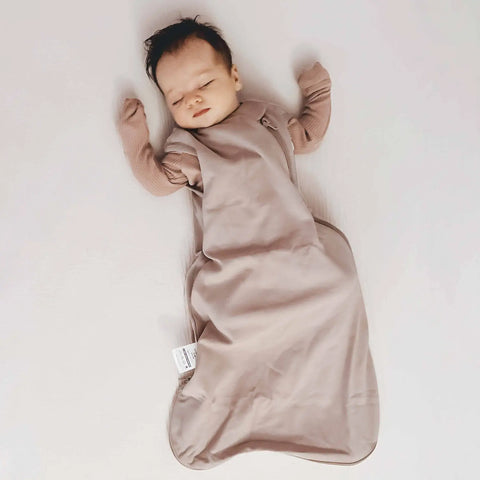
Addressing any discomfort
Sometimes babies wake up screaming because they are uncomfortable. Checking your baby for common problems such as wet diapers, signs of illness, or painful teething can help identify and address the cause of discomfort.
How to make your baby sleep safely?
Safe sleep recommendations apply to every nap, regardless of why your baby wakes upset. The essentials that apply directly to naps are: always place your baby on their back, use a firm, flat mattress with nothing loose in the sleep space, and keep the room at a comfortable temperature.
For the complete guidelines, including room-sharing, smoke exposure, and how sleep sacks and swaddles fit safely into your setup, see our full guide on reducing the risk of SIDS and safe sleep.
Conclusion
Understanding why your baby wakes up screaming from a nap can help parents address the problem more effectively. Common causes include hunger, discomfort, and short sleep cycles. Babies may also wake up due to night terrors, separation anxiety, teething pain, illness, overstimulation, or sleep regression.
Night terrors are uncommon in babies and are not the first explanation to consider when crying begins as a nap ends.
Once the underlying cause is identified, parents can take steps to soothe their baby and create a more restful sleep environment. Staying patient and attentive to your baby's needs helps them feel safe and comfortable.
Frequently Asked Questions
How do I stop my baby waking up screaming or crying from naps?
You usually cannot prevent every wake-up, since abrupt sleep cycle transitions happen on their own. What helps most is a full, well-timed nap so your baby isn't overtired, a calm, dark room, and a consistent pre-nap routine. If your baby seems disoriented or hard to comfort right at wake-up, keep stimulation low and give it a minute or two before intervening further.
Do overtired babies wake up screaming?
Often, yes. Overtiredness can make settling and sleep transitions harder, so an overtired baby may take shorter naps and wake more abruptly and upset. If this pattern shows up often, it can help to compare how naps go after a longer wake window versus a slightly earlier nap, and see which settles your baby more easily.
Is a confusional arousal the same as a nightmare?
No. A nightmare is a frightening dream associated with REM sleep, whereas a confusional arousal is a partial awakening from deeper non-REM sleep. In an infant, behavior alone cannot reliably confirm either explanation, and an infant cannot report what they dreamed or remembered.
Is a 2.5 hour nap too long for a baby?
A long nap is not automatically a problem, particularly for a newborn. Whether it needs adjusting depends on your baby's age, feeding needs, total 24-hour sleep, growth, and whether it consistently disrupts night sleep. A groggy, screaming wake-up from a long nap does not prove the nap itself was too long. It can also mean your baby woke in the middle of a sleep cycle, which can happen after naps of any length.
Best Sellers













Read more
If your 16-month-old was sleeping well and has suddenly started waking, crying, and fighting bedtime, you are seeing something real, even though there is no single scheduled "16-month regression" o...
Read more
What is a TOG Rating? How to Choose the Right TOG of Sleep Sacks?
You've probably looked up TOG while buying a sleep sack, found two different charts that don't quite agree, and ended up more uncertain than when you started. That's a frustrating place to land whe...
Read more
Leave a comment
This site is protected by hCaptcha and the hCaptcha Privacy Policy and Terms of Service apply.