


How to Dress a Baby With Fever at Night?


When you touch a hot little forehead at 2 a.m., the first instinct is to do something with the layers.
For most babies, one light, breathable cotton layer is the safest starting point for a feverish night. Not extra bundling to keep them warm, and not stripping them bare to force the number down.
The American Academy of Pediatrics, MedlinePlus, and the NHS agree on the core message, which is to keep your child comfortable, avoid overdressing, and treat clothing as a comfort measure rather than medicine.
What that one layer looks like changes with age, and a sleep sack can still belong on a feverish night as long as it is light enough for the room.
What should a baby wear with a fever at night?
For most babies, a single lightweight cotton layer is the sensible place to start. Depending on the room, that may be a short-sleeve or long-sleeve bodysuit, light cotton pajamas, or a thin, breathable sleep layer your baby already tolerates well.
Clothing does not treat a fever, and it does not need to. Its one job tonight is to avoid making a hot baby hotter. MedlinePlus notes that overdressing can itself push a child's temperature up, which is the opposite of what you want at bedtime.
Going too far the other way backfires too. MedlinePlus describes shivering as raising the core body temperature, so a baby who gets cold enough to shiver starts generating heat again. Comfortable, light, and breathable is the target, not bare skin at all costs.
What should a baby wear at each age?
The one-light-layer rule holds at every age. What changes is what sits over that layer, because safe sleep rules are stricter for younger babies.
Newborns to 3 months
A single cotton bodysuit, with a lightweight sleep sack or a light swaddle only if your baby is not yet rolling. No loose blankets in the crib at this age, fever or not.
Any rectal temperature of 100.4°F (38°C) or higher in a baby under 3 months needs a call to the doctor right away, per the AAP and MedlinePlus, before you adjust a single layer. At this newborn age, the outfit is never the answer.
3 to 12 months
Light cotton pajamas or a bodysuit, with a low-warmth sleep sack if your baby normally sleeps in one and the room is not warm. Loose blankets still stay out of the crib.
Cool hands and feet are normal and are not the signal to add layers; check the chest or the back of the neck instead.
12 months to toddler
Light cotton pajamas are usually enough. Past their first birthday, a thin blanket becomes an option, but on a feverish night, a lightweight sleep sack is often the easier choice because your toddler cannot kick it off in the night and then wake up chilled, or burrow under it and overheat.
Why should you avoid extra layers at night?
The most common nighttime mistake is adding warmth because the baby seems unwell. It feels like care. In practice, it can make the night harder for both of you.
If your baby has a fever, skip thick sleepwear, stacked layers, hats indoors, fleece or other heat-trapping fabrics, and heavy blankets. MedlinePlus puts the hardest part of this plainly, which is that you should not bundle a child in blankets or extra clothes even when they have the chills.
Skip the sweat-it-out approach too. Fever is the body's own response to illness, and pediatricians at Children's Hospital Los Angeles are plain about it. Over-bundling raises the temperature further and makes the child more miserable.
You have not done anything wrong if you bundled your baby up last time. Almost every parent has. The habit comes from a good instinct; it is only the direction that needs to flip.
Should a baby sleep in only a diaper with a fever?
Usually not as a first move, even though this advice circulates widely. The NHS advises against undressing a child who has a fever. MedlinePlus describes shivering as the body's way of producing heat when it feels cold.
Start with one light layer, and take one away only if your baby seems overheated. Put your hand back on the chest and the back of the neck before you settle down again, and go one step lighter if you still need to. Settling a baby who has got cold is much harder than settling one who is a little warm.
Can a baby wear a sleep sack with a fever?
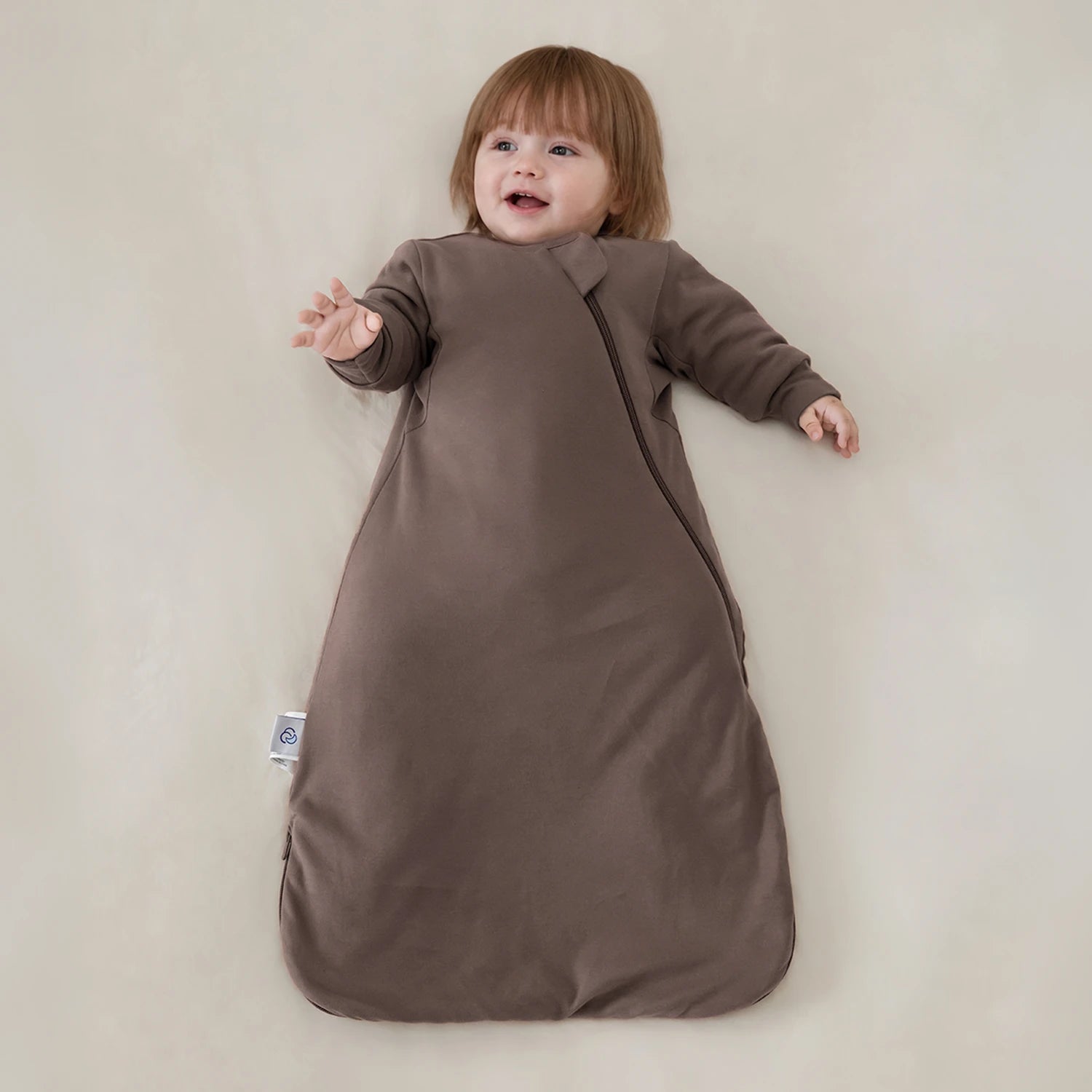
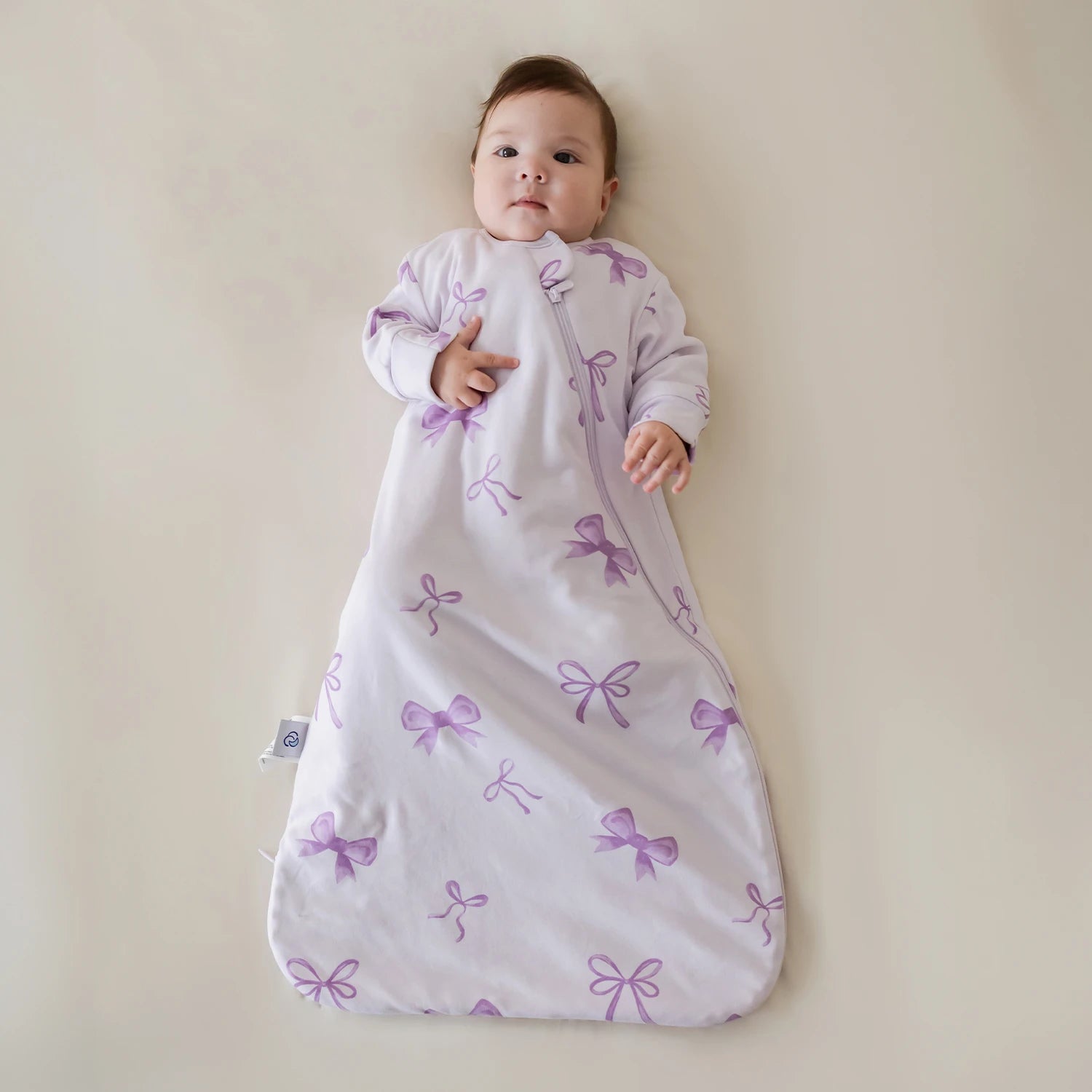
Sometimes yes, and it depends entirely on how warm the sack is, not on the sack itself. Nationwide Children's Hospital tells parents of babies under one to dress them in a sleep sack or wearable blanket when they have a fever, and not to put loose blankets over them. A lightweight, non-swaddling sack does that job while adding only a thin layer of warmth.
A sack earns its place tonight if it is light enough for the room, if it is not adding warmth your baby does not need, and if it replaces loose bedding instead of sitting on top of another layer.
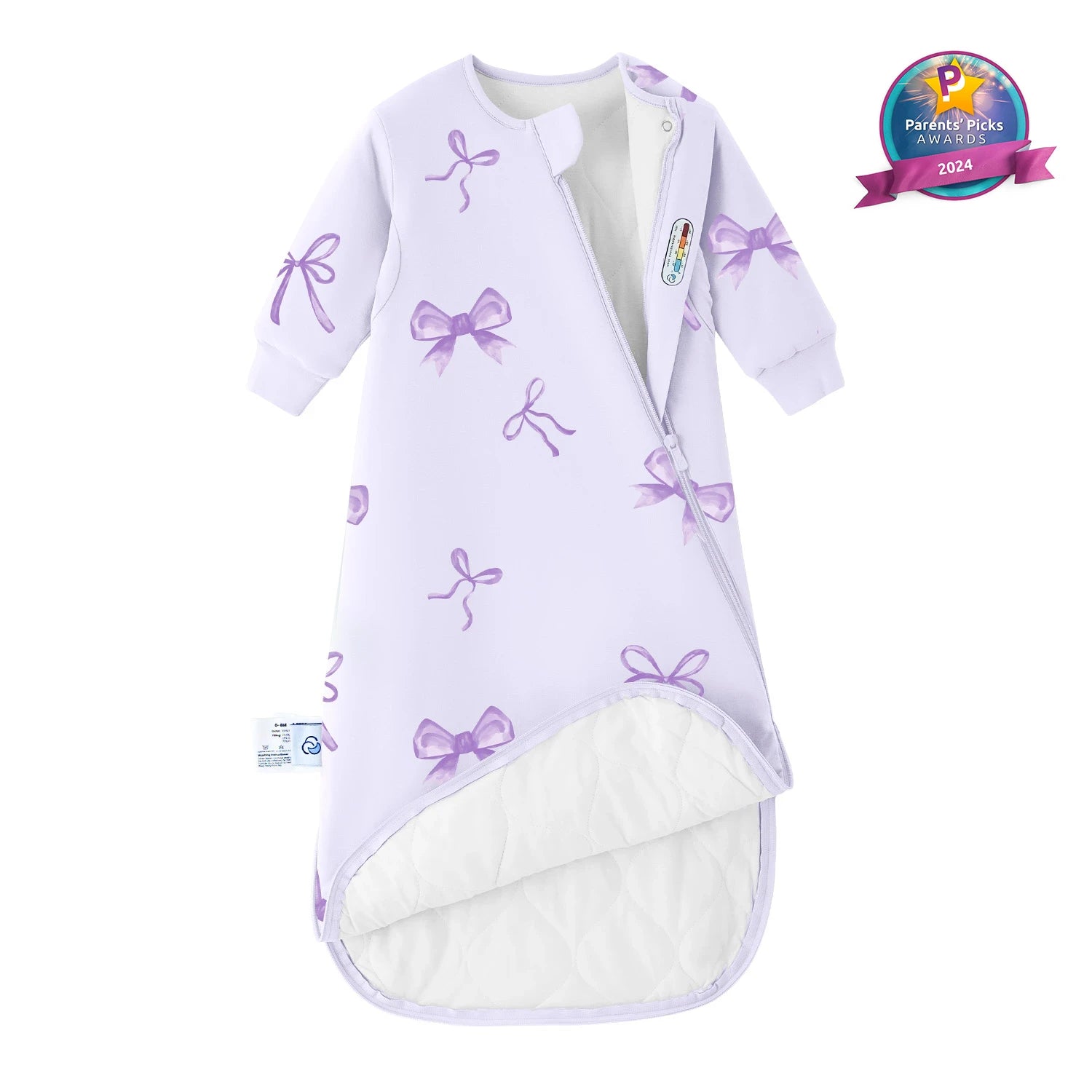
Warm winter-weight sacks and layered sleep setups point the wrong direction for a hot baby. A thin option in the 0.5 TOG range over a single bodysuit is the kind of pairing that keeps a feverish baby covered without trapping heat.
The AAP says to stop swaddling as soon as your baby shows any signs of trying to roll over, so skip swaddle-style wraps from the first attempt to roll, not from the first successful roll.
What room temperature feels right for a baby with a fever?
If the room runs warm, even the right outfit cannot do its job. Aim for a comfortable room, not a cold one.
MedlinePlus asks only for a comfortable room, not too hot or too cool. In practice, that usually means a nursery around 68 to 72°F (20 to 22°C), and a degree or two cooler is fine when your baby is dressed for it.
A room that is too chilly triggers shivering. A room that is too warm traps heat and produces a sweatier, fussier baby who is harder to settle. If the air feels stuffy, keep it moving gently. Manchester University NHS Foundation Trust says not to blow fans directly at your child.
Check the room before you blame the outfit, because a light layer only holds up when the room cooperates. For the full range at every age, see our guide to the ideal room temperature for a baby's room.
How should you check if your baby feels too hot?
Hands and feet often feel cool during a fever, and on their own they are not the signal to add a layer. The Lullaby Trust notes that a baby's hands and feet will usually be cooler, which is normal, and points you to the chest or the back of the neck instead.
Hands and feet that feel unusually cold are a different matter. The NHS lists that, along with changes to skin colour such as blue, grey, paler than usual, or blotchy skin, which may be harder to see on brown or black skin, or lips or a tongue that turn blue, grey, or paler than usual, as a reason to call emergency services straight away.
Slide two fingers onto the chest or the back of the neck instead. Hot and sweaty means lighten the setup by one layer. Comfortably warm and dry means the layers are right and you can go back to bed. Shivery and unsettled in a cool room means one thin layer more, then recheck.
The check below is about layers, not about treating the fever. The Lullaby Trust points to the chest or the back of the neck for this. For the fever itself, follow the NHS and MedlinePlus guidance, and the thresholds further down this page.
| What the chest and the back of the neck feel like | What to do | What to leave alone |
|---|---|---|
| Hot, sweaty, or clammy | Take one layer away, then feel again before you settle back down | Do not strip your baby down to a diaper as the first move |
| Comfortably warm and dry | Nothing. The layers are right for the room | Do not add a layer because the hands or the feet feel cool |
| Cool, with your baby shivery or unsettled | Check the room temperature before you change anything about the layers | Do not add blankets or extra clothes to stop the shivering, and keep loose bedding out of the sleep space |
The last column follows the NHS on not undressing a child who has a fever, the Lullaby Trust on hands and feet that usually feel cooler than the chest, MedlinePlus on not bundling a child who has the chills, and AAP safe sleep guidance on keeping loose bedding out of the sleep space. For the signs that apply on any night rather than only a feverish one, see our guide to the signs a baby is too hot or too cold while sleeping.
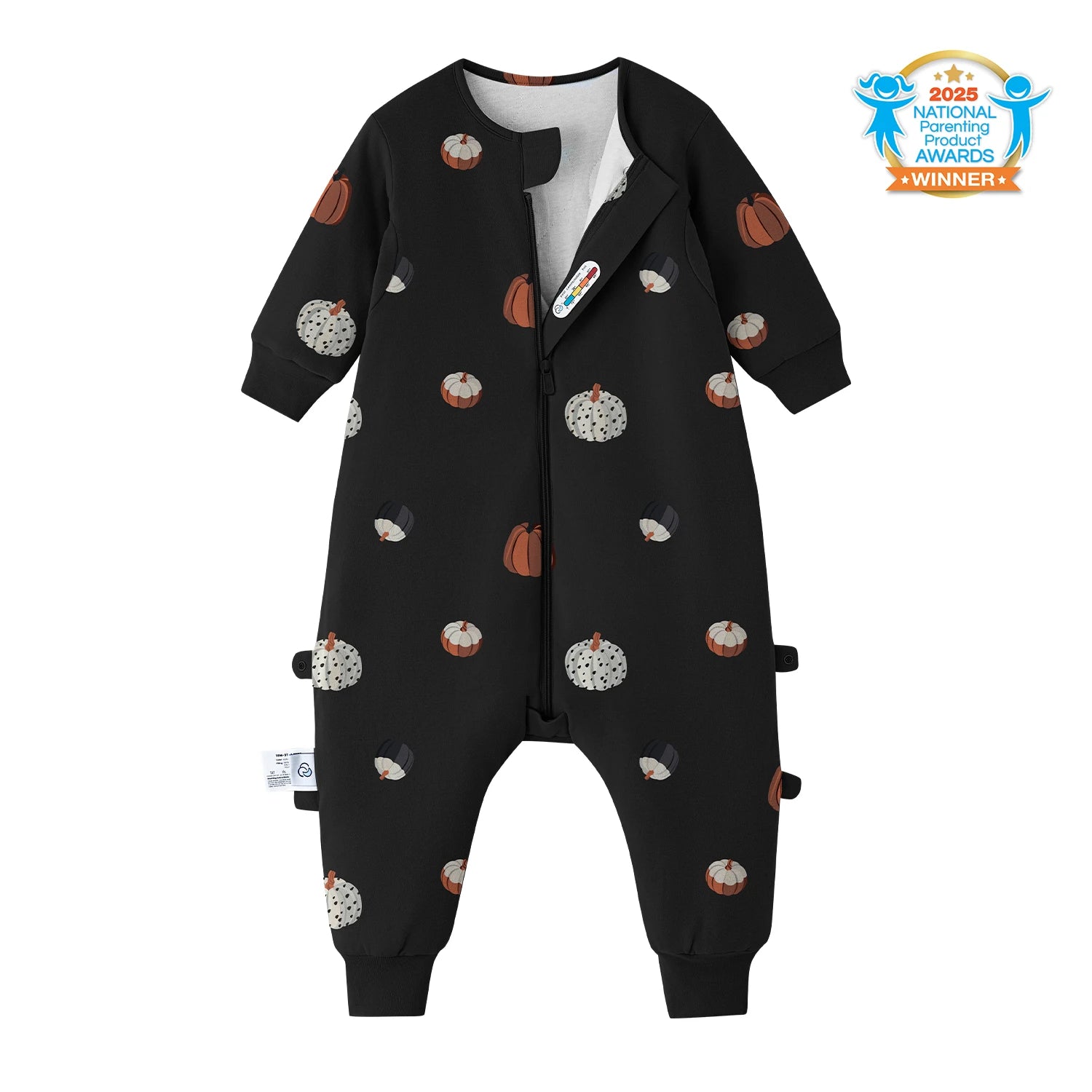
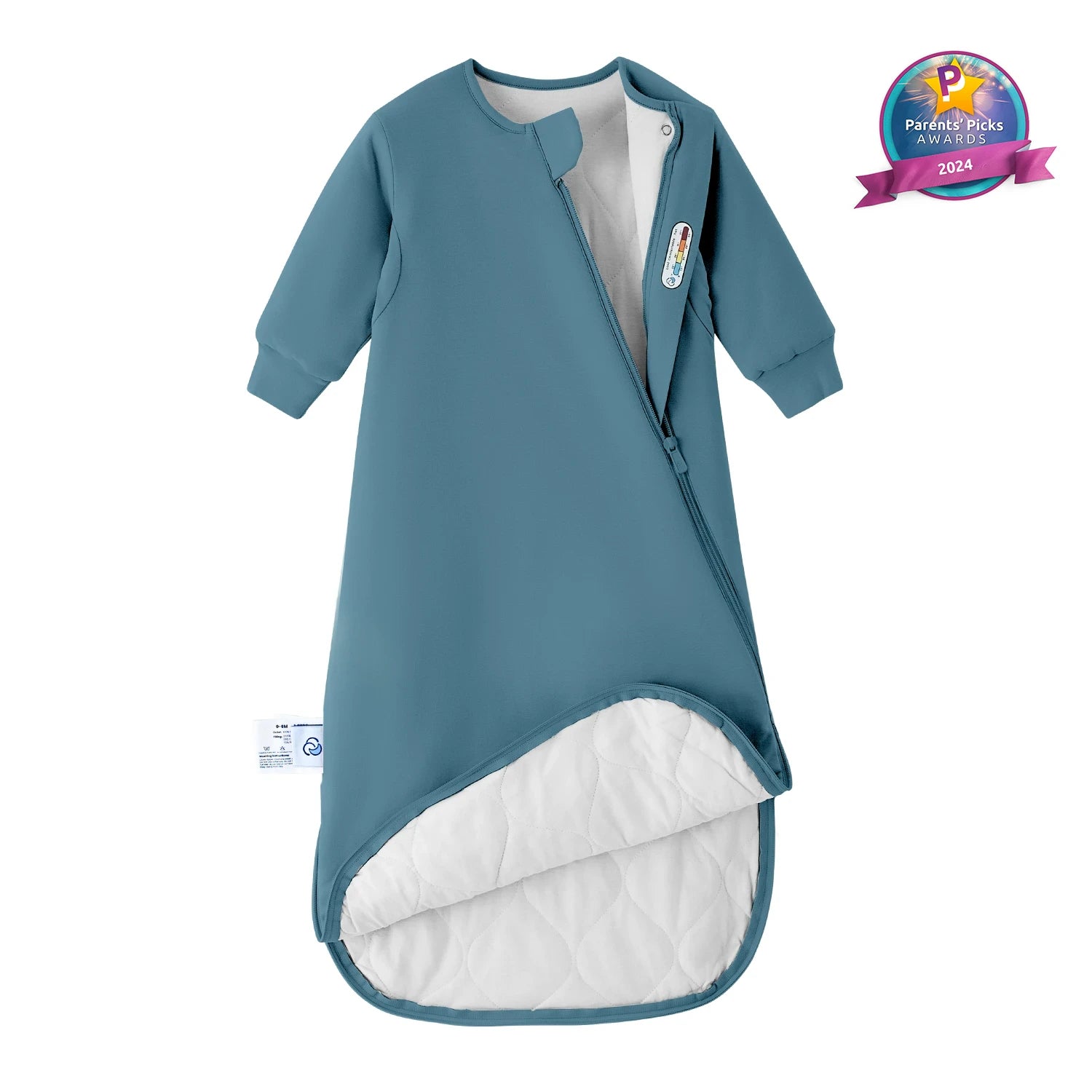
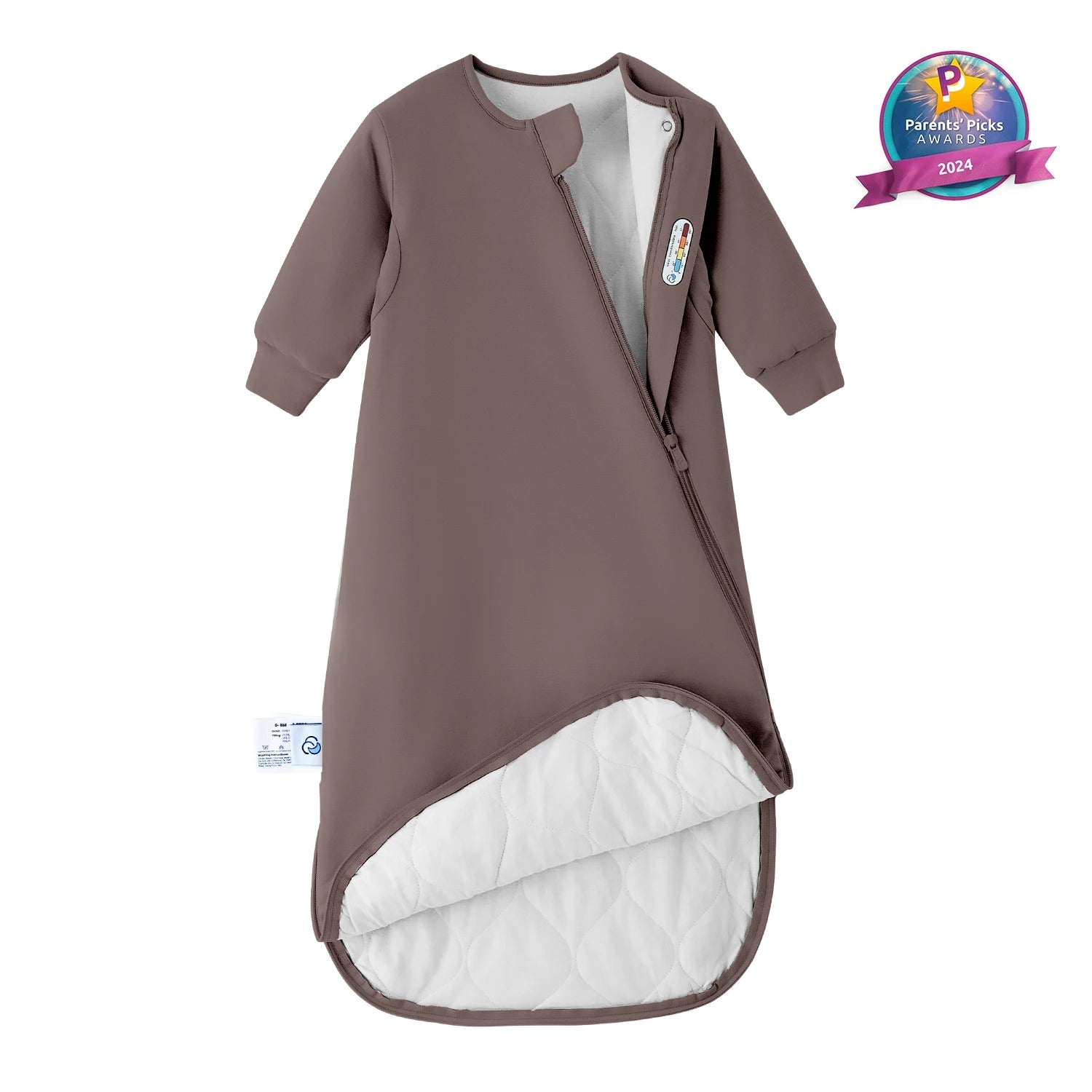
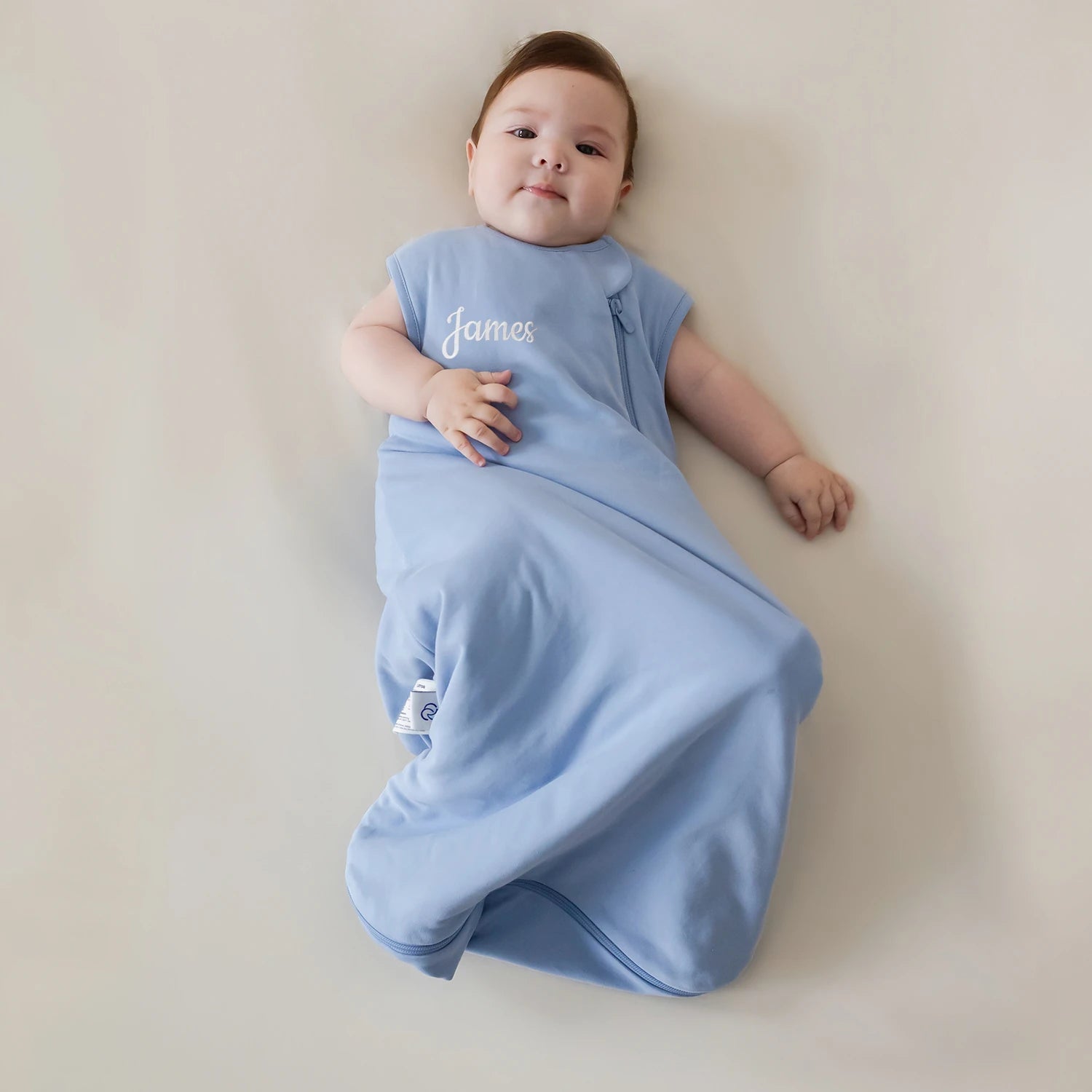
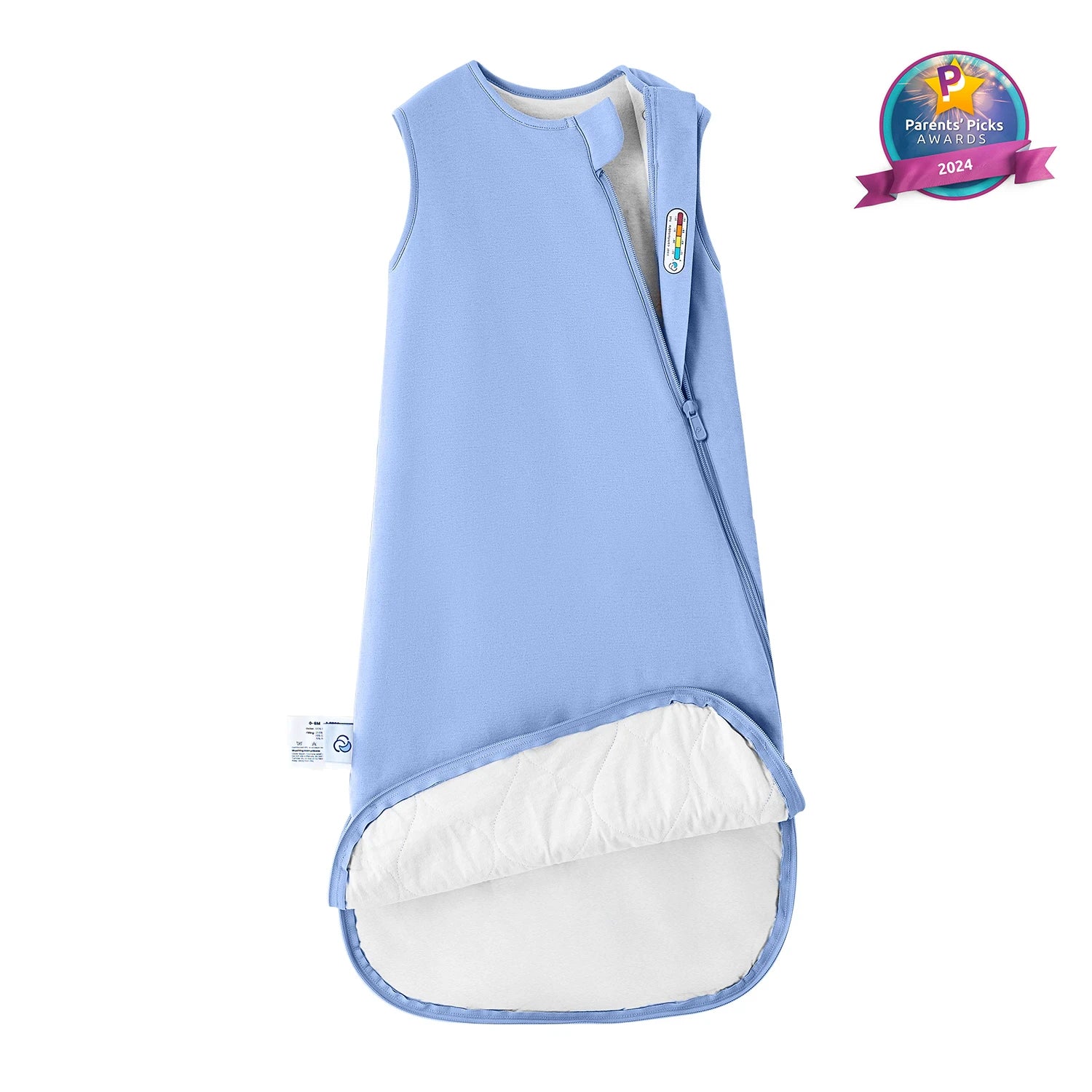
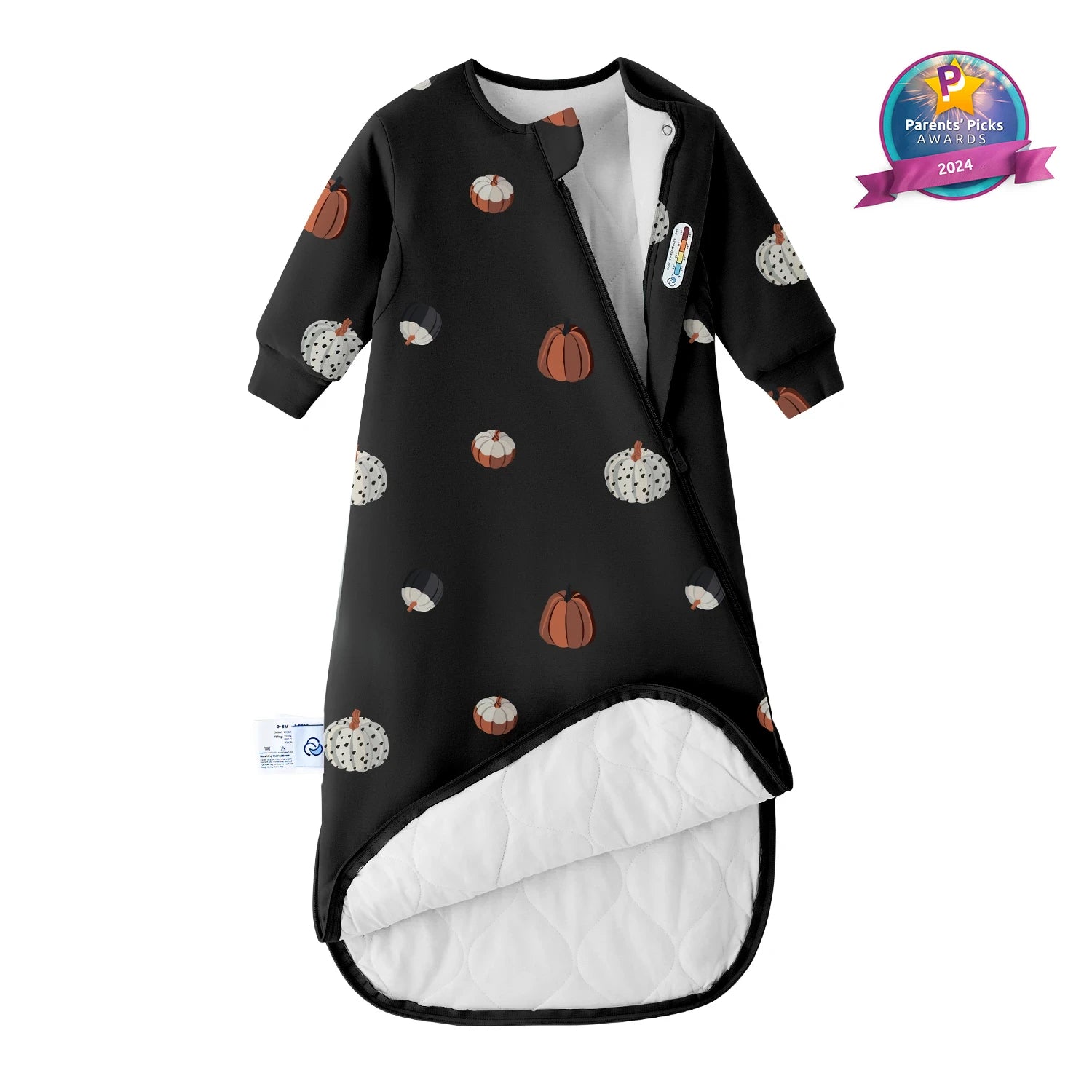
If you want an at-a-glance cue between checks, Kaiya Baby sleep sacks carry a temperature-sensing sticker that shifts color with warmth: blue suggests your baby may be running cool, yellow sits in the comfortable range, and orange or brown means things are getting warm.
Treat it the way you would a room thermometer, as a signal that supports the neck check rather than replacing it.
What else helps at night besides changing clothes?
Clothing is one piece of a feverish night, and honestly not the biggest one.
Keep offering breast milk or formula as usual. MedlinePlus says not to give a baby any fruit juice.
Fewer wet diapers, a dry mouth, and no tears when crying are dehydration signs to watch. Use fever medicine only as your child's clinician or the label directs for your baby's age. The NHS says not to give aspirin to children under 16.
And if your baby over 3 months is sleeping comfortably, leave them. MedlinePlus says not to wake a sleeping child to give medicine or take a temperature. Sleep is doing more for them than the thermometer would.
Check in if they seem restless, unusually hot, harder to settle, or if you recently gave medicine and want to reassess.
When should you call a doctor instead of adjusting clothing?
Some nights, the outfit stops being the question. Call promptly if your baby:
- is 3 months of age or younger with a rectal temperature of 100.4°F (38°C) or higher, which the AAP says needs a call to your pediatrician immediately
- is under 2 and the fever has lasted more than 24 hours, per the AAP
- looks unusually sleepy, floppy, or hard to wake
- is breathing fast or working hard to breathe
- is feeding poorly or showing dehydration signs
- has a rash, repeated vomiting, or a seizure
- does not seem more alert or comfortable even when the fever comes down
The AAP also says you may need to notify the doctor if your baby is between 3 and 6 months with a fever of 101°F (38.3°C) or greater, or is older than 6 months with a temperature of 103°F (39.4°C) or higher.
None of these are clothing problems. Trust the instinct that made you check on them, and make the call. Doctors would rather hear from you at 2 a.m. than have you wonder until morning.
Some signs skip the phone call to your own doctor. The NHS treats the whole list below as a reason to call emergency services straight away:
- a stiff neck
- a rash that does not fade when you press a glass against it
- being bothered by light
- a fit, or febrile seizure, for the first time, where they cannot stop shaking
- unusually cold hands and feet
- changes to skin colour such as blue, grey, paler than usual, or blotchy skin, which may be harder to see on brown or black skin, or lips or a tongue that turn blue, grey, or paler than usual
- being drowsy and hard to wake
- being extremely agitated and not stopping crying, or being confused
- difficulty breathing, where you may notice grunting noises or the stomach sucking under the ribcage, or breathlessness, or breathing very fast
- not responding the way they normally do, or not being interested in feeding or normal activities
What is the safest rule to remember at night?
There is no exact outfit formula, and you do not need one. If you remember nothing else, work down this list.
- Start with one light, breathable cotton layer.
- Do not bundle. Extra layers trap heat and can push the temperature higher.
- Keep the room comfortable rather than cold, so one layer can do its job.
- Use a light, non-swaddling sleep sack only if it suits the room and replaces loose bedding instead of adding to it.
- Judge warmth at the chest or the back of the neck, not the hands or feet.
- Stop adjusting clothes and call the doctor the moment age, symptoms, or behavior say this is bigger than layers.
The job tonight is to keep your baby comfortable while their body does the work, and to know which signs mean it is no longer about the pajamas.
Frequently Asked Questions
What should a baby wear to bed with a fever?
A single light, breathable cotton layer is usually enough. The goal is to avoid trapping heat without letting your baby get cold enough to shiver.
Can a baby wear a sleep sack with a fever?
Yes, if it is lightweight, non-swaddling, and suits the room. Thick winter-weight sacks or layered setups are the wrong direction for a feverish night.
Should I remove all my baby's clothes if they have a fever?
Not usually. The NHS advises against undressing a child who has a fever, so take away one layer at a time and recheck the chest and the back of the neck instead.
How should I dress my baby with a fever at night in winter?
The same one light layer, with the room kept comfortable rather than warm. Heat the room modestly instead of adding layers, and resist winter-weight sleepwear while the fever lasts.
How should I dress my baby after vaccines if they have a fever?
Dress them the same way, with one light layer and no bundling. A mild fever after shots is common. The under-3-month rule still applies, and call if the fever climbs, lasts beyond a day, or your baby seems unusually unwell.
Is it okay to cover a baby with a blanket during a fever?
Not for babies under 12 months; loose blankets stay out of the crib even when they are sick. For toddlers with chills, one thin blanket is fine. Avoid heavy layering at any age.
Should I wake my baby to check their fever at night?
Not if they are over 3 months and sleeping comfortably. Check them if they seem distressed, are breathing oddly, recently had medicine, or are unusually hard to wake.
When is a fever more urgent in a baby?
Any fever of 100.4°F (38°C) or higher in a baby 3 months of age or younger needs medical advice right away. At any age, poor feeding, dehydration, breathing trouble, unusual sleepiness, or a seizure means the situation is beyond clothing changes.
Why does my baby's fever seem higher at night?
Nationwide Children's Hospital notes that body temperature is usually lowest in the morning and goes up through the day, so the same illness can read higher at bedtime than it did at breakfast. What your baby wears does not change because of that. Check the chest and the back of the neck, and dress for the room rather than for the number.
Best Sellers


Read more
Do Babies Need a Summer Sleep Sack?
Most questions about summer sleep sacks come from the same place. The nursery feels warm at bedtime, but by early morning, after the air conditioning has been running for hours, it feels noticeably...
Read more
You have zipped the swaddle, stepped back, and something looks wrong. A swaddle can be too tight, and the check takes about ten seconds: two or three fingers should slide flat between the chest and...
Read more
Leave a comment
This site is protected by hCaptcha and the hCaptcha Privacy Policy and Terms of Service apply.