


What Is the Best Material for a Baby Sleep Sack?


Fabric questions rarely start with fabric. They start with a baby who wakes up sweaty, a patch of eczema that flared after a new sleep sack, a winter room that needs real warmth without the sweaty-back feeling of fleece, or a price tag that made you wonder whether the premium fabric earns it.
This guide compares the materials sleep sacks (called sleeping bags in the UK and AU) are actually made from, by the problems each one solves, with the honest tradeoffs stated for every fabric, including ours.
What material is best for a baby sleep sack?
There is no single best material; there is a best material for your baby and your room.
Cotton is the everyday default: breathable, durable, easy to wash, and affordable. Bamboo-derived rayon suits hot sleepers and sensitive skin because it moves moisture away faster than cotton.
Wool suits cold rooms and babies whose temperature swings, because the fiber buffers warmth and wicks sweat instead of trapping it.
Fleece and polyester run warm at low cost but hold heat against the skin, which is the property to watch on anything but a cold room and a cool sleeper.
The sections below take each fabric by the situation it serves, with a "think twice if" for every one.
Cotton: the everyday default
Cotton earns its place as the most common sleep sack fabric by being good at almost everything: it breathes, it survives hundreds of washes, it costs the least of the natural options, and nearly every baby tolerates it.
It is the fabric behind the everyday sacks from long-running brands like Halo, and the default most parents start with. If your baby sleeps comfortably and your room stays mild, cotton is a complete answer, and choosing it is never a mistake.
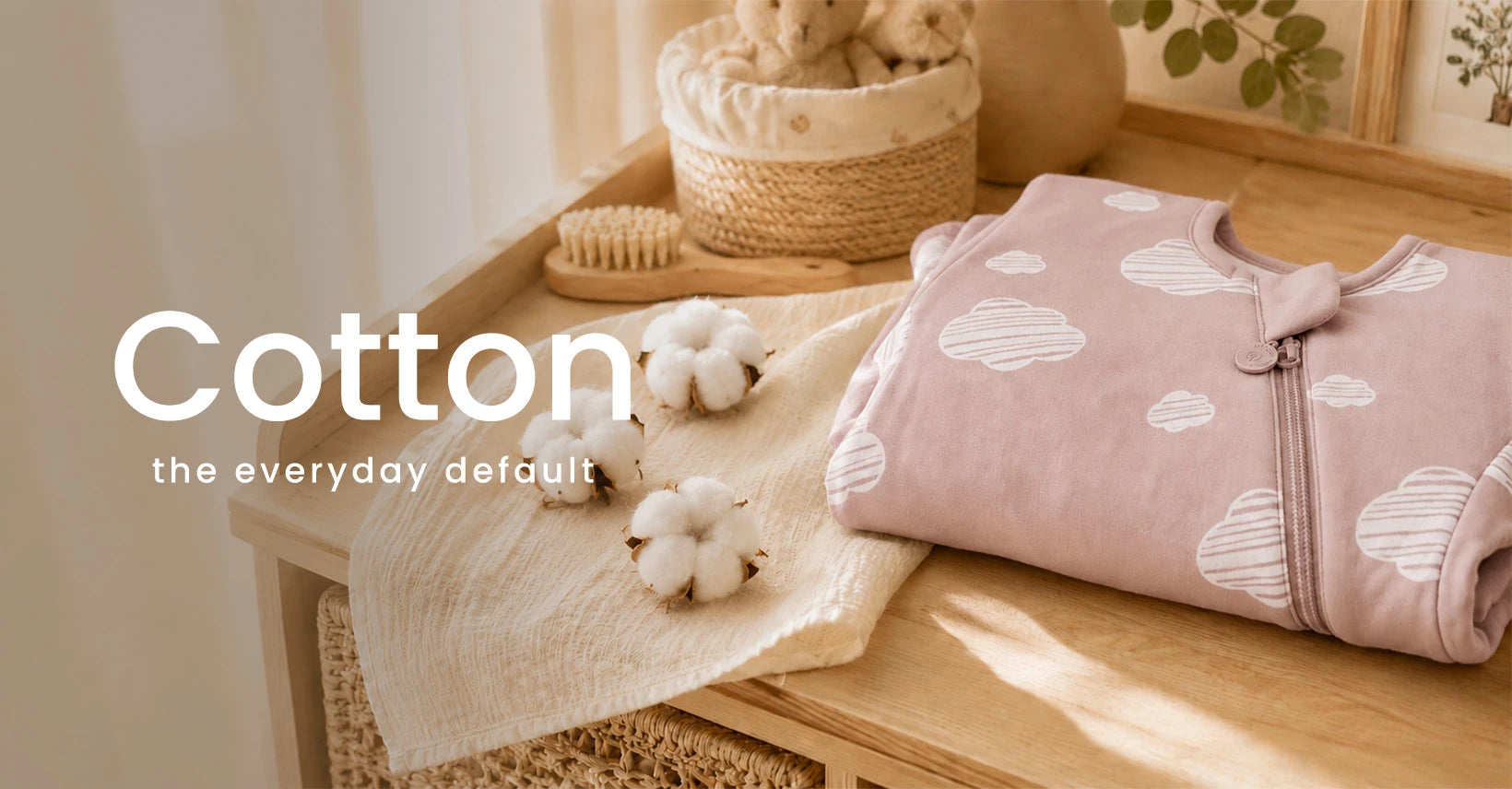
Muslin belongs inside the cotton family rather than beside it: it is cotton woven loosely and airily, not a different fiber. That open weave moves air through the fabric, which makes muslin sacks the airiest choice for warm, still rooms.
Muslin and rayon made from bamboo solve the hot-sleeper problem by different mechanisms, airflow versus moisture-wicking, and the difference decides between them:
A baby in a stuffy, warm room does well in muslin, while a baby who sweats heavily does better in rayon made from bamboo, because sweat needs moving, not just air.
GOTS-certified organic cotton
Organic cotton adds one specific assurance: GOTS certification means the cotton was grown and processed to the standard's environmental and chemical criteria, which is the version of "chemical-free" that actually means something verifiable.
If a sleep sack claims organic without naming the certification, ask which standard backs the claim.
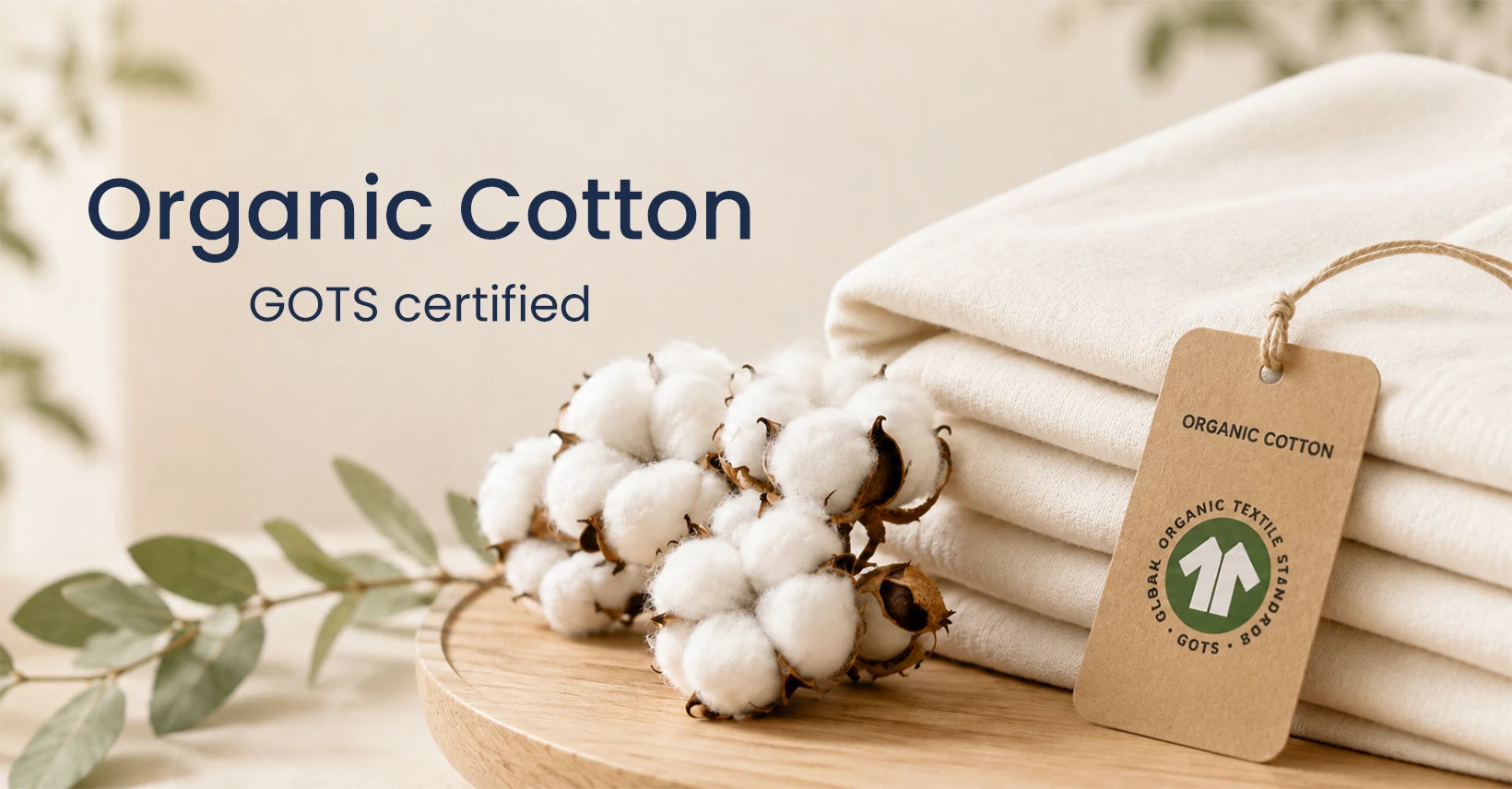
Think twice if your baby sweats through cotton regularly. Cotton absorbs moisture well but releases it slowly, so a heavy-sweating baby can end up sleeping in a damp layer. That is the exact problem the next fabric exists to solve.
Rayon made from bamboo: for hot sleepers and sensitive skin
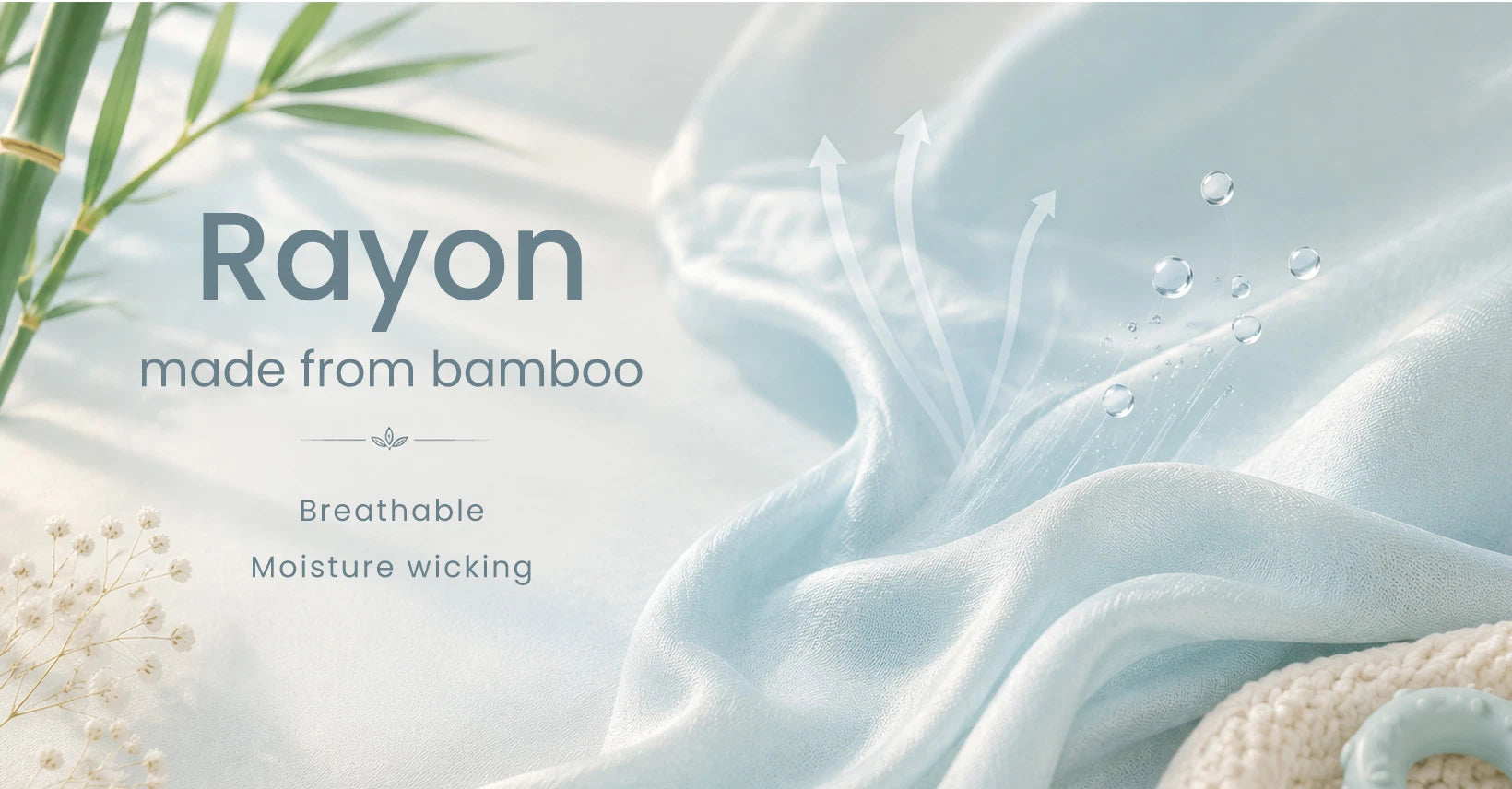
Many textiles marketed as bamboo are rayon made from bamboo, so check the fiber content before making a purchase: the plant is processed into a regenerated fiber, and that fiber is what touches your baby.
It feels cooler and silkier than cotton and moves moisture away from the skin faster than it can soak in, which is why parents of sweaty sleepers and babies with eczema so often land here after cotton disappointed them. Brands like Kyte Baby built their reputation on this fabric.
If your baby wakes with a damp neck in cotton, rayon made from bamboo is the first switch to try.
Two honest caveats. The processing that turns bamboo into rayon uses chemical solvents, so the fabric's eco-image deserves a clear-eyed read; what matters for your baby is the finished fabric, and OEKO-TEX Standard 100 certification tests exactly that: the finished textile, for harmful substances.
And rayon made from bamboo is a more delicate fiber than cotton: it pills and thins faster under heavy washing, which parents notice around the six-month mark. Wash cold and gently, and expect a shorter cosmetic lifespan than cotton in exchange for the cooler sleep.
Think twice if durability per dollar is your priority, or the sack will be handed down through siblings.
Wool: for cold rooms and temperature swings
Wool is the fabric the TOG chart can't fully describe, because its useful property is dynamic: the fiber absorbs moisture vapor and releases warmth gradually, so it buffers a baby through room-temperature swings instead of running one fixed warmth all night.
In a cold room, or an old house that drops several degrees after midnight, that buffering is the difference between a 2 a.m. wake and a full night.
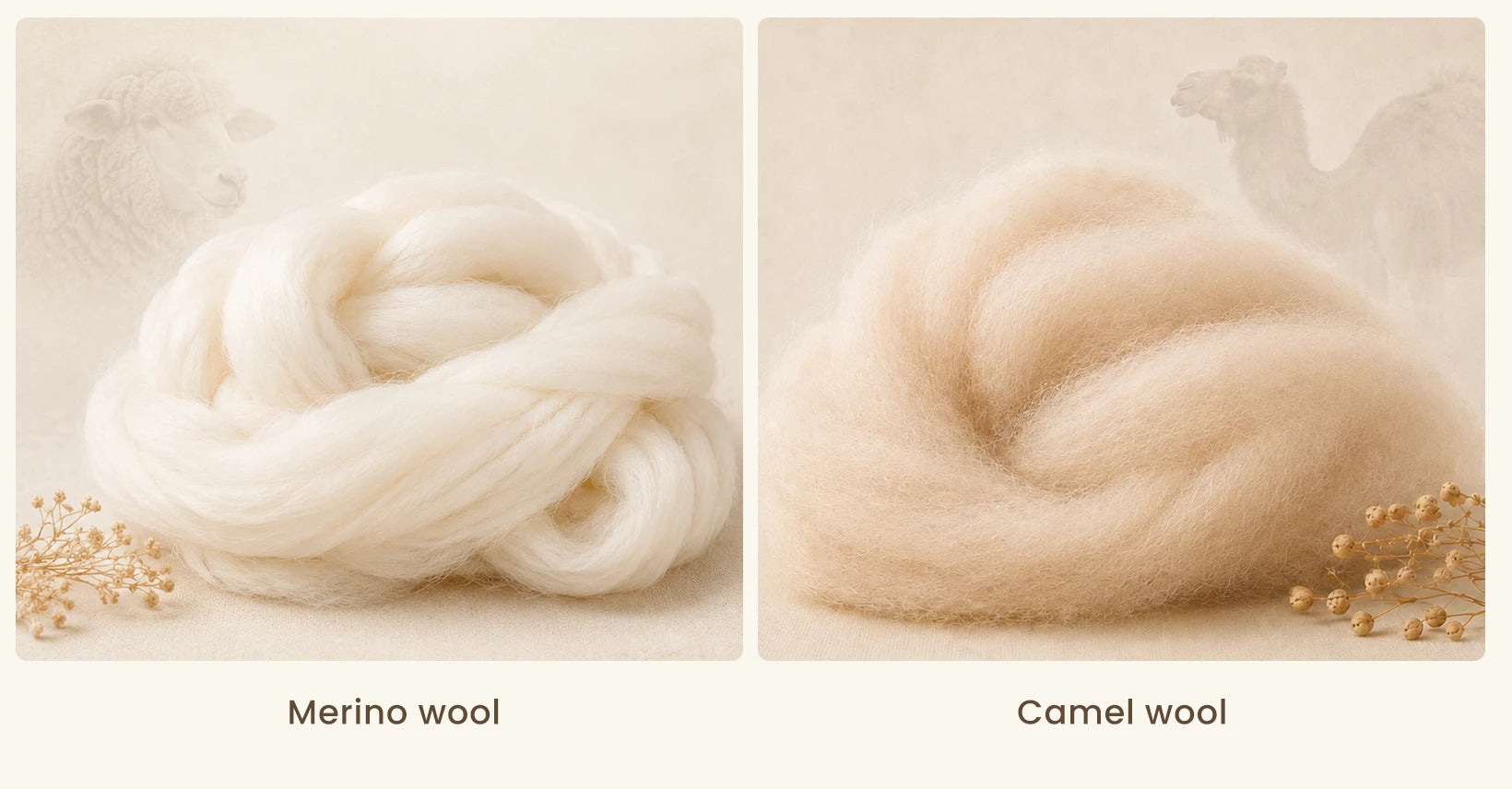
Merino and camel wool, the types used in baby sleepwear, are fine-fibered and soft; the scratchy-wool memory most adults carry comes from coarse wool that baby products do not use.
Within the wool family, the two come from different worlds. Merino, the common choice, is fine sheep's wool prized for its softness, and the fiber brands like Woolino built their lines on.
Camel wool is the fine undercoat camels grow for desert climates, environments that swing between hot days and cold nights, and the fiber carries that origin: it insulates strongly for its weight while staying light, and it wicks moisture the way all fine wools do.
It is rarer in baby sleepwear than merino, which is why few brands offer it; our camel wool guide covers the fiber in depth.
The honest tradeoffs: wool sleep sacks cost the most upfront, and they ask for more care than cotton, gentle wash cycles, and flat drying.
On price, the math worth doing is per night rather than per purchase: a wool sack covering the whole cold season, replacing the need for a second heavy option and some thermostat hours, often lands cheaper per use than its tag suggests.
On care, the wash guide is one page, and following it once makes it routine.
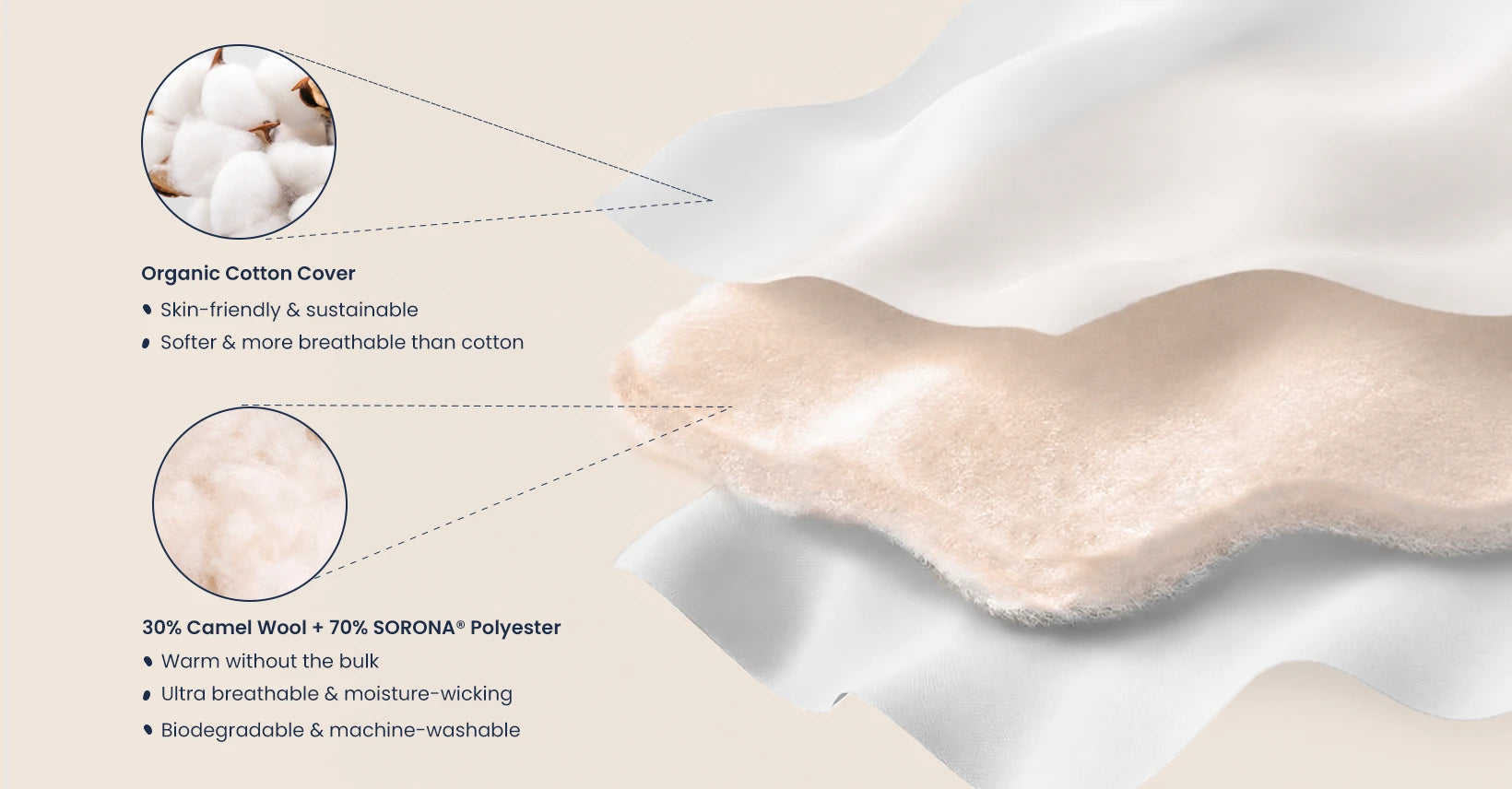
Kaiya Baby's warm-weight sacks pair 30% camel wool with 70% SORONA® polyester, a DuPont™ fiber that adds loft and softness, outside a GOTS-certified organic cotton shell, which is our answer to wool's care question: the wool sits inside the fill, not against the skin or the washing machine drum.
Think twice if your rooms stay warm year-round, where wool's buffering has nothing to do, or the care instructions are a dealbreaker for your laundry reality.
Fleece and polyester: warm, cheap, and worth understanding
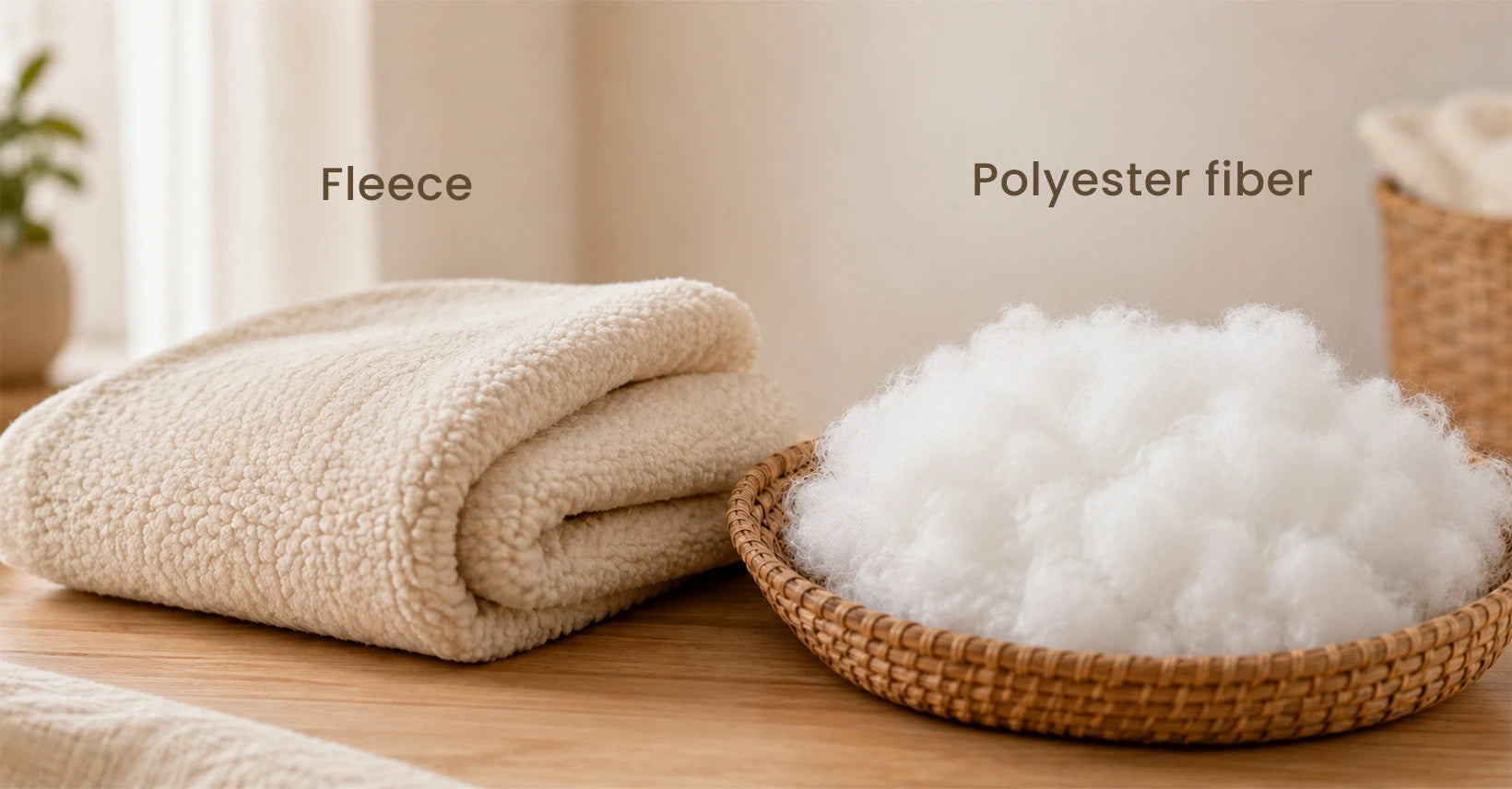
Fleece and polyester sleep sacks, including the microfleece lines most major brands offer, dominate the budget shelf, and for a truly cold room with a baby who runs cool, they do deliver warmth at the lowest price.
The property to understand is that synthetic fibers insulate by trapping air and do not absorb moisture at all, so sweat stays liquid against the skin. The sweaty-back report parents give about fleece is that the mechanism is working as designed.
If fleece is what the budget allows, it works best in cold rooms on cool-running sleepers, sized so air can circulate, with the back-of-the-neck check as your monitor: warm and dry means it is doing its job, damp means the fabric is holding heat your baby needs to shed.
Think twice if your baby runs hot or sweats in anything. This is the one fabric-and-sleeper mismatch that reliably produces bad nights.
How do I choose for my situation?
If you skimmed everything above, this table is the whole guide in one glance. Find the row that sounds like your baby and your room, and start there; the fabric sections above explain the why behind each match.
| Your situation | Best first choice | Because |
| Mild room, easy sleeper, everyday use | Cotton | Breathable, durable, affordable, no downside to manage |
| Baby sweats or overheats easily | Rayon made from bamboo | Moves moisture off the skin faster than cotton |
| Eczema or sensitive skin | Rayon made from bamboo or GOTS organic cotton | Smooth fiber, certified finished fabric |
| Cold room, or big overnight temperature swings | Wool blend | Buffers warmth through the swing instead of one fixed level |
| Cold room, tight budget, cool-running baby | Fleece | Cheapest real warmth; watch the neck check |
Whatever the fabric, the TOG rating sets the warmth level, and the room decides the TOG; our TOG rating guide covers that half of the decision, and the two halves together, fiber plus warmth rating, are the complete answer to what your baby should sleep in.
What is the best fabric for babies to sleep in generally?
The same logic extends past sleep sacks to everything worn at night: breathable natural fibers as the base layer, cotton or rayon made from bamboo against the skin, warmth added by the sleep sack rather than by piling fabric layers.
A light cotton bodysuit under the right-TOG sack outperforms heavy pajamas under a light one, because the sack's warmth is designed and rated while stacked clothing is guesswork.
What do the fabric certifications actually mean?
Two certifications appear on baby sleepwear, and they answer different questions.
GOTS certification
GOTS (Global Organic Textile Standard) covers where the fiber came from and how it was processed: at least 70% organically grown fiber, handled to the standard's environmental and chemical criteria from farm through finished label.
A GOTS mark on a cotton sleep sack means the organic claim is independently verified rather than self-declared.
OEKO-TEX standard 100
OEKO-TEX Standard 100 covers the finished fabric itself. Every component of the product, including threads and zippers, is laboratory-tested against limits for more than 1,000 harmful substances, and baby items fall under Product Class 1, the strictest tier.
The label says nothing about how the fiber was grown; it only says the textile that touches your baby's skin passed testing.
Neither certification implies the other, and a sack can carry either, both, or none.
A conventionally grown cotton sack can hold OEKO-TEX certification, while a GOTS mark speaks to origin.
For the parent whose real question is whether chemicals will reach their baby, OEKO-TEX answers it directly, because it tests the end product regardless of the fiber it began as, which is also why it matters most for rayon made from bamboo, where the processing raises the question in the first place.
A "chemical-free," "natural," or "organic" claim with no named certification behind it is marketing until a standard backs it.
Which fabric survives real laundry?
Sleep sacks get washed more than almost anything a baby owns, so durability is a nightly-use question, not a footnote.
Cotton is the workhorse: it tolerates warm washes and machine drying, holds its shape for years, and is the fabric to choose when the sack will pass down through siblings.
Rayon made from bamboo trades durability for its cool hand: wash cold on gentle and skip the dryer, and expect some pilling and thinning past the six-month mark of heavy rotation.
That is the fiber's nature, not a defect, and the tradeoff is worth it exactly when the cooler sleep is solving a real problem.
Wool-filled sacks ask for the most deliberate routine, gentle cycles, and flat drying, but the construction matters: when the wool sits inside the fill with a cotton shell facing the machine, the shell takes the wear and the routine stays close to ordinary.
Fleece and polyester are the easiest of all in the machine and the most prone to holding odors over time, a small tradeoff their price already accounts for.
The practical rule across all of them: two sacks in rotation, whatever the fabric, halves the wash frequency each one endures and roughly doubles its life.
Frequently Asked Questions
Are sleep sacks a SIDS risk?
No; used correctly, a sleep sack replaces the loose bedding that safe sleep guidance warns against. Our guide on sleep sack safety covers the full picture, including the rules by age.
What do pediatricians say about sleep sacks?
The AAP recommends wearable blankets over loose blankets for the first year. The details, and what that means at each stage, live in our sleep sack safety guide.
Does OEKO-TEX mean a fabric is organic?
No. OEKO-TEX tests the finished fabric for harmful substances; GOTS certifies organic origin and processing. Different questions, different answers, and a sack can hold either or both.
Which material is warmest?
Warmth is set by the TOG rating more than the fiber; a 2.5 TOG cotton sack outwarms a 1.0 TOG wool one. Fiber decides how that warmth behaves: wool buffers, fleece traps, cotton and bamboo breathe.
Is bamboo really better than cotton for babies?
For hot sleepers and sensitive skin, usually yes, because it moves moisture faster and feels smoother. For everyday durability and price, cotton wins. Neither is better in the abstract; they solve different problems.
Is muslin or bamboo better?
They cool differently, so the better one depends on the problem. Muslin, an airy cotton weave, wins in warm, still rooms where airflow is a need. Bamboo rayon wins for babies who sweat, because it moves moisture off the skin rather than just letting air through.
Should babies wear 100% cotton?
Cotton is an excellent default, but the number alone is not the guarantee parents want it to be. A 100% cotton sack with no certification says nothing about processing; a GOTS or OEKO-TEX certified sack answers the real question behind this one, whatever the fiber percentage.
What is the best sleep sack material for summer?
Muslin or a light bamboo rayon in a 0.5 TOG, over a short-sleeve bodysuit or nothing extra. Muslin for airflow in still rooms, bamboo rayon for babies who wake sweaty.
Does the best material change for a newborn versus a toddler?
The fiber logic stays the same at every age; the priorities shift. For newborns, breathability and certified fabrics matter most because they regulate temperature poorly and their skin is at its most reactive. For toddlers, durability moves up the list because the sack faces harder wear and more washes.
Best Sellers

Read more
How Long Does the Newborn Stage Last?
If you are reading this at 3 a.m. with a crying baby on your shoulder, here is the short answer. In medical terms, the newborn stage is the first 28 days of life. In everyday parenting language, m...
Read more
Understanding Sleep Regressions: Why and When Happen, and What to Do
There’s nothing more stressful than when your baby is finally sleeping well and then suddenly, they’re not. If your once-great sleeper is now waking frequently, fighting naps, or suddenly wide awak...
Read more
Leave a comment
This site is protected by hCaptcha and the hCaptcha Privacy Policy and Terms of Service apply.