


What Should Baby Wear Under Sleep Sack?


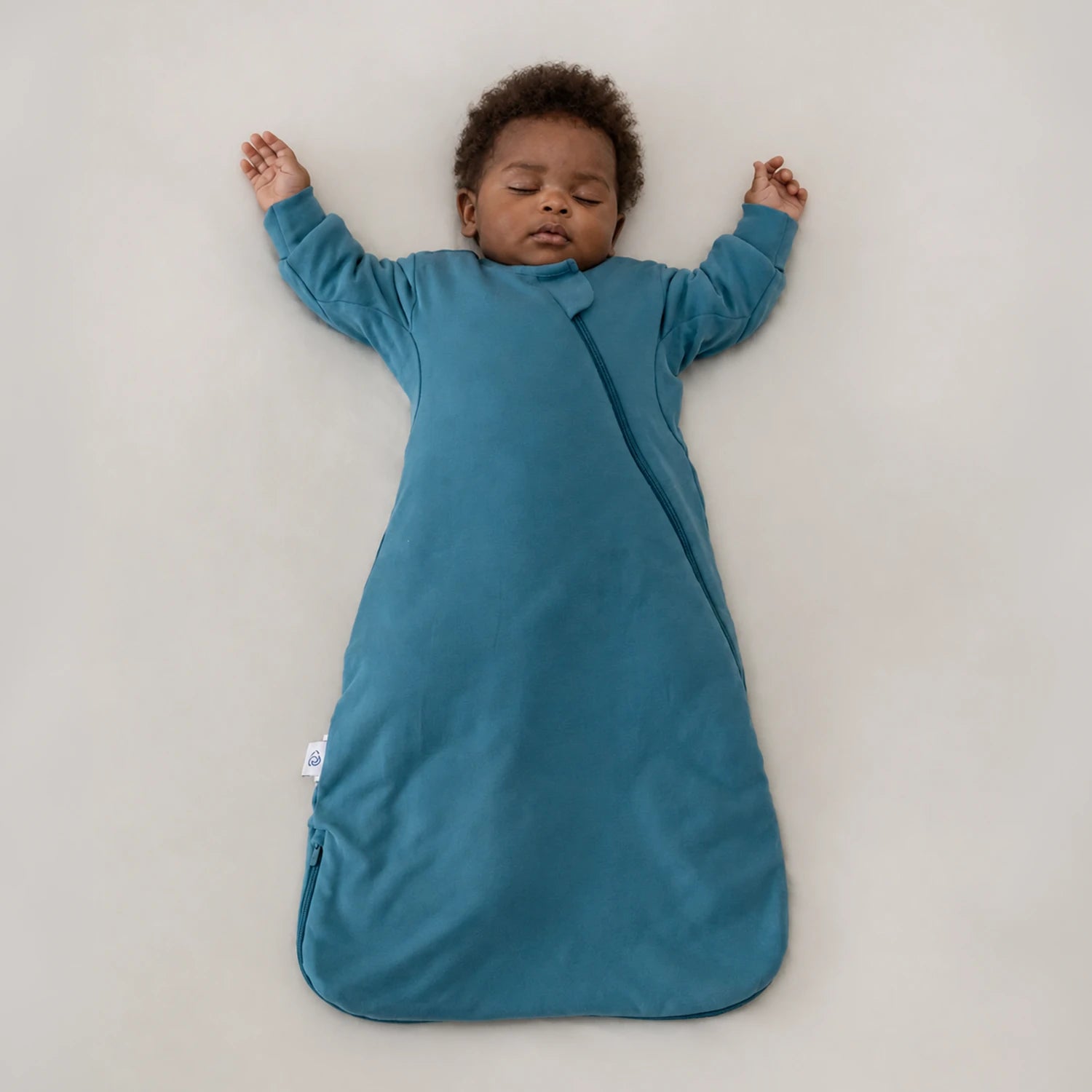
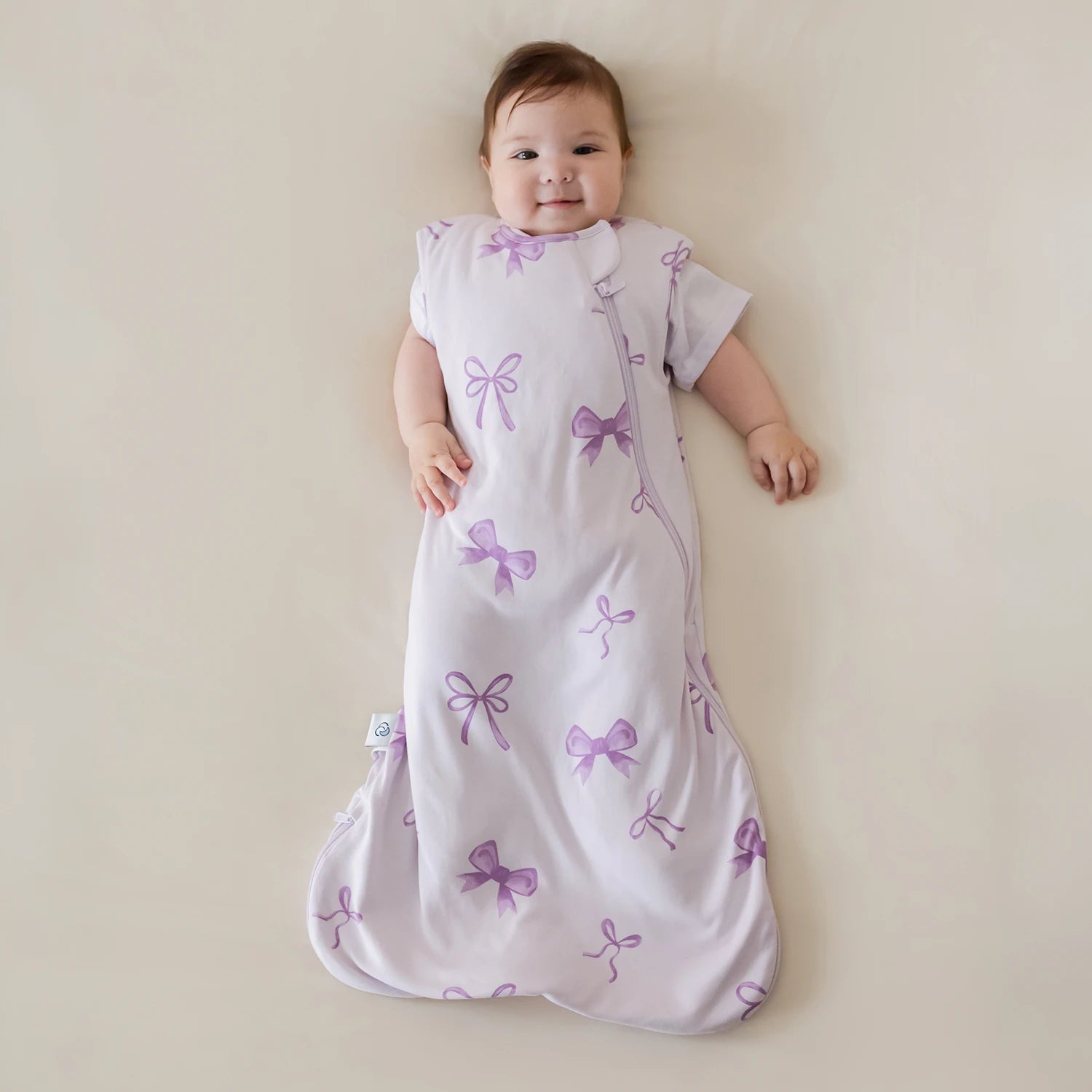
A baby will usually wear a bodysuit or romper under a sleep sack, with the layer matched to the room temperature and the sack's TOG rating.
This guide breaks that down by temperature band, covers what goes under a swaddle separately, and answers the questions parents ask most about fit, overheating, and safe sleep.
Quick answers
Check the room temperature first, then the sack's TOG, then decide the layer. Doing it in that order answers most of the questions below before you get to them.
Do you put a onesie or pajamas under a sleep sack?
Yes. A onesie or pajamas can go under a sleep sack. Choose a lighter or warmer layer based on the room temperature and the sack's TOG rating.
On very warm nights, a diaper alone may be enough. Follow the sleep sack's dressing guidance.
Can baby wear footie pajamas with a sleep sack?
Yes. Footie pajamas can go under a sleep sack. What matters is the combined warmth: a lightweight cotton pair and a thicker fleece pair may need different sleep sack choices.
Can baby wear fleece pajamas under a sleep sack?
They can, but fleece adds warmth. Check the sleep sack's dressing guidance before combining fleece pajamas with a high-TOG sack, and remove a layer if your baby's chest or the back of their neck feels hot or sweaty.
Does it matter if the pajamas are loose or snug?
Yes. Pajamas should fit comfortably and lie smoothly under the sack, without bunching up or restricting movement. Follow the garment's fit instructions rather than sizing up for extra room.
By room temperature and TOG rating
Match the base layer to the room temperature, using the sack'sTOG ratingas the guide. The options below follow Kaiya Baby's dressing chart.
Within each range, choose lighter coverage when the room is warmer and more coverage when it is cooler. Check the guidance for your specific sack and how warm your baby feels.
- Warmest nights, 75–80°F (24–27°C): under a 0.5 TOG sleep sack, choose a short-sleeved bodysuit or just a diaper.
- Mild rooms, 68–75°F (20–24°C): under a 1.0 TOG sleep sack, choose a short-sleeved bodysuit, a long-sleeved bodysuit, or a long-sleeved romper.
- Cool rooms, 61–68°F (16–20°C): under a 2.5 TOG sleep sack, choose a short-sleeved bodysuit, a long-sleeved bodysuit, or a long-sleeved romper.
- Cold rooms, 57–61°F (14–16°C): under a 3.5 TOG sleep sack, choose a short-sleeved bodysuit, a long-sleeved bodysuit, or a long-sleeved romper.

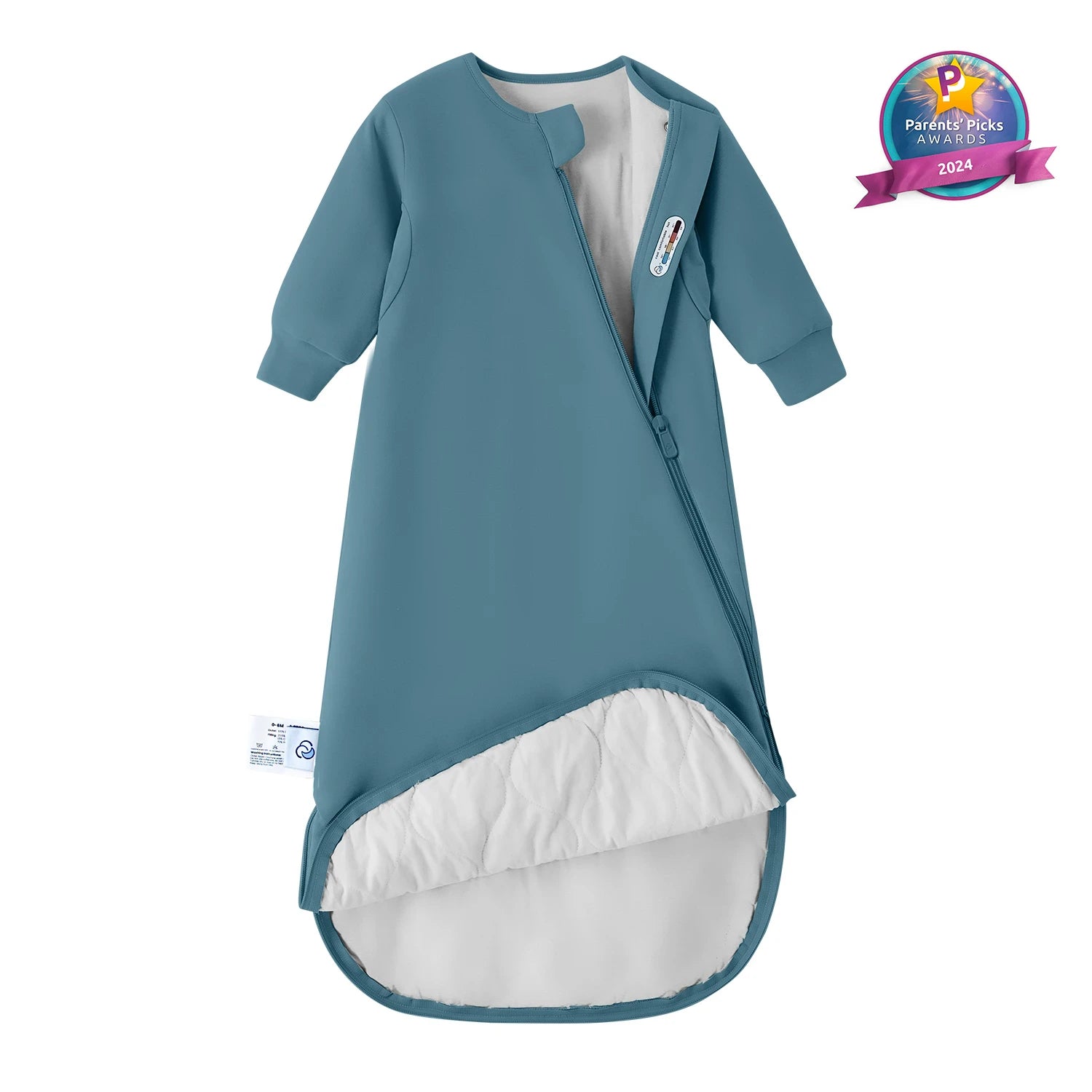
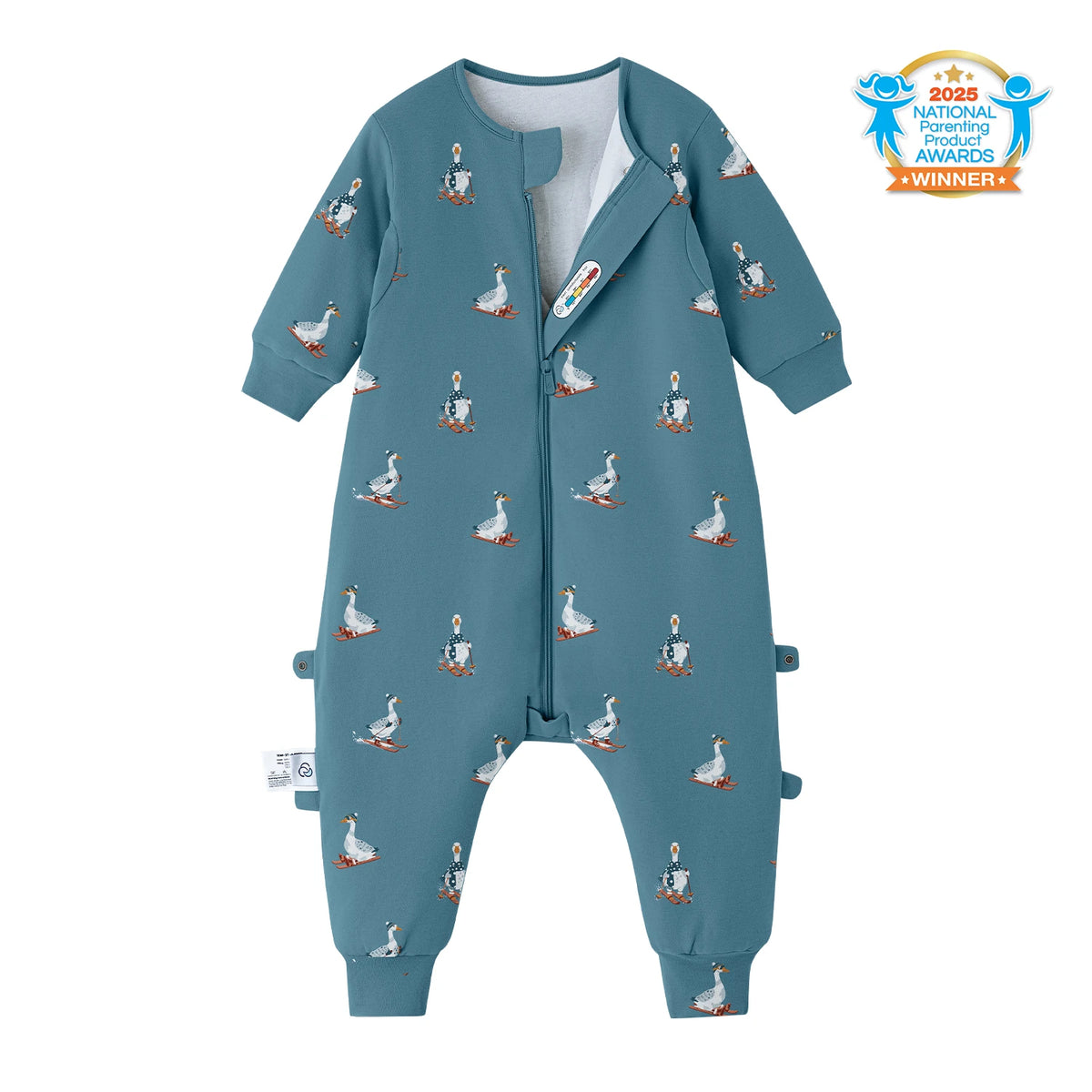
Kaiya Baby's bodysuits come in short and long sleeves and leave the legs uncovered. Our zipped rompers add leg coverage and have a two-way zipper for diaper changes. Choose the coverage you need, then check the material and fit.
A Merino wool blend and a lightweight cotton layer should not be assumed to provide the same warmth. Our sleep sack selection guide helps you compare TOG ratings and sleeve styles before choosing the combination.
What to wear under a swaddle, and when it ends
A swaddle adds warmth of its own. Choose the layer underneath using the room temperature, the swaddle's fabric, and its TOG rating where one is provided.
A short-sleeved bodysuit may be enough in a warmer room, with more coverage needed in a cooler one. Follow the swaddle's dressing guidance rather than assuming the same outfit works under every wrap.
The swaddle itself needs to stop at the first sign your baby is trying to roll, not at a fixed age. The American Academy of Pediatrics notes that some babies begin trying as early as two months.
A correctly sized sleep sack that leaves the arms free and does not compress the body is an option for the next step. Check its TOG and dressing guidance when making the switch. Our guide on transitioning from swaddle to sleep sack covers the change.

Getting the fit right
Fit matters in two places. The sleep sack itself should sit securely around the neck and shoulders without feeling tight, with room through the hips and legs. The neck opening should not be loose enough for your baby's head to slip through.
Check the size chart against your baby's current height and weight rather than choosing by age alone, since babies grow at different rates.
The layer underneath matters too. It should sit smoothly without riding up or pulling, and leave room for the hips and legs to move naturally.

Checking if baby is too warm or too cool
Hands and feet often feel cooler than the rest of the body, even when a baby is comfortable. They are not the best places to judge whether another layer is needed.
The Lullaby Trust recommends checking the chest or the back of the neck. Hot or sweaty skin means you should remove a layer. If the chest feels cold, reassess the clothing and the sack's warmth.
Our guide on the signs a baby is too hot or too cold while sleeping covers what to look for.
Cool feet alone are not a reason to add socks or a heavier outfit.

The one-layer-more rule, and where it breaks down
A common shorthand is to dress a baby in one more layer than an adult would wear comfortably in the same room. The AAP's safe sleep guidance uses this as a general guide.
It is a reasonable starting point, not a precise one. Adults vary in how warm or cool they feel, and a thin bodysuit does not provide the same insulation as a warmer romper.
Count the sleep sack as part of the outfit. Use the rule to get in the right range, then check your baby directly rather than trusting the layer count alone.
The thermostat is not the room
A thermostat reading may not reflect the temperature where your baby sleeps. Drafts, sun exposure, and the sensor's location can affect the reading.
This is one reason to check the sleeping area even when the thermostat looks right. A separate room thermometer near the crib, out of your baby's reach and away from direct heat, helps you measure the conditions around them.

Conclusion
A chart gets you into the right range. Checking your baby tells you whether the layers need adjusting.
Start with a bodysuit for a base layer without leg coverage, or a romper when you want the legs covered too. Then choose a sleep sack in the TOG and size that suit the room and your baby.
Once the outfit is on, check the chest or the back of the neck. Adjust the layers if your baby feels hot, sweaty, or cold, even if you followed the temperature guide.
Frequently Asked Questions
Will my baby overheat in a sleep sack?
Yes, a baby can overheat if the clothing, sleep sack, and room temperature add up to too much warmth. Check the chest or the back of the neck. If the skin feels hot or sweaty, remove a layer. Keep the head uncovered during indoor sleep.
What should baby wear under a sleep sack in a 72°F room?
At 72°F (about 22°C), a lightweight short-sleeved bodysuit is a good starting option with a 1.0 TOG sleep sack. Check the sack's dressing guidance, especially if it has sleeves or the clothing underneath is made from a warmer fabric.
What should baby wear under a 2.5 TOG sleep sack?
Kaiya Baby's guide recommends a long-sleeved bodysuit or long-sleeved romper at 61–63°F (16–17°C) under a 2.5 TOG sleep sack. At 64–68°F (18–20°C), it recommends a short-sleeved bodysuit.
What should baby wear under a sleep sack in warm weather?
For a Kaiya Baby 0.5 TOG sleep sack in the 75–80°F (24–27°C) range, use a short-sleeved bodysuit at 75–77°F (24–25°C). From 78°F (26°C), the chart recommends a diaper only.
What fabric is best under a sleep sack for sensitive skin?
Soft cotton is a practical place to start. Look for smooth seams and avoid scratchy tags or fabrics that have irritated your baby's skin before.
Are footed pajamas or a onesie better under a sleep sack for a newborn?
Both can work. A onesie leaves the legs uncovered, while footed pajamas cover the legs and feet. Choose based on the room temperature, fabric, and sleep sack's TOG rating. Make sure the clothing and the sack both fit your newborn's current size.
Can a swaddle or sleeper go under a sleep sack?
A sleeper is clothing and can go underneath if the combined warmth suits the room. A separate swaddle should not be added as another warming layer: the Lullaby Trust advises against extra bedding over a swaddled baby. Stop swaddling at the first signs of trying to roll.
How should clothing fit under a sleep sack?
Use the clothing's size chart and your baby's current measurements rather than age alone. The layer should fasten easily and sit smoothly without pulling or bunching. Leave room for natural hip and leg movement, and follow the garment's fit instructions.
Are sleep sacks SIDS safe?
A correctly fitted, non-weighted sleep sack can replace loose blankets, but it is not proven to prevent SIDS. Always place your baby on their back on a firm, flat sleep surface, and keep pillows, toys, and loose bedding out of the crib.
Best Sellers

Read more
A Guide to Better Rest for Your Baby
Welcome to the world of parenthood, where sleep becomes both a prized possession and an elusive dream! As a new parent, you've probably realized that understanding a newborn's sleep schedule is lik...
Read more
When Do Babies Typically Start Rolling Over
The rolling over milestone is an essential developmental achievement in a baby's growth journey. It marks a significant step in their motor skill development and indicates progress in their physica...
Read more
Leave a comment
This site is protected by hCaptcha and the hCaptcha Privacy Policy and Terms of Service apply.